How a Telescope Locks Focus Without a Bright Star express
The night sky shimmers. Warm and cold air currents jiggle the star's image, and a large telescope sees a blurry blob instead of a point. To restore sharpness, astronomers ignite an artificial star in the sky — a laser beam reflected off a layer of sodium atoms about 90 kilometers up. By its twinkling, the telescope's mirror flexes hundreds of times per second, compensating for the jitter.
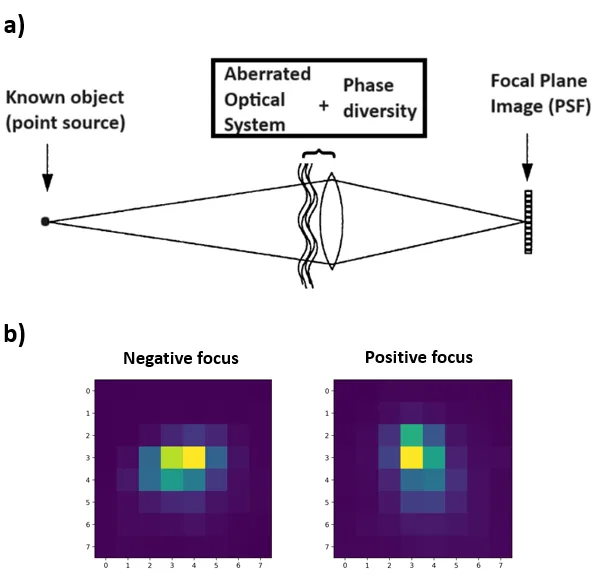
But the laser star has a quirk: the glowing sodium layer itself slowly drifts up and down, and the telescope's focus slips. Previously, a real star nearby was needed for correction, but it's not always there. Engineers at the Keck telescope in Hawaii tried a different approach: tracking focus directly from the camera image, without a second star. They compared three algorithms like chefs in a kitchen: who's more accurate, who's faster, who won't break under a weak signal. The winner was a method that reconstructs the shape of the light spot, much like we identify a coin by its glint.
Sky tests showed that even when the air was particularly turbulent, the algorithm restored sharpness.
Now Keck will have more nights when it sees distant galaxies sharply, not as if through water. The same trick will work for future giant telescopes with thirty-meter mirrors.
The sodium layer that the laser illuminates sits at about 90 km altitude — higher than meteors fly, but lower than the ISS orbit.