Galaxies Line Up: How We Measure the Expansion of the Universe express
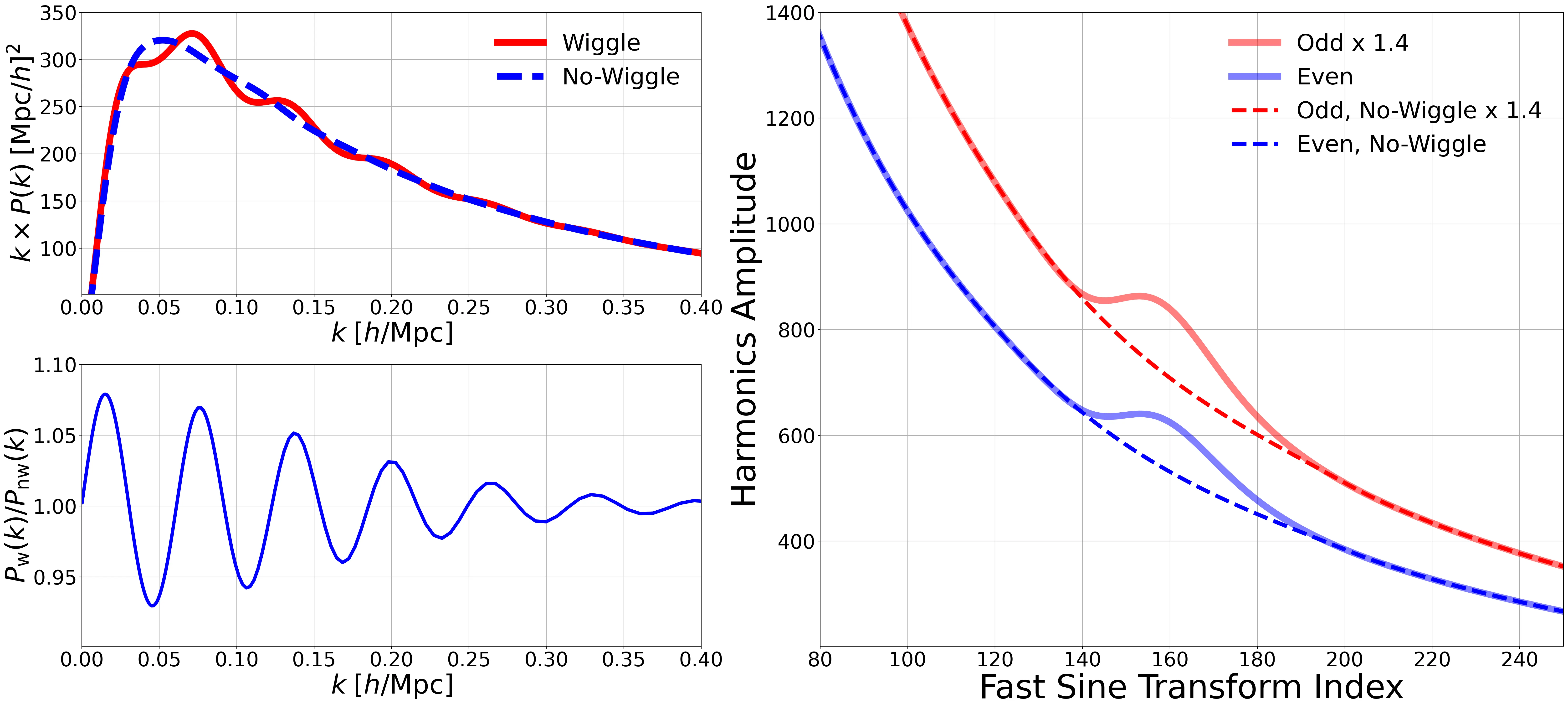
In the early universe, when it was just a few hundred thousand years old, matter had not yet gathered into stars and galaxies; it was a hot soup of particles and light. Sound waves rippled through this soup — compressions and rarefactions, like ripples from a stone thrown into water. After 380,000 years, the universe cooled enough for light to decouple from matter, and the waves 'froze': galaxies were slightly more likely to form at the peaks. This left an imprint in the distribution of galaxies — a characteristic scale astronomers call baryon acoustic oscillations (BAO). It's as if on a giant sheet, billions of galaxy-points lined up in a faint ruler with markings every 490 million light-years.
Usually, this ruler is sought by comparing pairs of galaxies: how many pairs are at a given separation. But pairs can also be connected into triples: this is called the three-point correlation function. It is more sensitive to the shape of structures: as if you not only counted distances between houses in a city, but also analyzed whether triples of houses form identical triangles. Scientists from the DESI collaboration have for the first time found a BAO signal in galaxy triples, using data on 2.1 million luminous red galaxies (old, massive galaxies that are visible at great distances).
In the new work, the BAO signal in galaxy triples is detected with a significance of 8.1 sigma (very reliable; the probability of a chance coincidence is negligible). The measured distance to galaxies at redshift 0.68 (when the universe was about half its current age) is 15.88 ± 0.27 in units of the 'sound horizon'—the size of the frozen waves. This corresponds to an accuracy of 1.7 percent. The result agrees remarkably well with previous measurements from galaxy pairs, strengthening confidence in the method.
The new way of measuring distances in the universe is like adding another ruler to the existing ones. The more independent rulers we have, the more precisely we can test how the universe expands and whether dark energy changes over time. In the future, as DESI accumulates more data, three-point correlations will allow us to refine the history of the cosmos with unprecedented precision.
Original abstract
as written by the authors arXiv:2602.16134
We present the first detection of the 3-Point Correlation Function (3PCF) Baryon Acoustic Oscillation (BAO) signal from the DESI Data Release 1 (DR1) sample of Luminous Red Galaxies (LRGs), which contains over 2.1 million galaxies. Our analysis is based on a tree-level redshift-space bispectrum template, which is then transformed to position space using the Fast Fourier Transform on Logarithmic scales (FFTLog) algorithm. We detect the BAO feature with a significance of approximately $$8.1\sigma$$ using the EZmock covariance matrix and $$8.5\sigma$$ using the analytical covariance matrix, for the full LRG redshift range ($$0.4
Sound waves in the early universe traveled at more than half the speed of light — about 60% of it. Today, their imprint has stretched to 490 million light-years, which is 5,000 times the diameter of our galaxy.
In Carl Sagan's novel 'Contact', deciphering a signal from space begins with finding patterns in the data stream — much like astronomers searching for regular patterns in the distribution of galaxies.