Charge Ripples That Outlived Order express
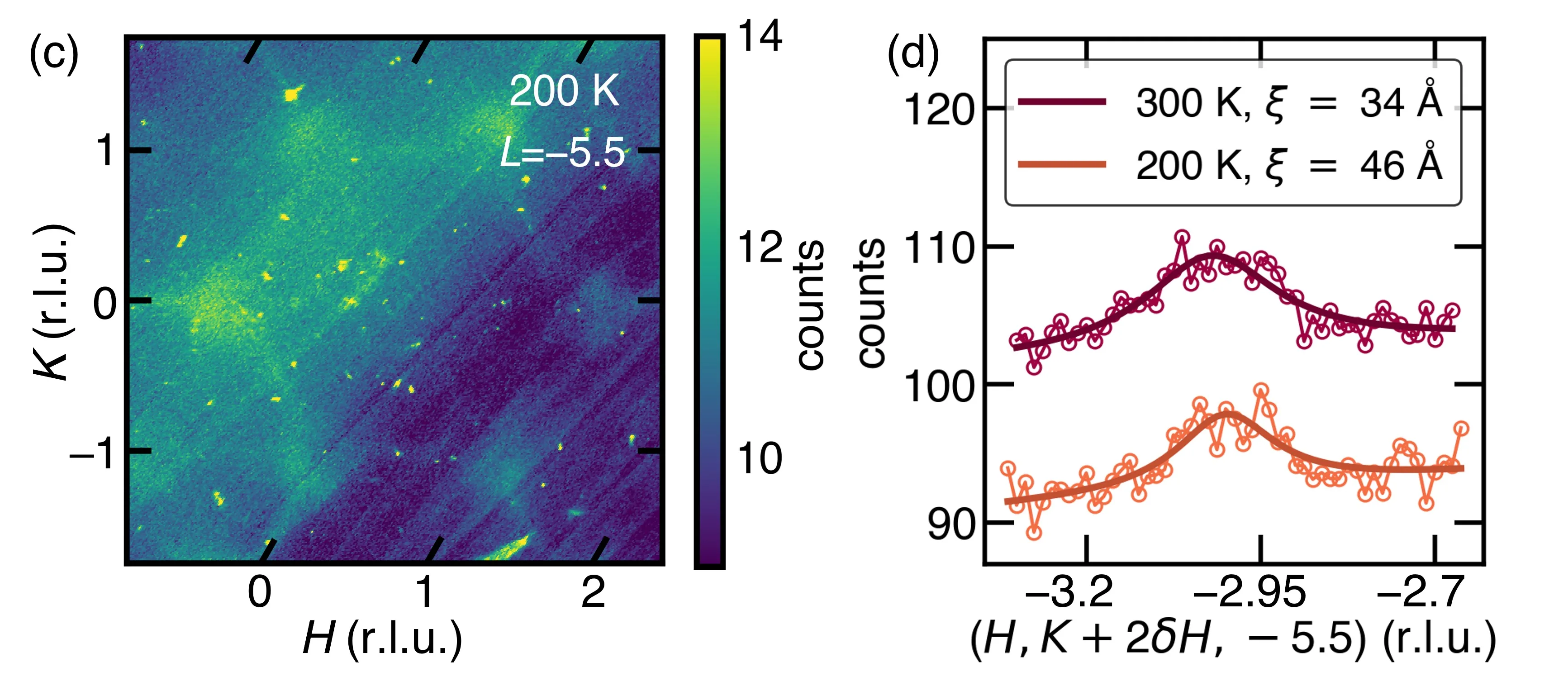
In some crystals, electrons line up into a wave, like ripples on the surface of water, but made of charge. Usually, such a wave exists only in extreme cold. But in this experiment, scientists saw that traces of the wave persist even at room temperature.
The researchers took a CsV$_3$Sb$_5$ crystal, added tin to it, and monitored the reflection of ultrashort laser pulses. From the vibrations of the lattice atoms, they deduced that the charge 'ripple' hadn't disappeared entirely: it had simply become disordered and frozen. The tin impurity acts like grains of sand that prevent the wave from moving freely, so it freezes in place.
So, in these crystals, the 'memory' of the charge wave lives much longer than previously thought. And this is not an exception but a general property of an entire family of materials.
The laser pulse in this experiment lasts only a few femtoseconds — less than one millionth of one billionth of a second. In that time, light travels a distance smaller than the thickness of a human hair.