The laboratory that teaches itself express
A baker who never tastes the dough and only looks at the color of the crust is unlikely to bake perfect bread. Materials science has long been similar: automated setups could churn through hundreds of variants but didn't understand why one recipe was better than another. Now engineers have created a system that doesn't just search: it formulates rules, like an experienced technologist who can explain every step to an apprentice.
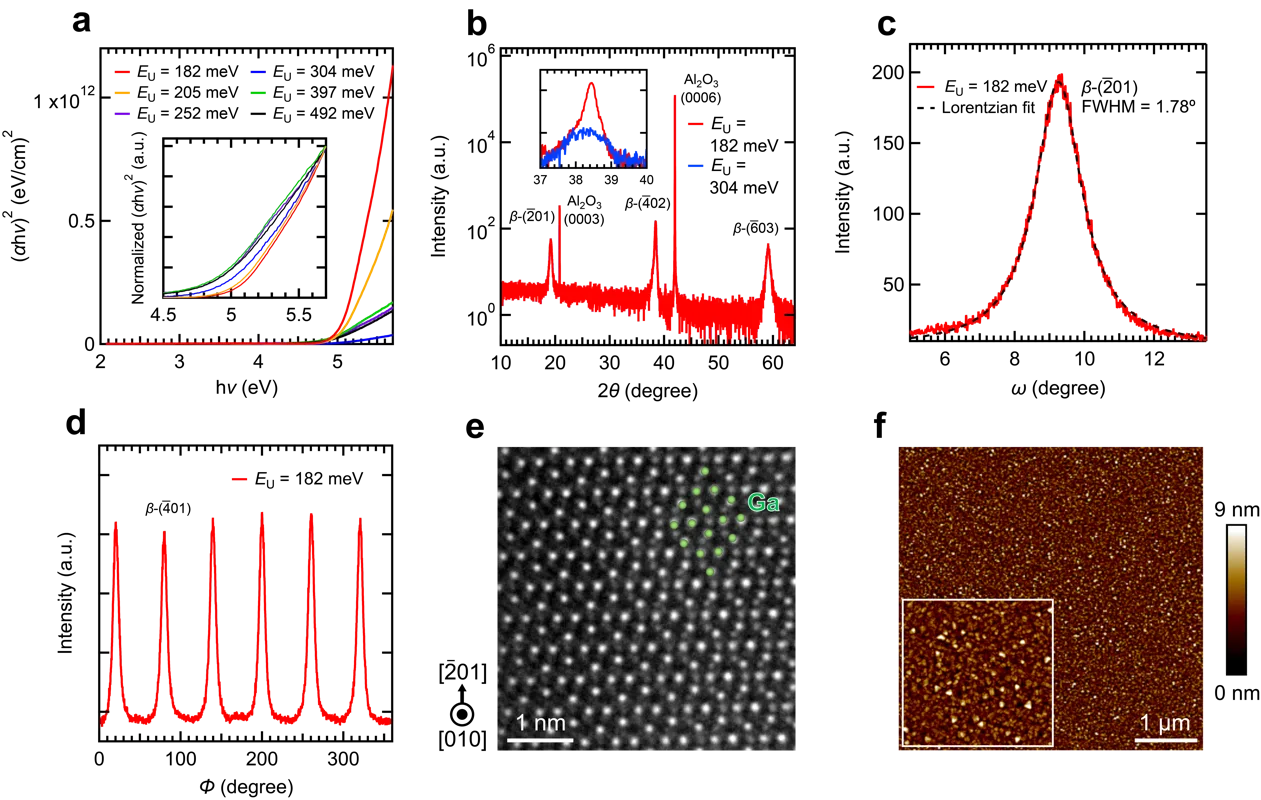
The subject was a film of gallium oxide, a material for power electronics that can operate at high voltages. The problem is that defects arise during deposition, spoiling the properties. To assess purity, the authors used the Urbach energy: the lower it is, the less disorder in the structure. The robot sputterer varied four parameters (substrate temperature, plasma power, and two gas flows) while an optical sensor measured quality on the fly. Within a few dozen iterations, the system found a regime with an Urbach energy of 182 meV — a record low for such films.
But the main point is not the record: it's that the system could explain its findings. A special algorithm analyzed how each parameter affects the outcome. It turned out that substrate temperature is the main lever: it changes quality the most. Power and gas flows act almost independently, while temperature and oxygen have a bit of a "disagreement"—their combined effect defines the narrow window where the ideal film is born. These rules were successfully transferred to another type of substrate without additional tuning, and a single crystal grew there as well.
Thus, the laboratory transforms from a black box into a mentor: it not only hands over a ready recipe but also teaches the human which ingredients matter and how they interact. The baker finally tastes the dough.
Original abstract
as written by the authors arXiv:2602.22531
Self-driving laboratories have emerged as powerful tools for navigating high-dimensional process spaces, yet systems remain black-box optimizers that yield limited transferable process understanding. Here, we demonstrate an interpretable self-driving laboratory framework that transforms autonomous optimization into human-usable growth rules. As a stringent benchmark, we apply this framework to RF magnetron sputtering, addressing a long-standing challenge of achieving high-quality beta-Ga2O3 heteroepitaxy and single-crystalline beta-Ga2O3 homoepitaxy via sputtering. By combining Bayesian optimization with automated optical evaluation of the Urbach energy as a metric of sub-bandgap disorder, the self-driving system efficiently identifies heteroepitaxial growth conditions yielding a minimum Urbach energy of 182 meV, the lowest value for sputtered beta-Ga2O3 films. Importantly, the optimized growth window is transferable, realizing single-crystalline beta-Ga2O3 homoepitaxy without further optimization, corroborated by scanning transmission electron microscopy. To convert the closed-loop dataset into interpretable growth rules, we train a random forest surrogate and distill it into response curves and quantified pairwise interactions across the four-dimensional growth-parameter space. This analysis identifies substrate temperature as the primary control knob, with RF power and gas flows acting largely additively and only a modest temperature-oxygen coupling delineating the narrow window for high-quality growth, establishing a general route from autonomous experimentation to transferable growth rules.
The Urbach energy is named after Franz Urbach, who in 1953 noticed that many crystals have an absorption edge with the same shape — a "tail" caused by defects. Since then, this parameter has become a universal measure of disorder in semiconductors.