The Universe's Hum and a Map of Galaxies express
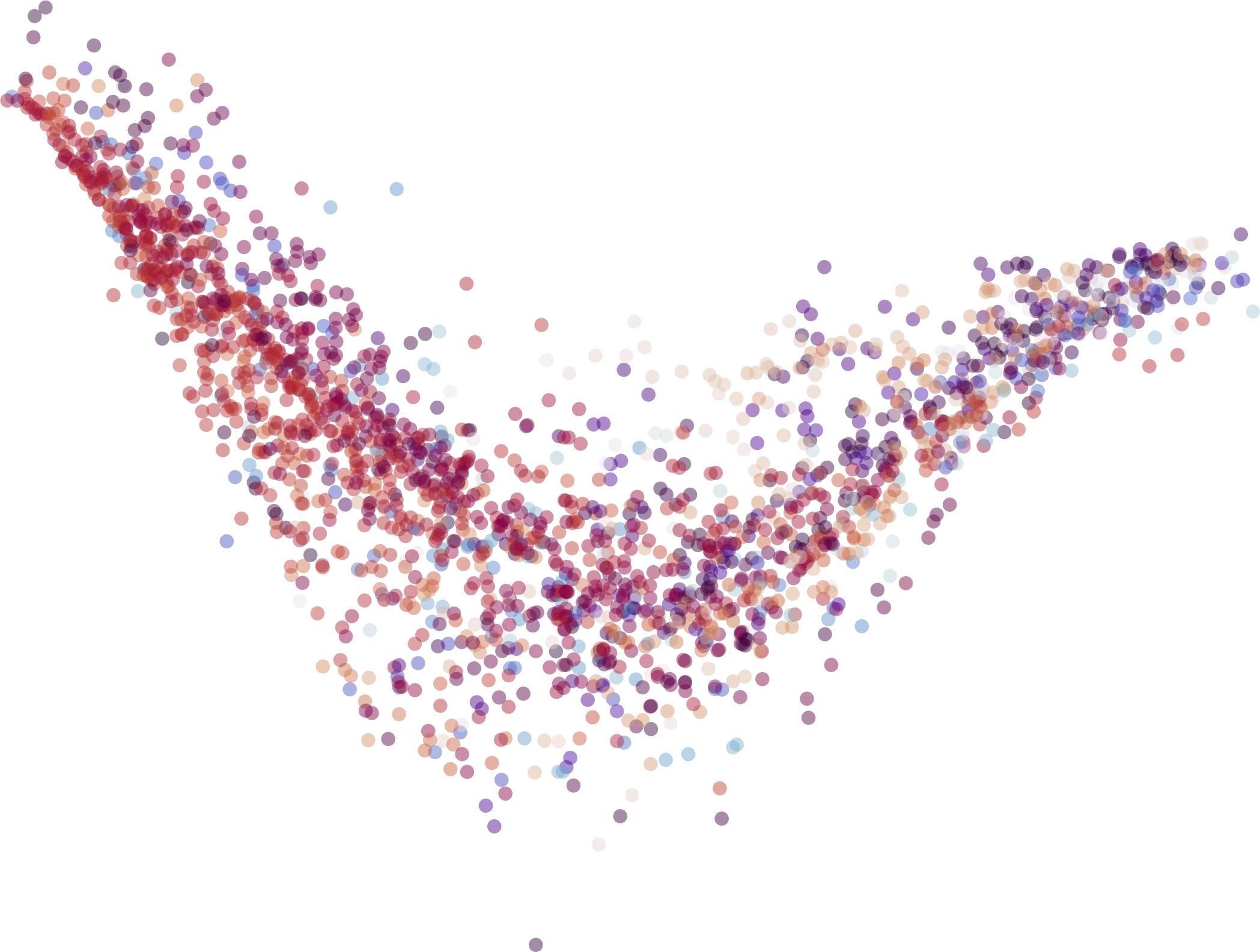
Pulsars are lighthouses of the universe: their radio pulses arrive with clock-like precision. When a ripple of spacetime passes between us and a pulsar, the pulses are slightly delayed or arrive early. Astronomers monitor dozens of pulsars and listen to how this ripple, a low-frequency hum, affects their timing. This is how they search for gravitational waves, which are generated, for example, by pairs of supermassive black holes at the centers of galaxies.
The hum shouldn't be perfectly uniform: if the waves come from nearby galaxy clusters, their contribution should be stronger in that direction of the sky. The authors took a galaxy map from the 2MPZ catalog, essentially a snapshot of the neighborhood out to a distance of about two billion light-years, and incorporated it into a mathematical model describing how pulsars 'hear' this hum. It turned out that the map adds almost nothing: 15 years of NANOGrav data show no noticeable correlation between the hum and the distribution of galaxies.
So the source of the gravitational waves is either farther away or more uniformly distributed than the galaxies in our map. For now, we can only set an upper limit on the fraction of the hum that follows the pattern of the 2MPZ catalog. In the future, as maps become more detailed and observations longer, this method could help pick out individual 'voices' in the overall noise.
The 2MPZ catalog contains nearly a million galaxies, and all of them could fit on a map you could spread out on a table, but each point on it is billions of light-years away from us.