How Rods Turn Liquid into Gel express
In a glass of water with charged cellulose rods (the kind you get from wood), a curious transformation takes place. As long as the rods repel each other, the mixture flows like a liquid. But add a pinch of salt, and the repulsion weakens, the rods start to stick together and form a three-dimensional network: the liquid sets into a gel.
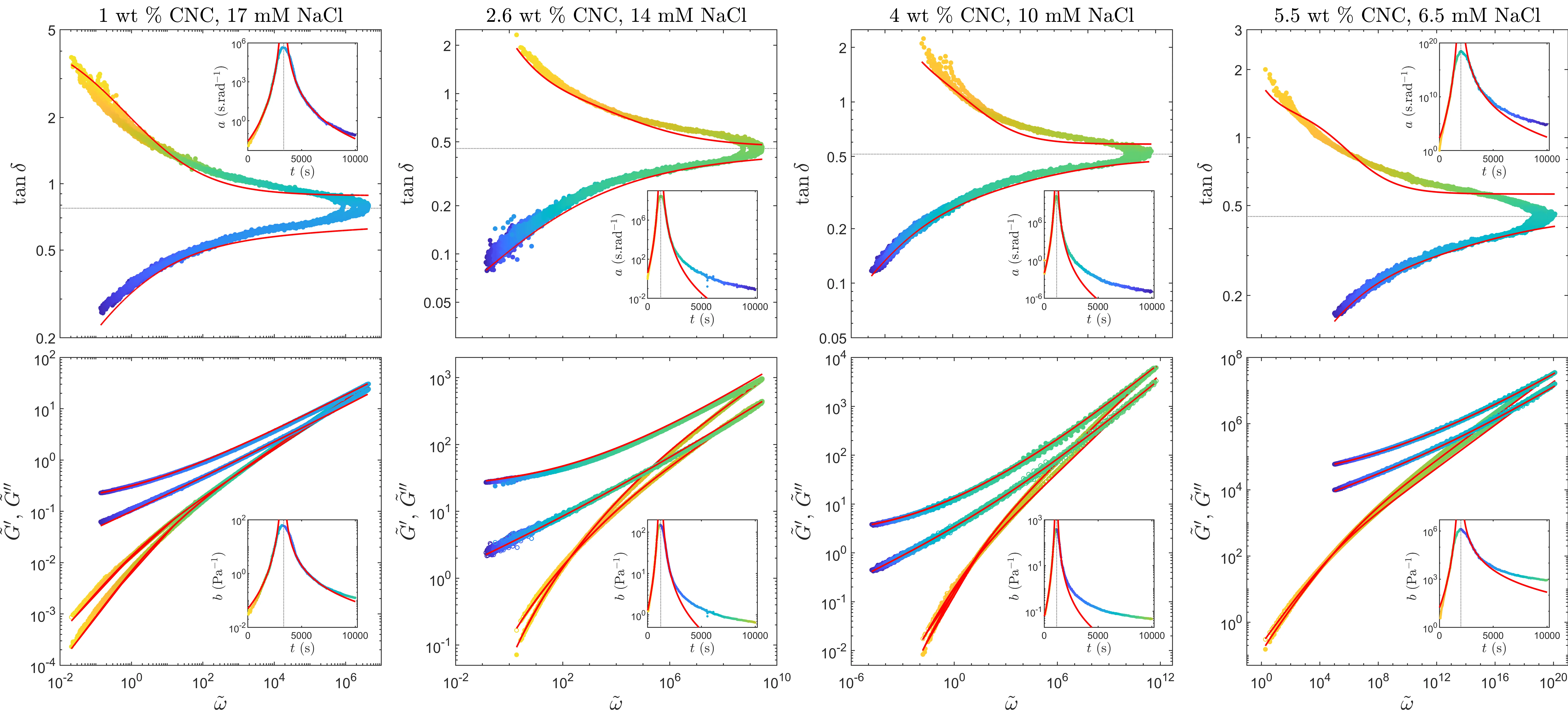
After vigorous mixing, the gel breaks apart, but over time it recovers. The researchers tracked this recovery by measuring how the material responds to gentle oscillations. They found that at a certain moment, called the critical gelation point, the properties change abruptly: before this point, the mixture behaves like a liquid; after it, like an elastic solid. Moreover, all the curves taken at different times can be superimposed if you stretch the axes properly. This points to self-similarity in the process: the network grows the same way at all scales, like a snowflake repeating its pattern.
The scientists varied the amounts of rods and salt and found a boundary between two states: a gel and an 'attractive glass'—a dense but disordered packing. Near the boundary, the material's behavior changes sharply. Interestingly, the dynamics before and after the gelation point are asymmetric: breakdown and recovery proceed differently. This distinguishes rods from spherical particles, where the transition is more symmetric.
Such insights will help create biodegradable gels from nanocellulose — for thickeners, coatings, or even medical dressings.
Cellulose rods in water can form a gel even at a concentration of just 1% by mass, the rest is water.