X-rays Teach Atoms to Dance express
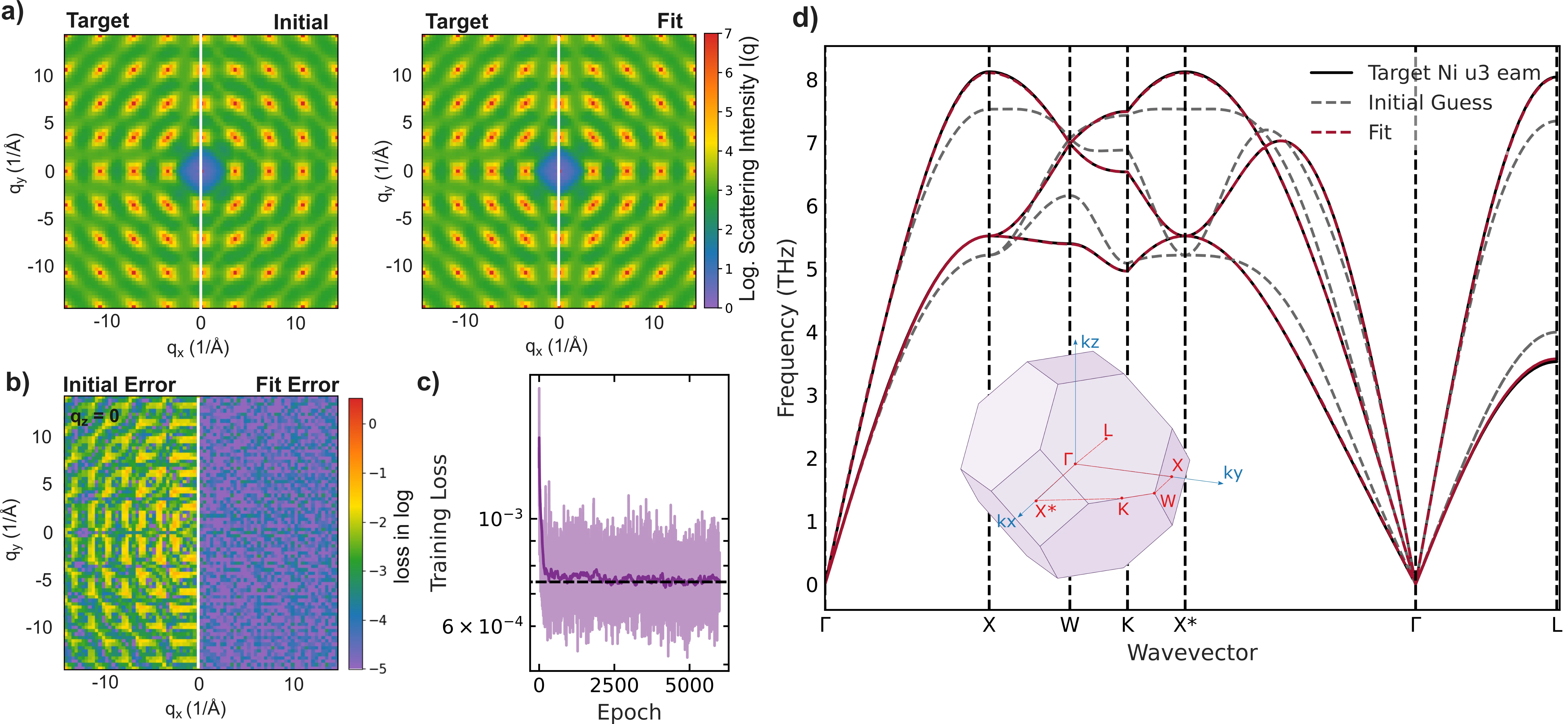
Heat a crystal, and its atoms start to jiggle like plucked strings. An X-ray beam passing through the crystal scatters off these vibrations, painting on the detector not only sharp spots but also faint, smeared patterns. These patterns are like fingerprints: from them, you can reconstruct how strongly atoms pull and push on each other.
Previously, such reconstruction was like picking a lock with a hundred pins. The program had to repeatedly solve cumbersome equations, and each step took a long time. The new work takes a different route: instead of solving the equations directly, it adjusts the forces so that the calculated pattern matches what's seen in the image. It does this using a fast way to generate random atomic vibrations, bypassing the bottleneck of old methods.
This approach makes analyzing X-ray images fast and automatic. Now we can study en masse how heat propagates in different crystals — from semiconductors to battery materials. It's a step toward getting a complete picture of a material's thermal properties from a single image.
The faint, blurry spots in an X-ray image of a crystal are not a defect of the imaging but direct evidence that atoms are vibrating from heat. Their shape and intensity depend on how tightly the atoms are bound to each other.
Science fiction often features devices that determine the composition and properties of a material from a single beam of light. This method is a step toward such technology: from scattered X-rays, you recover not only the structure but also the forces holding atoms together.