Plasma Pulse: What Makes a Tokamak Tremble express
Inside a tokamak, a donut-shaped device where magnetic fields confine plasma, the hot gas of charged particles can start to tremble. At first, everything is calm, but then the temperature drops sharply, and sawtooth edges appear on the graph. These events are called sawtooth oscillations, and they can interfere with the start of a fusion reaction.
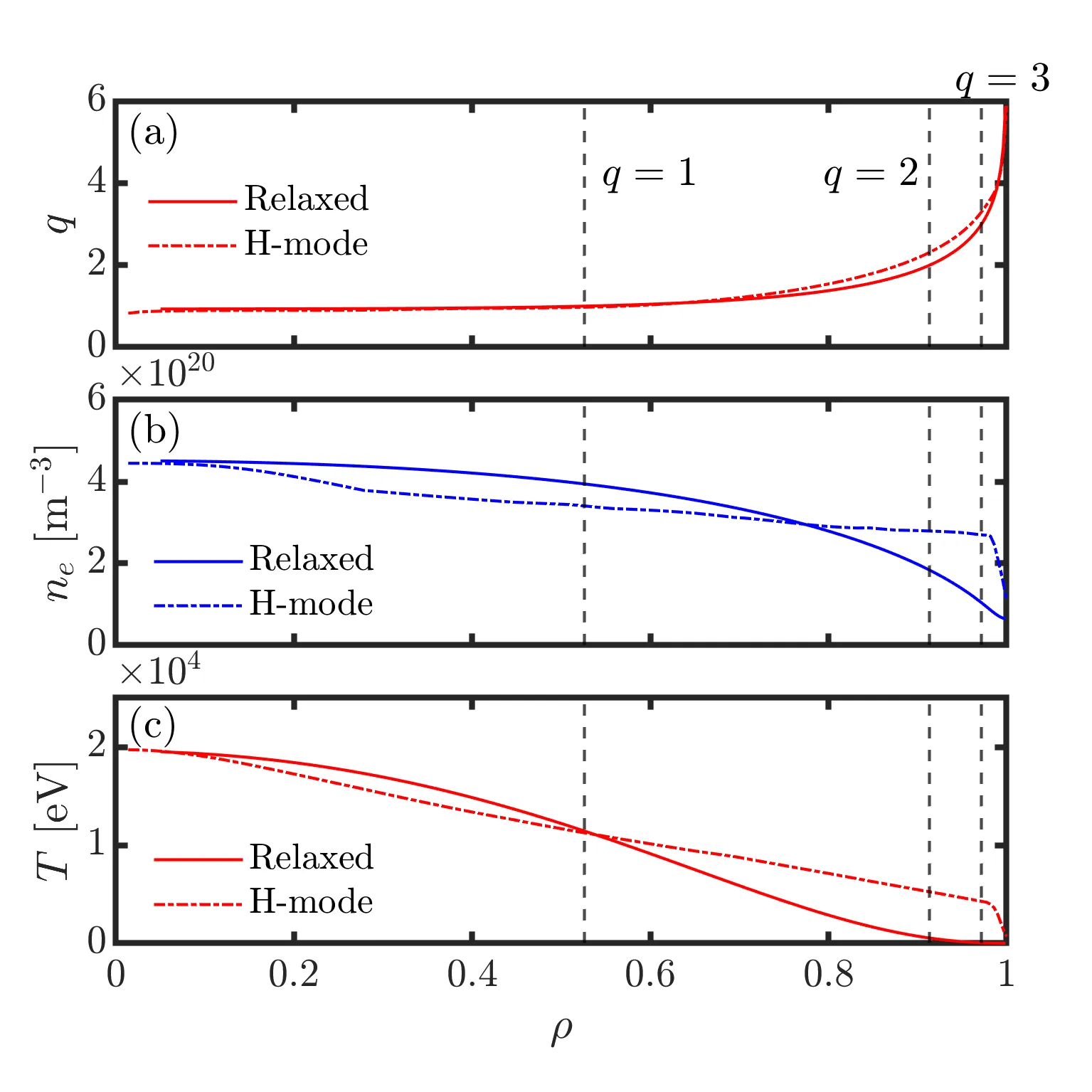
For the first time, scientists have calculated in detail how such oscillations arise in the planned SPARC reactor. They used a computer model that accounts for the three-dimensional behavior of plasma and its electrical properties. It turned out that the main culprit is an internal instability, similar to the twisting of a bundle of magnetic field lines. When the twisting becomes too strong, the plasma suddenly rearranges, and the temperature drops.
The calculations showed that even a small change in temperature or the shape of the current inside the plasma can strongly affect the moment of the crash. If stabilizing factors, such as fast particles, are not taken into account, the crash occurs almost immediately after the twisting reaches a critical level. This means that in the real SPARC, sawtooth oscillations may start earlier than expected and will need to be controlled.
Understanding these oscillations will help predict more precisely how much heat the plasma loses, and ultimately bring the launch of the first fusion power plants closer.
Sawtooth oscillations are named so because on a temperature graph they look like saw teeth: a slow rise and a sharp drop.