Charged particles are the fundamental actors in the electromagnetic drama of the universe. They carry electric charge, a property that makes them respond to and generate electric and magnetic fields. This interaction governs everything from the binding of electrons to atomic nuclei, to the flow of current in a wire, to the violent collisions of heavy ions in particle accelerators. In the context of the experiments referenced, charged particles are the projectiles and debris whose trajectories and energy deposits reveal the inner structure of matter and the forces at play.
History
The concept of electric charge dates back to ancient observations of amber's attraction, but the modern understanding began with Benjamin Franklin's experiments in the 18th century. The electron was discovered by J.J. Thomson in 1897, establishing the particle nature of charge.
How it works
A charged particle, such as a proton or electron, possesses an electric field that extends through space. When it moves, it also creates a magnetic field. These fields exert forces on other charged particles, causing attraction or repulsion. In a detector, a charged particle ionizes the material it passes through, leaving a trail of electron-hole pairs or light flashes that can be tracked to reconstruct its path and momentum. The curvature of that path in a magnetic field reveals the particle's charge-to-mass ratio.
In practice
Charged particles are harnessed in particle accelerators for medical cancer therapy (proton therapy), in cathode ray tubes (historically), and in the detectors of high-energy physics experiments that probe the fundamental constituents of matter.
Fun fact
A single bolt of lightning carries about 10^20 electrons, yet the total charge transferred is only about 5 coulombs — roughly the charge stored in a small capacitor.
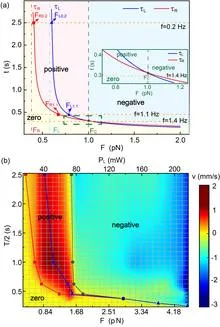
A swing that rocks on a sawtooth hill behaves strangely: without kicks, it gets stuck in the first dip, but with rhythmic pushes it can move uphill, downhill, or stay frozen in place. That is exactly what physicists saw when they placed a single dust grain in a trap with a sawtooth bottom and started pushing it alternately with laser beams.
In dark interstellar clouds where new stars are born, chemistry starts with a tiny particle — the trihydrogen ion (H₃⁺). It collides with other atoms and sets off a cascade of reactions that build ever more complex molecules. For a long time, it was thought that the main reaction producing it, H₂⁺ colliding with H₂, only happens in the gas phase.
A black hole is not a vacuum cleaner. By itself, it doesn't pull everything in more strongly than an ordinary star of the same mass. But if there's a magnetic field nearby and charged particles flying around, an interesting game begins.
In the first moments, the Universe expanded at an enormous rate. This process is called inflation, and its driving force is the inflaton field. Its energy pushed space apart, like yeast raising dough. But physicists suspect that the dough might have left 'bubbles'—superheavy particles born from the expansion itself.
Dark matter — the invisible architect of the universe, holding galaxies from flying apart. Thanks to the pioneering work of Fritz Zwicky and Vera Rubin we know: ordinary matter in the cosmos is just a negligible impurity. But what lies behind this dark matter?
Two floats on the waves. Throw a stone into water, and the ripples will spread, rocking both floats one after another — not simultaneously. In the quantum world, such rocking is called entanglement: particles, like floats, begin moving in sync.
The Standard Model is a set of rules for all known particles. But it says nothing about dark matter, which makes up a quarter of the Universe. To find it, you don't need to build city-sized colliders. Radioactive molecules act like sniffer dogs: their incredible 'scent' picks up the faintest traces of unknown forces that slip past giant machines.
A thin layer of oil on the surface of water breaks into separate droplets at the slightest disturbance. Something similar happens in the pulsar wind — a stream of particles ejected by a rapidly rotating neutron star. This stream also contains plasma layers, which can break apart into clumps — magnetic islands.
A neutron star is the collapsed core of a massive star, squeezed to the size of a city. In its heart, matter is packed so densely that atoms cease to exist, and protons and neutrons dissolve into a sea of quarks.
Gravity is like a stretched trampoline: massive bodies press into it, making other bodies roll toward them. This shared curvature of space, gravity, affects everyone, but it doesn't convey secret messages.
A tiny glass bead hangs in a laser beam like a speck of dust in sunlight. Around it is a rarefied gas: atoms of krypton, xenon, and heavy molecules of sulfur hexafluoride. They collide with the bead, and each hit transfers a tiny impulse, like a pea thrown at a taut sheet makes it tremble.
Impulse is a measure of motion: mass times velocity.
Cosmic rays are particles that arrive from deep space. When such a particle hits the atmosphere, it triggers a whole shower of new particles, like a billiard ball breaking a rack, sending balls scattering in all directions. To predict what such a shower will look like, we need to know how the primary particle interacts with the nuclei of air atoms.
When heavy nuclei collide in accelerators, a multitude of particles is produced, and physicists want to understand how electric charge moves through this chaos. Two trains crash into each other: the passengers (quarks) scatter, but their luggage (charge) may end up far from the crash site.
An electron beam in an accelerator is like a flock of birds: it flies in a tight group, but over time it spreads out. To keep particles together, heavy magnets are usually used. Here they did without them — the beam squeezed itself.
When two different materials are pressed together and then pulled apart, a spark jumps between them. Anyone who has pulled off a wool sweater in the dark or gotten a shock from a doorknob knows the feeling. For a long time, it was thought that charges simply hop from one surface to another due to differences in material properties.
In a jar of oily liquid float millions of tiny magnetic grains: each about the size of a bacterium. Switch on a magnet, and the grains, like obedient little soldiers, line up into long threads. But why do they form threads rather than clumps? It turns out it's not just about magnetism.
A rotating black hole is a cosmic whirlpool that sucks in everything around it. Some of these holes have invisible threads that stretch from the event horizon like spokes from a wheel. Scientists have long debated what these threads are and whether they can be observed.
In a new study, physicists have shown that these threads are not just a mathematical artifact.
Hot plasma is like a swarm of frantic fireflies darting around in a jar. Keeping it confined in an open magnetic trap is like trying to keep those fireflies from touching the glass. A new computer model shows how to do it more precisely.
Ions and electrons in plasma constantly collide, exchanging energy.
After an injection under the skin, a drug doesn't just spread out like ink in water. Antibody molecules carry an electric charge, and that charge makes them interact with surrounding tissues — much like a magnet attracts or repels iron filings.
Two water droplets tremble in sync — because they're connected by a straw. So it is with entangled particles: their unity may be held together by a microscopic wormhole.