Secrets of the Lunar Garden: How Meteorites Mix Cosmic Dust ⚡ экспресс
Original: "Gardening on the Moon: An Advection-Diffusion Model to Guide the Search for Supernova Debris in the Lunar Regolith"
Meteorites churn the Moon like gardeners, and a new model shows how stardust from ancient explosions gets scattered in the process.
Links in the knowledge graph 1
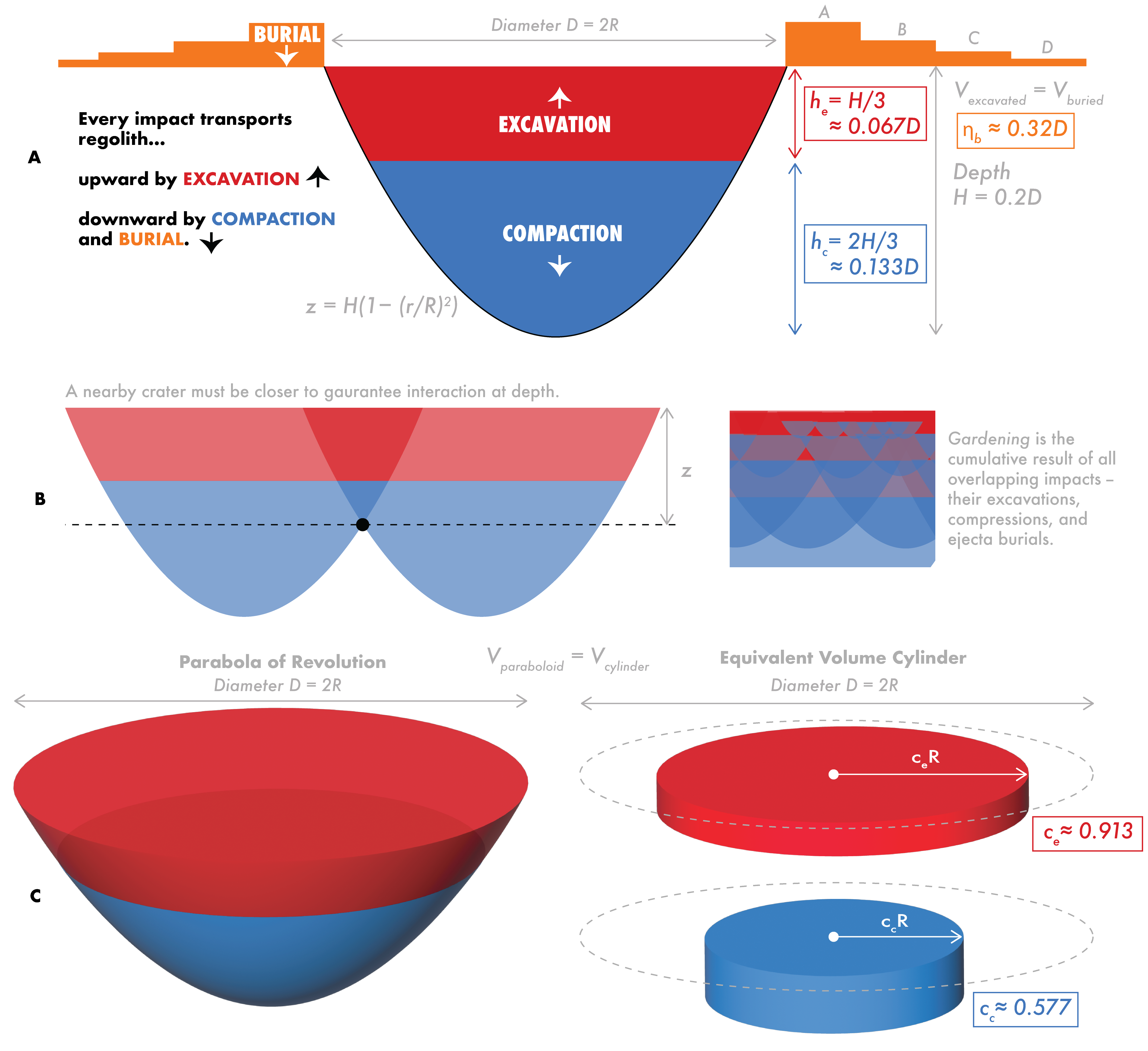
Lunar soil is a graveyard of stars. Every meteorite impact, like a gardener’s shovel, mixes the dust, hiding and revealing particles from ancient supernovae. A new model showed that alien isotopes are distributed surprisingly evenly. By studying slices at different depths, we can read the history of explosions in our Galaxy and learn where to look for signs of kilonovae. The future of lunar missions promises a harvest of cosmic secrets.
🎯 The mixed layer reaches several meters—as if a gardener dug a bed to the depth of a three-story building.
🎬 Arthur C. Clarke, in *A Fall of Moondust*, described mining rare resources on the Moon. Perhaps in the future, we’ll go there for traces of supernovae and other cosmic catastrophes.