Popular

Paul Dirac

1902-1984 · theoretical physics, quantum mechanics, quantum field theory
British theoretical physicist, one of the founders of quantum mechanics. He formulated the Dirac equation, which united special relativity and quantum theory, and predicted the existence of antimatter. His work laid the foundation for quantum electrodynamics and field theory.

Biography

Born in Bristol, England. Studied electrical engineering at the University of Bristol, then mathematics at Cambridge. Completed his doctoral thesis under Ralph Fowler. At age 30, became the Lucasian Professor of Mathematics at Cambridge (a position once held by Isaac Newton). Nobel Prize in Physics in 1933 jointly with Erwin Schrödinger. After retiring, moved to Florida, where he taught at Florida State University. Fellow of the Royal Society, member of the Order of Merit. Known for his extreme taciturnity and literal perception of the world.

Key discoveries

💡 Dirac was known for his extreme reticence. Once after a lecture a student said, 'Professor Dirac, I didn't understand the last equation.' Dirac simply remained silent. When reminded of the question, he replied, 'That was not a question, it was a statement.' He also remained unmarried for a long time, but one day met the sister of a colleague and unusually for him said, 'You are my better half.' They lived together for the rest of his life.
Quote: "The beauty of equations is more important than their agreement with experiments. If an equation is not beautiful, it is probably wrong."
Links in the knowledge graph 1
Related tags
antimatterQuantum FieldStandard Model
Related laws
Pauli exclusion principleDirac equationFermi–Dirac statisticssuperposition principleFermi's golden rule
Related scientists
Wolfgang PauliSatyendra Nath BoseEmilio Gino SegrèPeter HiggsRichard FeynmanJ. J. ThomsonWerner HeisenbergMarie Curie

Related articles

Cosmic Tango: How Spins Dance with Dark Matter

Armed with a quantum magnetometer that reads nuclear spins with incredible precision, scientists hunted for exotic forces that break mirror symmetry. A tandem of rotating lead masses and a cloud of neon atoms improved previous constraints by a thousandfold. The setup works like a miniature gravitati
arXiv:2505.00483v1 · 2025-05-01

Quantum Measurement as a Deformation of Perception: The Bloch Sphere and the Birth of Categories

A deep connection between quantum measurement and categorical perception: how a continuous spectrum turns into discrete concepts. On the Bloch sphere, wave function collapse deforms distances—pure states 'fall' into mixed ones, distances within a category shrink, and those between categories stretch
arXiv:2505.00777v1 · 2025-05-01

The Electron's Heel: What Dirac Knew and Pauli Missed

The simplified description of electrons in magnets misses a built-in curvature. Dirac's equation shows that every electron inherently has a property that slightly bends its path. This explains the anomalous Hall effect without extra assumptions. The discovery changes the foundations of magnet physic
arXiv:2506.01292v2 · 2025-06-02

The Void That Dresses Matter

Vacuum is not emptiness, but an invisible fabric of fleeting particles of light. By placing a material inside a microresonator, we 'wrap' it in this fabric, and its properties change without external influence. This is the path to new electronics and energy technology running on emptiness.
arXiv:2506.02170v1 · 2025-06-02

Anti-qubit: Reverse Time for a Quantum Sensor

Physicists have created an 'anti-qubit' — a quantum bit that evolves backward, like a film in reverse. Paired with an ordinary qubit, it becomes a gold standard sensor that even picks up the hidden direction of weak fields.
arXiv:2506.04315v1 · 2025-06-04

Who’s Who in the World of Particles and Antiparticles

Physicists at LHCb have learned to identify neutral B mesons—particles that can turn into their antiparticles—more precisely. The new method analyzes not individual traits but the entire decay picture, improving accuracy by 35%. This brings us closer to understanding why matter defeated antimatter i
arXiv:2508.20180 · 2025-08-27

A Cosmic Blast Showed How Its Light Is Born

For the first time in a gamma-ray burst GRB 221009A, astronomers noticed how the light fingerprints of elements were born and reddened. It turned out that particles of light emerged when matter met antimatter, and then, colliding with electrons, lost energy — like a billiard ball after a series of h
arXiv:2509.14715 · 2025-09-18

Hydrogen and Antihydrogen Weave into a New Particle

In particle theory, there’s a puzzling phenomenon that usually calls for a new particle. But the authors found that this role falls to ordinary hydrogen and antihydrogen, forming a special combination. The discovery brings the atomic world and fundamental forces closer together.
arXiv:2509.15912 · 2025-09-19

Magnetic Ripples: How Relativity Plays with Spins

A magnetic material has been discovered where electron spins arrange into ripples due to relativistic effects. This brings spintronics — spin-based electronics — closer to reality.
arXiv:2511.01690 · 2025-11-03

How Time Can Run Backwards

Scientists have figured out how to make quantum clocks tick in both directions at once. To do this, a magnetic particle is placed in a trap made of opposing fields — and it feels the flow of time backwards just as real as forwards. Such an experiment would test temporal entanglement and show that an
arXiv:2511.07220 · 2025-11-10

How to See an Electron Tremble

The quantum jitter of free electrons, too tiny for direct observation, can be made noticeable by twisting the particles into a vortex and mixing their positive and negative energy states.
arXiv:2511.21142 · 2025-11-26

How a Crystal’s Hidden Order Sharpens Gamma-Ray Telescopes

Gamma rays are hard to catch. In a telescope’s crystal detector, they create a particle shower that usually fans out, demanding heavy hardware. But if the crystal’s atomic grid aligns with the ray, the shower tightens. A small, oriented crystal then does a better job, even measuring the gamma ray’s
arXiv:2601.04129v2 · 2026-01-07

Cosmic Orchestra: Atomic Superflare at the Heart of the Galaxy

Superradiance is when billions of atoms, like musicians, simultaneously emit light, creating a flash brighter than a star. Astrophysicists believe that in interstellar space, especially near the center of our Galaxy, hydrogen and positronium stage these natural 'concerts'. This discovery promises a
arXiv:2602.07489 · 2026-02-07

The Rubber Band That Gives Birth to Antimatter

Klein's paradox about the birth of particles from emptiness gets a simple explanation: a tightly stretched rubber band snaps, creating whirls — a particle and an antiparticle. This image makes it clear that pair creation is the medium's reaction to extreme stress.
arXiv:2604.14378 · 2026-04-15

Vortices in the Ocean of Vacuum: How Spin Dictates the Birth of Matter

In ultra-strong fields, the vacuum births electron-positron pairs. By controlling the delay between laser pulses, physicists turn the birth into chaotic ripples or ordered vortex lattices resembling whirlpools. The pattern of whirlpools is dictated by the particles' spin — as if each whirlpool spins
arXiv:2604.19002 · 2026-04-21

Quantum Ripples in the Atom: A Simple Way to Account for Them

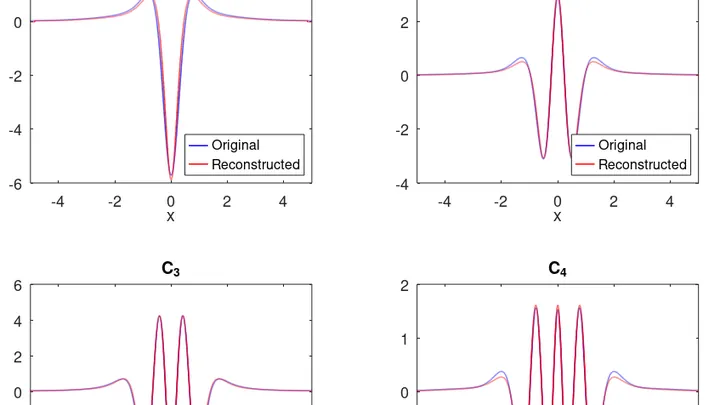
Quantum fluctuations slightly distort the motion of electrons in atoms. For simple systems, these corrections are known, but for complex ions, calculations have been more difficult. A new approach using smooth bell-shaped functions gives reliable results, paving the way for ultra-precise spectroscop
arXiv:2604.23660 · 2026-04-26

Improvisation beneath the horizon: quantum bounce turns a black hole into a white hole

The event horizon of a black hole conceals not a point of infinite curvature, but a zone of quantum transformation, where time itself changes roles. New research in quantum gravity shows: the singularity vanishes thanks to relational dynamics — one of the metric variables serves as a clock, and the
arXiv:2605.01576v1 · 2026-05-02

One Neuron, One Memory: Inequalities to Unlock Brain Secrets

Scientists proposed a way to determine whether a neuron remembers its past or starts fresh each time. Using a mathematical test akin to quantum physics checks, but applied to time, they can distinguish a 'coasting-by-inertia' neuron from an 'instant-stop' one. Failing the test would mean the cell ha
arXiv:2605.12126 · 2026-05-12

Laser Test of Nature's Mirror Symmetry

Physicists plan to use a laser to make a hydrogen molecule and its antihydrogen antipode vibrate. Comparing frequencies will test a fundamental symmetry rule of nature: if it holds, matter and antimatter sound in unison. The slightest discrepancy would be a window into new physics. The experiment is
arXiv:2605.16585 · 2026-05-15

How a Black Hole’s Magnetic Tilt Creates Matter

It turns out that the tilt of the magnetic field around a spinning black hole acts as a power regulator in a cosmic factory: the more precise the tilt, the more matter is born from emptiness. This explains where the energy for the brightest explosions in the universe — gamma-ray bursts — comes from.
arXiv:2605.21910 · 2026-05-21

Fermions Won’t Perish at the End of the World

When the Universe perishes in the fire of a singularity, matter particles (fermions) behave like fireproof seeds. Their mathematical description avoids infinities, unlike that of bosons—the carriers of forces. This means matter could survive the end of the world and seed a new one.
arXiv:2605.22623 · 2026-05-21

How a Quantum Coin Pretends to Be a Die

Scientists have shown: the simplest quantum particle with two magnetic states can imitate particles with many states. Under tight constraints, its beam in a magnetic field splits not into two, but into three, five, and more parts. This observation changes our view of spin's nature and opens new poss
arXiv:2605.31435 · 2026-05-29

Light Poses as a Fermion During Acceleration

If an electric charge moves along a cleverly designed curve, its radiation starts behaving strangely: photons occupy strictly separate energy levels, as if passing through a turnstile. This effect blurs the line between bosons and fermions and opens up new possibilities for quantum technologies.
arXiv:2606.02824 · 2026-06-01

Vacuum Tide: How Cosmic Emptiness Conducts the Universe

Standard cosmology stumbles over a 120-order abyss: by quantum calculations, vacuum energy should incinerate the universe, yet we see only a smoldering ember. The Running Vacuum Model (RVM) bridges the gap: it teaches spacetime to “remember” the expansion rate. In curved geometry, quantum fluctuatio
arXiv:2606.05352v2 · 2026-06-03

Positronium and Quantum Hide-and-Seek: How to 'Push' a Photon to Uncover the Mystery

When an electron and a positron merge, they briefly form positronium — a tiny paired system. Its annihilation produces two photons in a state of quantum entanglement: like two coins that always land on opposite sides. A new experiment using Compton scattering will measure photon polarization and pro
arXiv:2606.31726 · 2026-06-30