Ultrasound Opens the Gates to the Brain express
The brain is a fortress. It's protected by a dense layer of cells that only lets in what it needs. Drugs can't get through this barrier, which is why many brain diseases are so hard to treat.
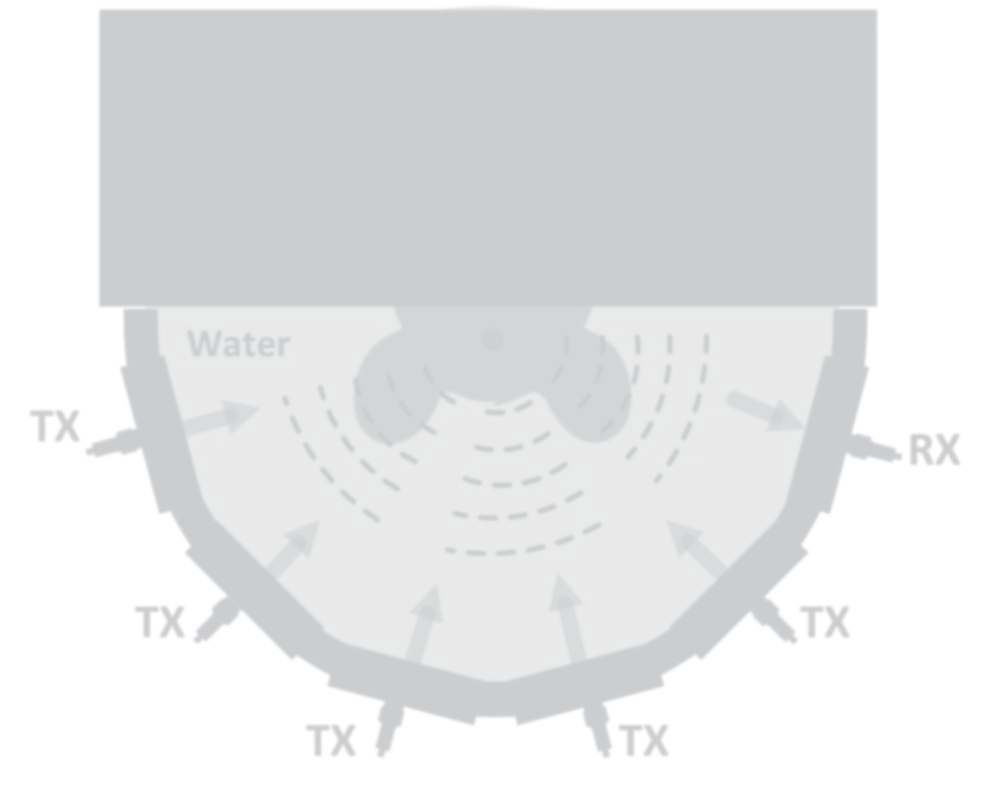
Scientists have found a way to crack the fortress gates. They built a device that sends focused ultrasound into the brain. Tiny gas bubbles are injected into the blood. The ultrasound makes them vibrate, and those vibrations push the barrier cells apart for a short time, just long enough for a drug to slip through.
The new device doesn't just open the barrier: it also listens to the echo from the bubbles. It's like a stethoscope for ultrasound: the doctor can hear when the bubbles arrive, when they leave, and how well the barrier has opened. Tests in rats showed the method is precise and safe. MRI confirmed that the barrier opened exactly where the ultrasound was aimed.
Now doctors have a tool that could one day deliver drugs straight to the brain — no incisions, no surgery. It's like opening the fortress door just long enough to hand over a package, then locking it again.
Original abstract
as written by the authors arXiv:2604.22666
Drug delivery to the brain is limited by the blood-brain barrier (BBB). We developed a capacitive micromachined ultrasonic transducer (CMUT)-based transcranial focused ultrasound system capable of both delivering therapy via BBB opening and monitoring microbubble activity across a broad frequency range. The performance of the geometrically focused half-ring array consisting of five transmitters and one receiving element was first assessed through simulations and in-vitro acoustic measurements with microbubbles. Use of phase-inversion (PI) during transmission effectively suppressed CMUT-generated harmonics and enhanced broadband detection of microbubble emissions. In rats, the same system achieved spatially localized BBB opening, confirmed by T1-weighted magnetic resonance imaging. BBB permeability mapping using dynamic contrast-enhanced magnetic resonance imaging (Ktrans) scaled with pressure. Time-resolved acoustic spectra captured microbubble arrival and decay kinetics, and 7-20dB enhancement in the effective dynamic range is observed with PI processing of acoustic emission signals. Together, these findings establish an integrated CMUT platform for combined therapeutic and sensing applications for BBB opening in small animal models, providing a foundation for future real-time, frequency-agile, closed-loop control of ultrasound-mediated drug delivery to the brain.
The ultrasound that opens the brain barrier has a frequency similar to that used for pregnancy scans, but it's far more focused.
In Star Trek, doctors use a hypospray to inject drugs without a needle — ultrasound delivery to the brain is a bit like that idea.