A Protein Builder with a Memory for Winning Moves express
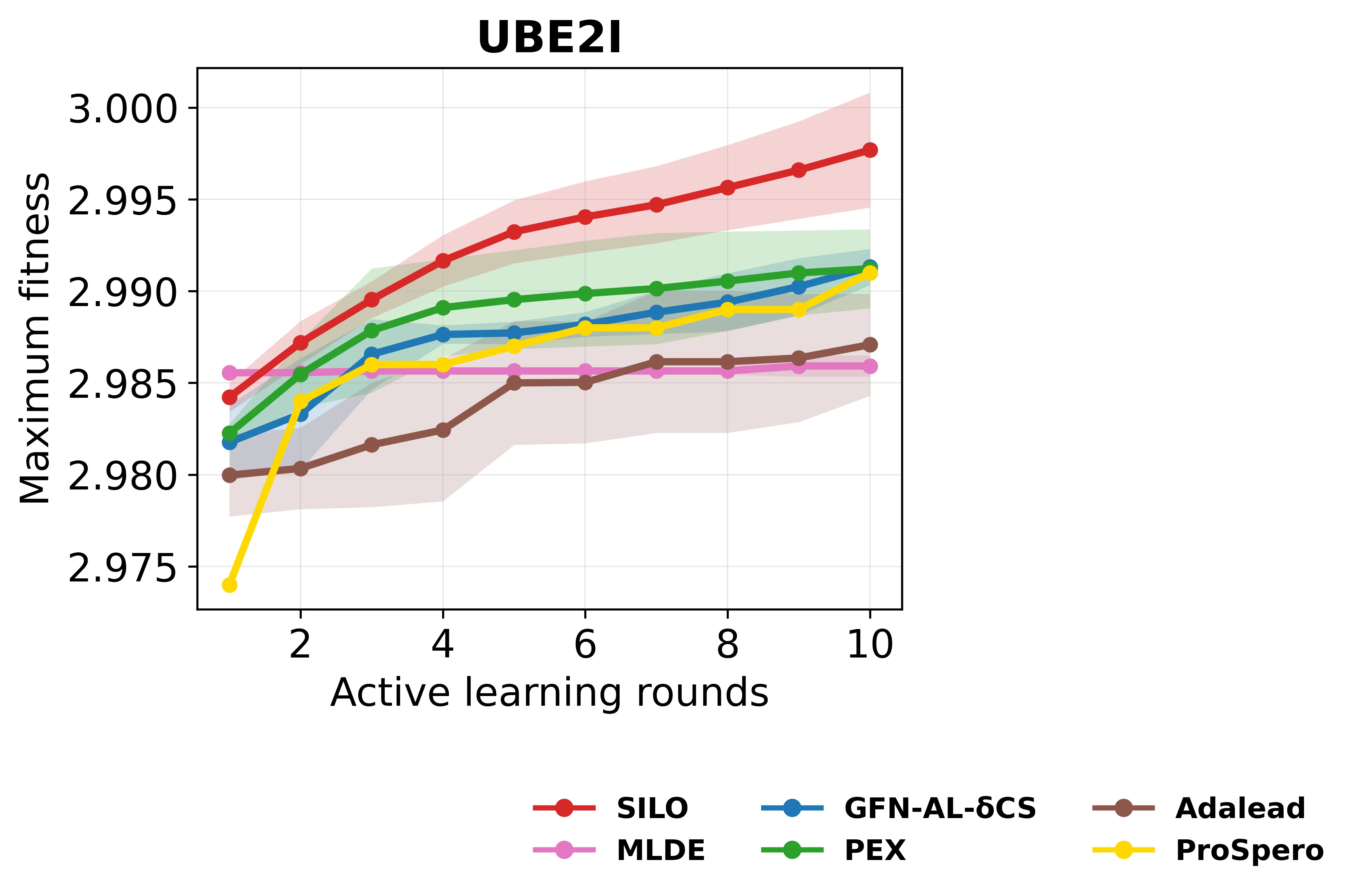
Improving a complex recipe is a delicate task, especially if you can only taste a few versions a day. Changing ingredients at random is risky: remove the salt or the baking powder, and you ruin the base. The same goes for proteins: random mutations often break vital parts, and each lab test costs time and money.
A new approach called SILO does it differently. It splits each change into two steps: first, it picks a position in the protein chain, then it decides which amino acid to place there. This is like repairing an engine: a mechanic doesn't replace all parts in a row but looks for the specific component that's failing and finds the right spare part. SILO also uses a clever trick — the "alanine test": it temporarily swaps the position with the simplest building block (alanine) to gauge how important that spot is for the protein's function. This way, the algorithm avoids touching critical regions.
During the search, SILO accumulates experience. Each round, it generates several variants, tests them in a computer model, and remembers the most successful ones. Then it learns to imitate those winning moves, without trying to predict the exact "score" of each change — such scores are often noisy and misleading. This approach is like a chef learning: instead of calculating the perfect oven temperature with formulas, he simply copies the head chef's moves when preparing the best version of the dish.
The takeaway is simple: to create an ideal protein, you don't need to try everything. Just remember your best moves and carefully avoid fragile spots — like a skilled craftsman who knows his tools and doesn't ruin the workpiece.
The alanine test used in SILO was invented back in the 1980s: biologists replaced amino acids with alanine one by one to find "hot spots" important for protein function. It's like checking which button in an elevator is broken by pressing them one at a time.