q-bio.QM q-bio.QM

106 articles

articles

Noise That Works for Us
An old aviation instrument sometimes sticks: the needle catches on the scale and doesn't move, even though the plane is already changing altitude. Engineers found a simple solution: add a slight vibration. The shaking doesn't hinder; on the contrary, it helps the needle break free and show the truth.
Chemical Physics2025-12-051 minarXiv:2512.06141express
A Quantum Accelerator for Drug Design
Drug design is like picking a lock: the drug molecule must fit precisely into the target protein. But the lock is submerged in water, and the fluid’s friction alters the fit. Classical calculations account for this by modeling the key dissolving into the solvent for hours per attempt.
q-bio.QM2026-01-101 minarXiv:2601.06360express
Prostate Cancer: A Look at the Tumor's Surroundings
A glass of water and a glass of jelly look the same but behave differently. So it is with prostate tissue: on a standard slide under a microscope, you can see both the tumor glands and the supporting connective tissue around them. Previously, pathologists focused only on the glands, treating the support as mere background.
q-bio.QM2026-01-152 minarXiv:2601.10202express
Seeing the Heart's Flicker in Two Mirrors at Once
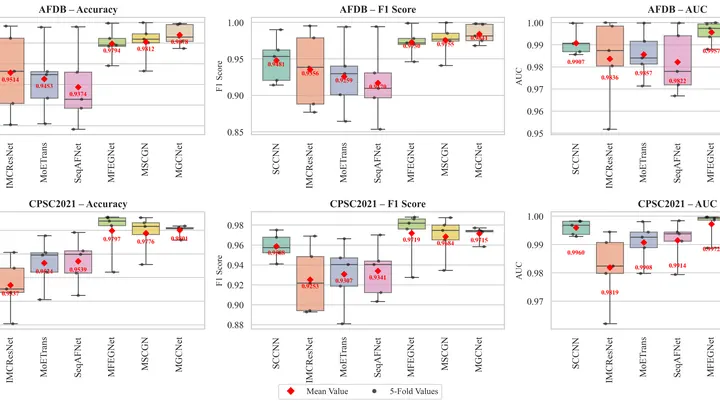
The heart doesn't beat like a metronome but like a jazz drummer: sometimes it stumbles, skips beats, or races. Atrial fibrillation is one of the most insidious glitches: the atria quiver instead of contracting, and blood can pool, forming clots. Doctors catch this glitch on an ECG — a recording of the heart's electrical signals.
A Map of Brain Aging
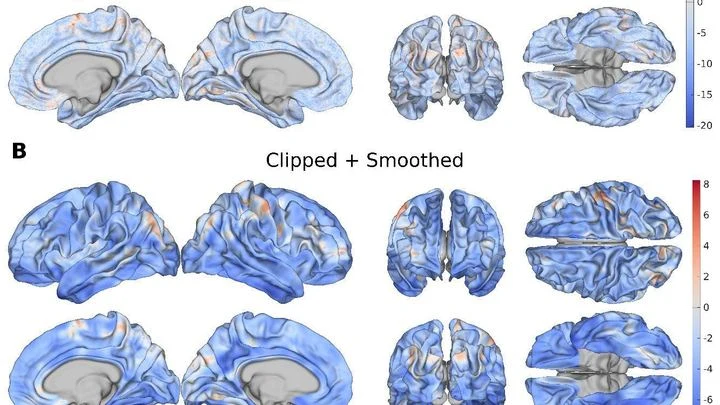
The cerebral cortex is like a crumpled sheet of paper: it has thickness, curves, and folds of varying depth. With age, this sheet changes unevenly — thinning in some places, losing the sharpness of its folds in others. Previously, doctors assessed brain age as a whole, as if looking at the sheet from a distance.
q-bio.QM2026-01-161 minarXiv:2601.11148express
How Blood Tells the Story of a Tumor
A drop of blood can reveal how a tumor in the lungs is behaving. Doctors have long noticed that when the disease retreats, some blood markers rise while others fall. But tying these changes into a single coherent picture has been elusive.
q-bio.QM2026-01-172 minarXiv:2601.12101express
Why DNA Loves Symmetry
In every cell lives a tireless scribe — an enzyme that copies the long thread of DNA. It moves along it like a read head over a tape, building a new strand alongside. It picks letters by strict rule: opposite A it always places T, opposite G it places C. But sometimes, very rarely, its hand trembles, and a different letter slips in.
Machine Learning2026-01-213 minarXiv:2601.15530express
Catching Alzheimer's Without a Poke
A detective is looking for a criminal in a file of mugshots, but the portraits are mixed up. Usually, they expect a man with a gray beard, but the culprit is young and clean-shaven. Similarly, doctors often fail to recognize Alzheimer's disease in those who show unusual symptoms — not memory loss, but problems with vision or speech.
Computer Vision2026-01-242 minarXiv:2601.17504express
Brain Tumor on Scans: Where Certainty Ends
Brain tissue on a scan looks like a stormy sky: bright patches, dark hollows, blurred edges. The tumor hides among these patterns, and the doctor needs to outline its contour to plan surgery or radiation. One MRI mode highlights edema, another the tumor core, a third dead areas.
q-bio.QM2026-01-251 minarXiv:2601.17669express
Kidney Cancer: Math Takes on the Tumor
A tumor in the kidney grows like a weed that has learned to hide from the gardener. The immune system, that very gardener, simply doesn't notice it. Doctors try different drugs, but each person's disease behaves differently. The authors made a computer replica of this battle.
q-bio.QM2026-02-131 minarXiv:2602.12730express
How to See the Hidden Shapes of Proteins
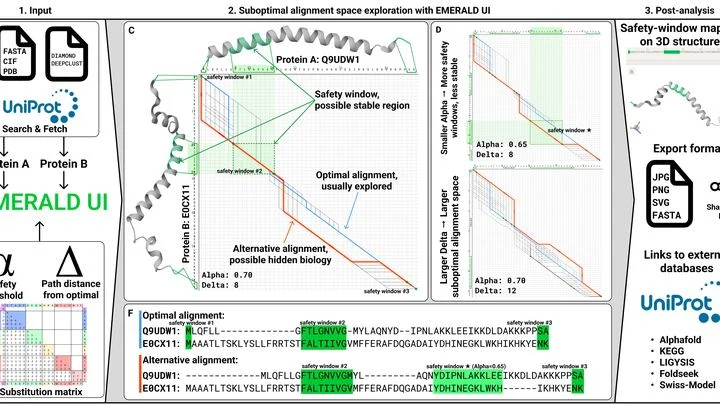
Proteins are the molecular machines of life. They fold into complex three-dimensional shapes, like a sheet of paper into origami. But if you fold the paper a bit differently, you get a different figure. Likewise, a protein can take on several forms, and that determines how it works. Usually, scientists compare proteins by their sequences — chains of amino acids.
q-bio.QM2026-02-132 minarXiv:2602.90004
Age in the blood: how stem cells count the years and give rise to leukemia
Every drop of blood hides founder cells that spend a lifetime churning out red blood cells, white blood cells, and platelets. With age, their work goes off the rails: immunity weakens, the risk of blood cancer rises. To see exactly how these cells deteriorate, scientists assembled an atlas of 186,000 blood stem cells from 28 healthy donors, from six weeks after conception to 74 years old.
Applied Statistics2026-02-211 minarXiv:2602.18727express
Seeing Molecules Without Cheat Sheets
Glowing spots on a dark background: that's what single-molecule images from MINFLUX look like. This microscope can reveal details smaller than five nanometers: roughly ten thousand times thinner than a human hair.
q-bio.QM2026-02-221 minarXiv:2602.19196express
The Hawk's Flight, Broken Down into Three Numbers
A hawk soars over a field, its wings tracing an intricate dance. Each flap, each tilt is not random but a combination of simple motions that can be broken down into components. Collective behavior in the air may seem intuitive, but behind it lies strict mechanics. Scientists recorded the hawks' movements using cameras that track the position of every point on the wing and tail.
q-bio.QM2026-02-221 minarXiv:2602.19295express
Two Mutant Brothers: Why One Gene Change Can Alter Lung Cancer's Fate
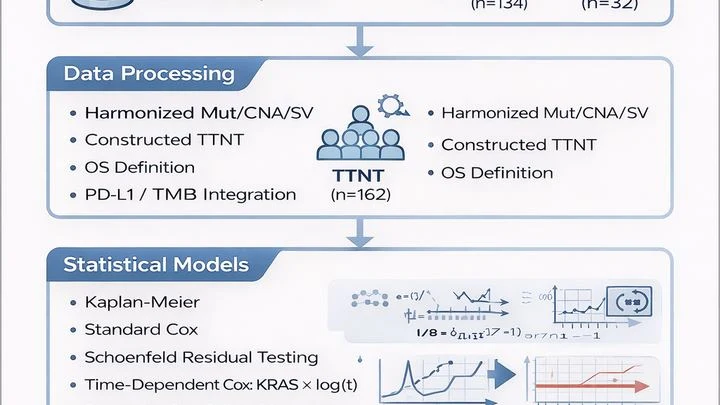
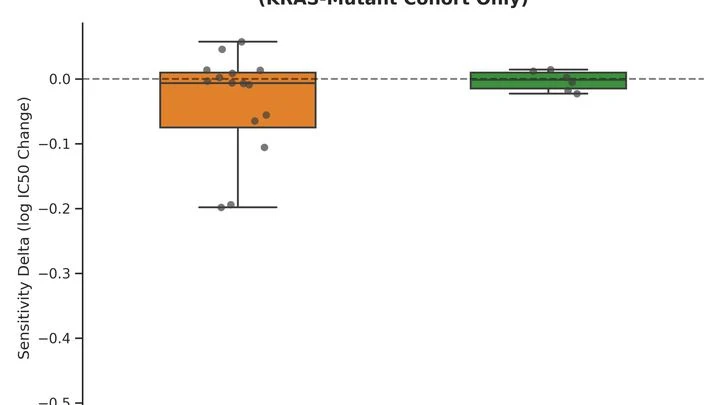
Cancer cells are like broken cars: one glitch makes them drive without stopping. In the KRAS gene, such glitches happen most often. But glitches come in different flavors: the wrong amino acid can sit in one spot of the protein, and that determines how the tumor behaves. In the new study, two such glitches were compared: G12C and G12D.
q-bio.QM2026-02-262 minarXiv:2602.23269express
Training Neural Networks on Less, but Smarter
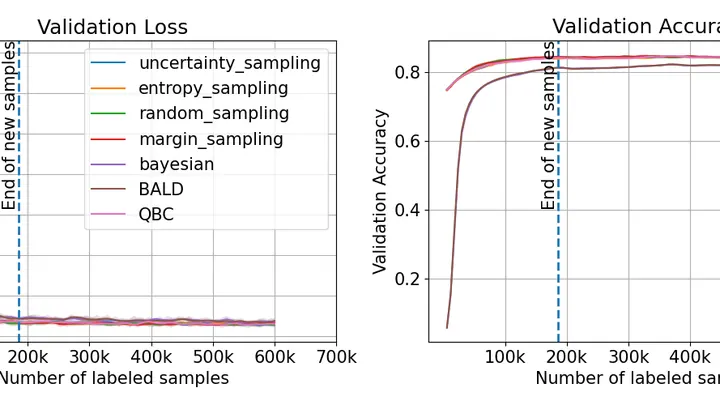
Proteins in nature are as numerous as grains of sand on a beach, and each has its own job: some break down food, others build cells. But to understand what a specific protein does, it must be studied in the lab — a slow and expensive process.
Biological Physics2026-02-261 minarXiv:2602.23324express
Bacteria Choose Jerky Moves, Not Smooth Sailing
A bacterium in a drop of water is looking for food. Around it, there's a chemical gradient: more food molecules on one side, fewer on the other. How should it move to reach the tasty spot fastest? It could steer smoothly, like a cyclist dodging a puddle. Or, like a bacterium, it could periodically stop, tumble, and swim off in a random direction.
Chemical Physics2026-02-281 minarXiv:2603.00614express
Chemical Space as a Construction Set
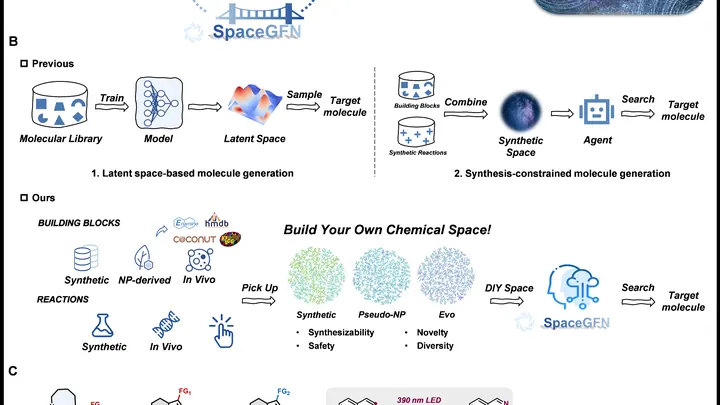
Previously, generative models for drug discovery worked like an artist painting without choosing a canvas. They learned from existing molecules and simply produced similar ones, without considering how the space of possible compounds is organized. SpaceGFN changes the approach: now chemical space is a construction set where the user specifies the parts and the assembly rules.
q-bio.QM2026-02-281 minarXiv:2603.00678express
Genetic Precision Without Stability
You can edit a cell perfectly, and it still turns out useless. The gene is fixed exactly as planned, yet the cell behaves unpredictably: it drifts, changes fate, loses safety. It's like fixing one gear in a watch, but the watch still runs wrong because the whole mechanism is out of sync. Previously, a cell was viewed as a list of independent parts.
Dynamical Systems2026-02-281 minarXiv:2603.00709express
How to Pick the Best Model Without Reading Tea Leaves
To understand a mechanism, you have to poke it. A child taking apart an alarm clock doesn't just stare at the gears: they turn the wheel and listen to how the ticking changes. Scientists do the same: instead of passive observation, they feed specially chosen signals into the system and watch the response.
q-bio.QM2026-03-011 minarXiv:2603.02274express
Inside the Cell: How Cancer Dodges the Drug
A cancer cell is like a stubborn lock that changes its keys as you try to pick it. The drug acts as a lockpick, but the cell quickly finds a way to keep it out. In a new study, scientists built a computer model that mimics how cancer cells behave with various genetic glitches.
q-bio.QM2026-03-041 minarXiv:2603.04074express
Prenatal Hormone Dose Alters Children's Heart Rhythm
A child's heart, even before birth, already listens to chemical signals from the mother. When mothers are given the hormonal drug betamethasone to help the fetus's lungs mature early, this signal can leave a lasting mark on the heart rhythm for years to come.
q-bio.QM2026-03-062 minarXiv:2603.06087express
How a Tumor Grows Back After an Electric Shock
A lightning bolt strikes an anthill. Some ants die instantly, some freeze, and a few days later the survivors start rebuilding the tunnels. That's roughly how a tumor behaves after electroporation — a method where short electric pulses are passed through tissue to poke holes in cancer cell membranes and kill them.
Gait as a Mirror of Health
Gait is not just a way to get from point A to point B. Each step, arm swing, and torso tilt is like a signature the body leaves in space. Doctors have long noticed that disease alters gait, but they considered it merely a symptom of a specific problem: if you limp, your leg hurts. Now it turns out that gait is a whole book about health, and you can read it with an ordinary camera.
Machine Learning2026-03-272 minarXiv:2603.26994express
How T Cells Recognize the Enemy: A New Look at the Immune Passport
When a virus enters the body or a cancer cell appears, T cells, the immune system's fighters, take the stage. Each T cell has its own receptor, a lock-like molecule that searches for the right key: a piece of protein (peptide) on the surface of the diseased cell. If the key fits, the T cell activates and destroys the enemy.
q-bio.QM2026-03-271 minarXiv:2603.27017express
Your Smartphone Instead of an X-Ray: How a Photo of Your Body Predicts Health
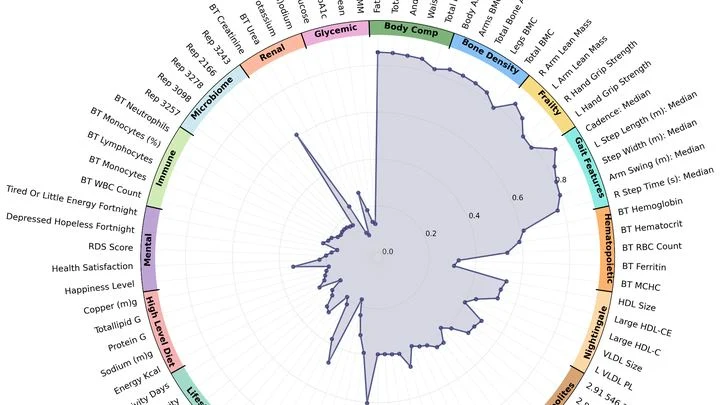
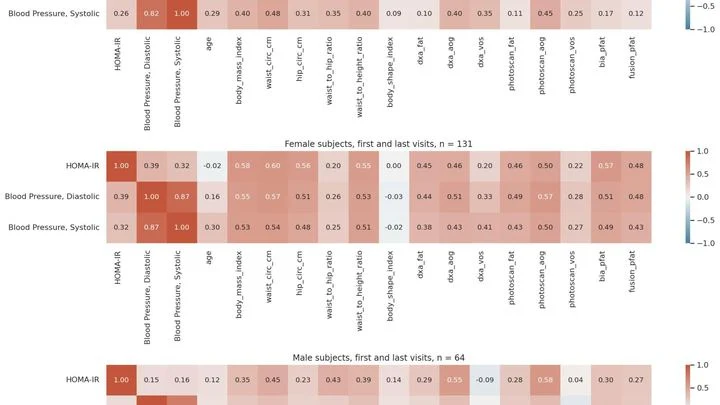
The scale tells you your weight, but it's silent about where those pounds sit — in muscle or belly fat. And it's the fat tucked deep inside, around your organs, that's most often linked to heart disease and diabetes. Previously, you could only see it with an expensive scanner at a clinic. Now, a smartphone is all you need.
q-bio.QM2026-03-292 minarXiv:2603.27484express
Seeing the Flow Inside a Living Cell
A living cell is like a bustling city: cargo moves continuously along its streets, and traffic flows are regulated so that everything needed arrives on time. But while you can watch a city from a helicopter, the cell's interior has long been observable only through a narrow slit — the microscope showed just a flat picture.
q-bio.QM2026-03-302 minarXiv:2603.90001
The Translator That Learned Every Dialect of Aging
A translator who gets distracted by every rustle in the room turns an hour-long meeting into two. That is how aging clocks used to work: each tool understood only one "dialect" of biodata. One read chemical tags on DNA (methylation), another read proteins in the blood, a third read the doctor's notes.
Body Map: How a Routine Tissue Image Reveals Genes
A pathologist stains a tissue section with hematoxylin and eosin — cells turn blue and pink, and under the microscope you can see their shape and arrangement. But which genes are active in each cell cannot be read from such an image. That requires a separate, expensive assay that reveals the activity of thousands of genes at once, but it is rarely performed.
Applied Statistics2026-04-051 minarXiv:2604.03952express
Grip Strength, Breathing, and Running: Three Shields Against Dementia
Brain aging is like the wear and tear on a bridge: cracks appear unnoticed, but if you reinforce the supports in time, the structure lasts longer. Three ordinary things turned out to be such supports — handgrip strength, the ability to move for a long time without breathlessness, and lung capacity.
Machine Learning2026-04-051 minarXiv:2604.04239express
Survival Prediction: Accuracy Isn't Confidence
A weather forecaster might correctly predict rain every day, but when he says "70% chance of precipitation," it actually rains only 30% of the time. His forecasts are useful, but the numbers can't be trusted. The same happens with models that predict cancer survival from tissue images and genetic data. Researchers tested 14 such models on data from five cancer types.
q-bio.QM2026-04-111 minarXiv:2604.11824express
Biological Physics2026-04-121 minarXiv:2604.10476express
Why a Mouse Runs Hotter Than an Elephant
The heart doesn't push blood in a steady stream but in pulses. Each beat sends a wave racing through the arteries, like ripples along a taut garden hose. For a long time, it was thought that an animal's metabolic rate depended only on how vessels branch, like pipes in a house. But new work flips that view: what matters isn't the shape of the pipes but the pulse itself.
q-bio.QM2026-04-142 minarXiv:2604.12671express
Stress Under the Skin: How the Body Betrays Anxiety
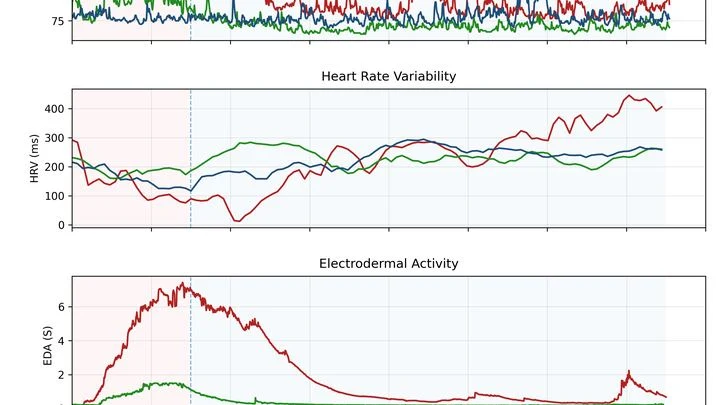
Six adults came to the lab on three consecutive days. On one day they simply rested, on another they pedaled a bike to exhaustion, and on the third they went through an ordeal that makes the heart race without a single movement: they had to give a speech and solve problems in front of a stern committee.
q-bio.QM2026-04-172 minarXiv:2604.16642express
Cells Huddle Together or Scatter
An orchestra without a conductor. Each musician plays their own part, and the overall volume builds, but the melody falls apart — violins rush ahead, brass lags behind. Cells behave much the same way when their DNA is modified: they may shift, but some move far, while others stay put.
q-bio.QM2026-04-182 minarXiv:2604.18634express
The Heart as a Map: Topology Reveals Hidden Patterns in Cardiac Rhythm
Each heartbeat can be drawn as a point on a sheet of paper. Thousands of these points merge into a cloud. The Mapper algorithm turns this cloud into a network: it connects points that behave similarly and colors them according to blood flow strength. The result is not just a pile of numbers but a colored map showing which parts of the heart work in sync and which are out of step.
q-bio.QM2026-04-212 minarXiv:2604.19563express
Why DNA Copies Itself in a Wasteful Way
If you write down a protein recipe on a piece of paper and send it to a print shop, a typo in a single letter can ruin the whole batch.
Computer Vision2026-04-231 minarXiv:2604.21573express
Histology Predicts Genes
A microscopic image of tissue is like a city map: streets, houses, parks. An experienced eye can tell a lot about a neighborhood from such a map. But what if you could predict from the map which houses are noisy today and which are quiet?
q-bio.QM2026-04-231 minarXiv:2604.21988express
How a Shell Builds Itself
Every shell is a stone diary of growth. The mollusk doesn't build it from a blueprint like an architect; it simply adds material along the edge, following the same rule over and over. It's as if a snail glued a new strip to its house each day, nudging it slightly sideways and making it a bit bigger. It's this repetition, not complex control, that creates the species' characteristic shape.