A protein language model is a type of machine learning model trained on large datasets of protein sequences, analogous to how language models are trained on text. These models learn the statistical patterns and relationships between amino acids in proteins, capturing evolutionary and structural constraints. Once trained, they can be used to predict protein structure, function, and interactions, as well as to design novel proteins with desired properties.
History
The concept gained prominence in the late 2010s and early 2020s, with models like ProtBERT and ESM (Evolutionary Scale Modeling) from Meta AI, building on advances in natural language processing.
How it works
The model is typically a deep neural network, often based on transformer architectures, that processes protein sequences as 'sentences' of amino acids. During training, it learns to predict masked or missing amino acids based on the surrounding context, similar to how a language model predicts missing words. This forces the model to internalize the complex dependencies between amino acids, which reflect the physical and evolutionary rules governing protein folding and function. After training, the model's internal representations can be used for downstream tasks like structure prediction or protein design.
In practice
It is used in drug discovery, enzyme engineering, and synthetic biology to predict protein structures and design new proteins with specific functions, such as enzymes for industrial processes or therapeutic antibodies.
Fun fact
Protein language models have been shown to learn evolutionary information without being explicitly trained on evolutionary data, simply by observing the patterns in existing protein sequences.
Four old maps were lying in different desk drawers. Each one marked genes linked to cellular aging, but the maps did not match: different names, different scales, different legends. A scientist hunting for a gene to test had to cross-check them by hand, at the risk of missing an important mark.
SenSASP stitched those maps into one.
In a hall of mirrors, a person walks up to a curved mirror and sees themselves now as a dwarf, now as a giant. Popular machine learning models behave in much the same way when asked to guess biological age from blood tests or brain scans: they stretch age at the extremes, underestimating it in older people and overestimating it in younger ones.
A stain is found at a crime scene. The expert takes a swab, and a few hours later the instrument outputs a list of proteins that made up the fluid. Previously, a rapid test could be wrong if multiple fluids were present: blood mixed with saliva, and the strip gave a false result.
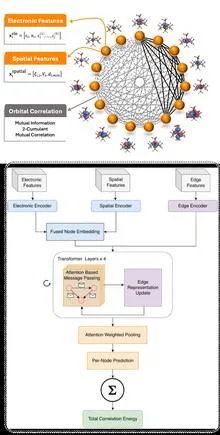
A cartographer who draws not mountains and rivers but invisible bonds between electrons: that's one way to describe the new neural network. Instead of atomic coordinates, it takes molecular orbitals and draws a graph where nodes are orbitals and edges are measures of their quantum entanglement.
A radiologist looks at an abdominal scan and sees not just organs but their spatial relationships: which kidney is larger, where the tumor lies relative to a vessel. It's like reading a map, where it's not enough to know where a city usually stands; you also need to measure the distance between two points on the ground.
In the Antarctic ice, a ghost particle leaves behind only a faint flash of blue light. The IceCube detector captures these flashes, and from them we need to infer where the particle came from. The PolarBERT model has learned to do this, but what exactly it sees inside has remained a mystery.
A protein in a cell doesn't hang motionless like a mannequin in a store window. Its atoms are constantly jiggling, stretching, and bending, like a plucked guitar string that keeps vibrating after you strum it. To understand how a protein works, you need to know how tightly each part holds onto its neighbors.
A protein engineer is like a chef trying to make a dish that is tasty, healthy, and cheap all at once. Change one ingredient, and you risk ruining another. In the past, computer assistants could only evaluate protein properties one at a time, missing how they are connected.
An interpreter gets distracted by every rustle in the hall, and a one-hour meeting stretches into two. Similarly, molecular foundation models learn the language of molecules from vast corpora, but each new conversation requires fine-tuning. Monroe changes the rules: it doesn't learn a new language but instantly finds common meaning from a few examples.
A protein is like a tiny machine that switches on and off on command. The command arrives when another molecule sticks to it, like a key in a lock. The protein then changes shape and passes the signal along. But exactly how the signal travels inside the protein has long been a mystery.
A perovskite solar cell is like a young athlete: it performs brilliantly at first, but tires with age. Over eight hours, its performance drops noticeably, with no visible cause like cracks or dust. Scientists took one cell and recorded its performance at 0, 90, 280, and 480 minutes of its life.
As you slowly turn the tuning knob of an old radio, the sound doesn't fade in gradually from the static: it bursts forth in a sudden jump, the moment the antenna hits resonance with the wave. Genes in a living cell behave much the same way.
Inside every cell, things are constantly meeting and parting. Some pairs hold tight, like Velcro, while others barely touch, like pollen on the wind. These fleeting touches, where the binding strength is comparable to a grain of salt dissolving in a glass of water, govern many of the cell's signals and decisions.
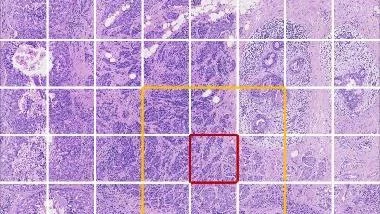
A huge orchestra without a conductor. Each musician is a gene, and the melody is the cell's complex work. Previously, looking at a tissue photo, a computer tried to guess each instrument's part individually. It didn't know that violins usually play with violas, and trumpets with trombones. The program just output a list of notes, without sensing the harmony.
A protein in a cell is not a rigid part but rather a soft glove that can grasp different objects. Until now, protein designers worked like sculptors, crafting a key for a single lock: one target, one shape. But life is more complex: sometimes a protein needs to recognize two different viruses at once or change its contours depending on its neighbors.
A bacterial biofilm is like a city made of slime. The houses are the microbes themselves. The streets and bridges are long polymer molecules that bacteria secrete outside. This whole construction is not static: the bridges are constantly breaking and re-forming.
The authors built a "toy" computer model of such a city.
A protein slides along the DNA strand like a key along a keyring, searching for its lock. One wrong turn and a gene stays switched off. To know where a protein will grip firmly, you need to measure the strength of that grip — the binding energy.
By 2025, large language models like GPT are no longer just chatting: they're helping scientists run experiments. But the same tool could fall into the wrong hands. A team of researchers built a digital proving ground to find out.
Imagine a vast library where every book is a precise instruction manual for assembling one protein molecule. AlphaFold2 read millions of such books and learned to instantly produce a ready-made 3D model. But inside this network, in its very 'brain,' something more remained — not just assembly rules, but an entire atlas of possible protein motions, its hidden life.
Ordinary AI looks at medical images like puzzles made of unfamiliar pieces: it considers any two unmatched pictures completely different. It's like trying to tell twins apart without knowing they're related. In medicine, however, patients with the same condition look nearly identical on MRI, and the algorithm mistakes 'relatives'.
An AI predicting room acoustics is like a student taking an exam with a cheat sheet. If the test points are the same as the training ones, the model simply memorizes the acoustic 'fingerprint' of each position — like a student recognizing a question by the dog-eared corner.
Models that turn text into audio are good at recreating single sounds, but get confused when the script has several in a row. For example, the script might call for a ring, then footsteps, then a door slam. The generator might shuffle events, so the listener hears footsteps before the ring.
Automatic speech judges are algorithms that evaluate pronunciation and emotions. However, they often work like a food critic who delivers a verdict after reading the menu but not tasting the dish.
You're standing in the shower: you turn the tap, and the water is either freezing or scalding. The pipes have a mind of their own — the pressure jumps unpredictably. The new controller learns on the go: it doesn't know the plumbing layout, but within minutes it adapts and gently guides the temperature to comfort, without breaching safety limits.
The modern standard approach to AI training is like a child locked in a library: he remembers millions of books but doesn't know that fire burns and falling hurts.
The brain communicates in short electrical clicks. Previously, to learn this language, thousands of examples with translations from the experimenter were needed. MOJO takes a different path: like learning a language through immersion, it first listens to the 'stream of consciousness' without any hints and finds recurring patterns on its own.
In a soup pot, you only need two thermometers to gauge the temperature everywhere — if you know heat travels in circles from the bottom. Science works the same way: from a handful of measurements, you want to reconstruct the full heat picture.
The system captures the gist of heat flow, compressing it into a handful of governing numbers.
The cells of an organism are like twin chefs sharing a kitchen. They have the same cookbook (DNA), but when copying the recipe to a cheat sheet and assembling the dish, random errors occur. This unpredictability, entropy, means that in identical cells, protein levels are sometimes high, sometimes low.
A driver on a slippery road doesn't know exactly how the car will respond to the steering wheel, and learns on the go, leaving room for error. A smart control algorithm behaves in a similar way.
Assessing image quality is a job for a meticulous inspector with a toolbox. The IQA-T1 neural network acts exactly like that: it doesn't just stare at the picture, but applies either a spectroscope or a light meter.
A sound signal is conveniently represented as a complex number: its modulus (amplitude) reflects loudness, while its argument (phase) indicates the wave's position in time: its instantaneous shift.
Traditionally, machine learning algorithms operate in a static environment, like water flowing along a pre-cut channel without changing its shape. The new method flips this paradigm: it lets an agent simultaneously master actions and deliberately modify the very environment it inhabits.
In a noisy room, a person picks out a desired voice thanks to two ears capturing the difference in sound arrival. A computer with several microphones does the same: it gets spatial cues — where each voice is coming from.
Previously, these cues were used to focus on one direction, like a flashlight beam.
Cooking a complex dish requires a clear recipe: first chop, then sauté, add spices at just the right moment. Chemical transformations also follow step-by-step recipes — mechanisms where atoms of carbon and hydrogen rearrange in a strict order.
Previously, neural networks often invented nonexistent steps, like a whimsical cook swapping salt for sugar.
Power systems with solar panels and wind turbines are like a chess game: cloud cover and load changes are the opponent's moves, impossible to foresee. To maintain balance, operators used to run through dozens of scenarios (uncertainty) — that took too much time and computing power.
When you type 'salad' and the keyboard suggests 'Caesar,' behind the scenes millions of phones are jointly learning to predict words. They share not your messages, but only improvements to the common algorithm, like a coach who sends athletes only the tweaks to the plan: 'add 5 push-ups to yesterday’s routine.' Information entropy helps send only unexpected, valuable updates.
A neural network that generates sounds from text is like a kitchen where dozens of chefs prepare each 'dish.' Many just get in the way — sending false signals and wasting resources.
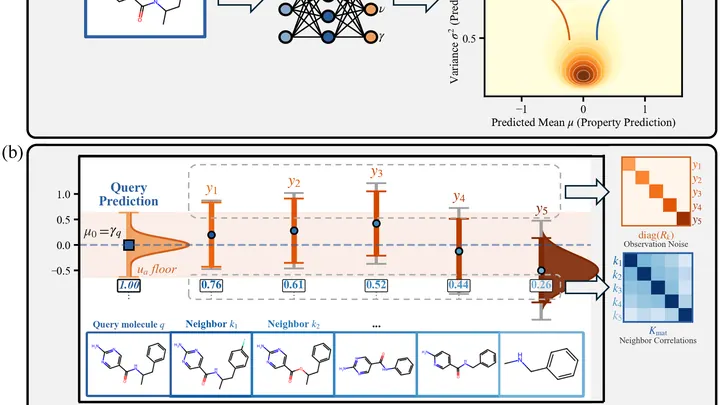
Predicting the properties of a new molecule is like guessing the flavor of an unfamiliar dish. The program works like an experienced chef: it “tastes” similar molecules whose properties are already known, and based on their “flavor,” it refines its guess.