The Score of Reproduction: Why Species Give Birth at Certain Ages
An orchestra plays a score in which every note is the birth of offspring at a particular age. In some species the notes cluster into a short phrase; in others they stretch across an entire lifetime. The rhythm of that distribution can be calculated from life tables.
Scientists took tables that list, for each age, the chances of surviving and the number of offspring born. From these tables they derived a quantity: evolutionary entropy. It measures how evenly reproduction is spread across ages. If a species gives birth at one and the same age, entropy is low; if its reproductive effort is smeared over decades, entropy is high. It turned out that entropy does not depend on how fecund a species is or how long it lives, only on the shape of the distribution.
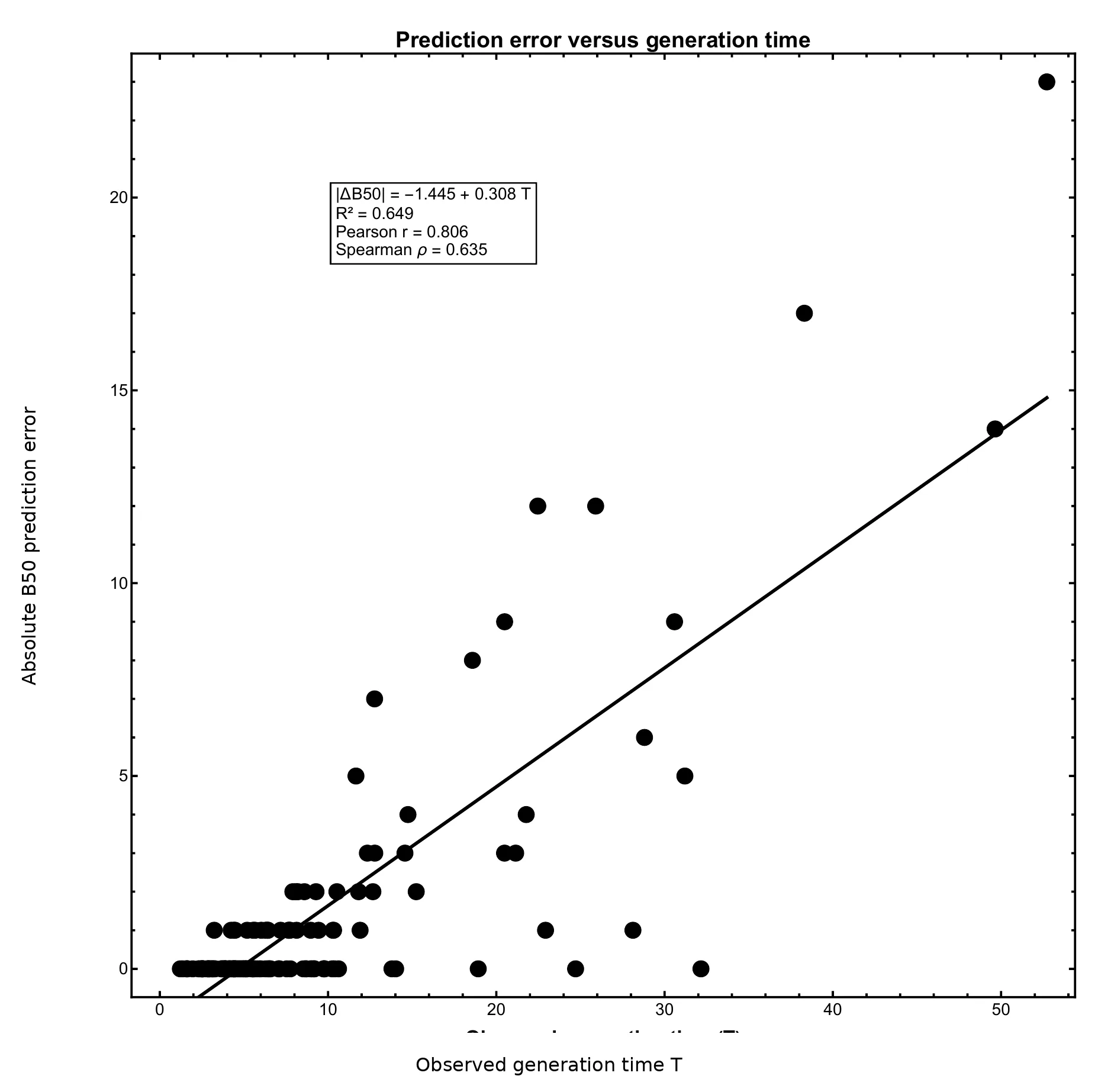
A test on 130 animal species showed strong agreement: in 85.8% of species, the predicted and observed reproductive medians matched to within two age classes. This means that the score of reproduction in most species is tuned to maximum entropy. Now, from demographic tables alone, one can assess a species' reproductive strategy without spending years on field observations.
Among the species analyzed was the beluga sturgeon (Huso huso), one of the longest-lived fish, whose predicted reproductive median deviated by 23 age classes, the largest spread in the sample.
The idea that the distribution of reproductive contributions can be described by entropy echoes the concept of "demographic pressure" in Ursula K. Le Guin's novel The Dispossessed, where a society deliberately regulates reproduction to maintain equilibrium.