Neurons Reveal Their Secrets in Minutes, Not Hours express
A neuron is like a complex musical instrument. To understand how it responds to a touch, you used to have to connect to each string directly — a delicate, slow procedure that only works for individual cells. Microelectrode arrays (grids of hundreds of sensors) listen to the whole orchestra at once, but deciphering which instrument is playing from the collective hum was a long-standing challenge.
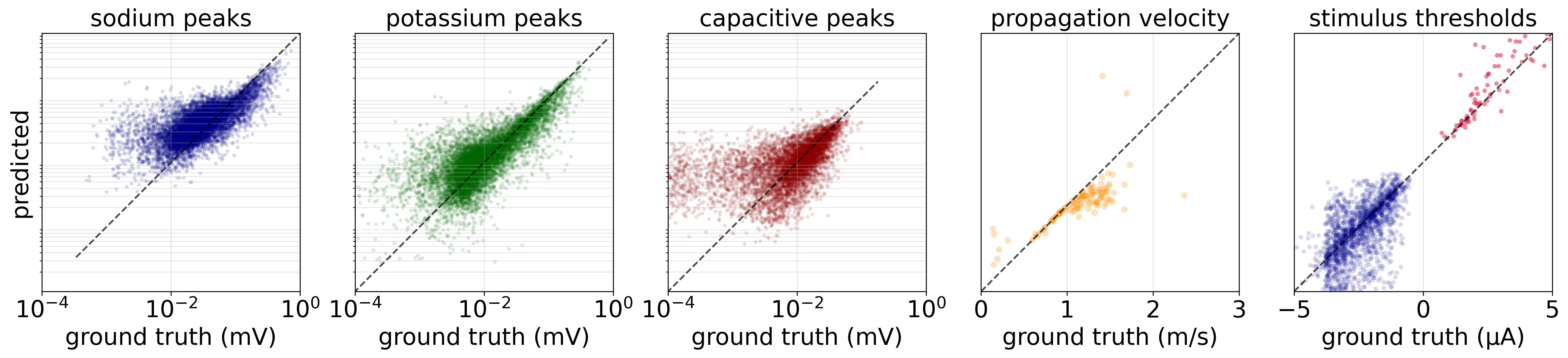
A team of researchers has created a "translator" that tunes a virtual copy of a neuron, a Hodgkin–Huxley model, from a short recording made with such an array. For testing, they used a macaque retina and an array of 512 electrodes with a 30-micrometer pitch. The model, trained in just a few minutes, predicted responses to new stimuli with 90.6% accuracy.
This approach replaces the lengthy trial-and-error of parameter fitting. Instead of blindly testing dozens of stimulation patterns, a clinician or researcher gets a ready-made prediction. It's like tuning a radio: rather than slowly turning the dial, you enter the frequency and get a clear signal.
Looking ahead, this method could help fine-tune neuroimplants — devices that restore vision or hearing. Instead of tedious patient testing, one could quickly compute the optimal stimulation pattern for each electrode.
The 512-electrode array used in the experiment has a 30-micrometer pitch — about half the thickness of a human hair.