Biological rhythm modeling uses stochastic (random) differential equations to describe the timing of processes in living systems, from the beating of heart cells to circadian cycles and neural firing. These models account for the inherent noise in biological systems—molecular fluctuations, random environmental inputs, and cellular variability—which can significantly affect the regularity and stability of rhythms. The goal is to predict how rhythms emerge, persist, or break down under different conditions, such as disease or external stimuli.
History
Stochastic modeling of biological rhythms dates back to the 1960s, with early work by Gerhart and others on noise in neural firing. The field gained momentum with the development of stochastic simulation algorithms by Gillespie in the 1970s, which allowed detailed modeling of biochemical reactions.
How it works
The core idea is to treat biological oscillators as dynamical systems driven by both deterministic forces (e.g., feedback loops in gene regulation) and random perturbations (noise). Mathematically, this is often done using Langevin equations or master equations, which describe how the probability distribution of a system's state evolves over time. For example, a cardiac cell's electrical activity can be modeled as a relaxation oscillator with noise, where the noise can cause variability in the timing of heartbeats. By analyzing these models, researchers can compute quantities like the period, phase, and stability of rhythms, and how they respond to external forcing.
In practice
These models are used in medicine to understand cardiac arrhythmias, in chronobiology to study jet lag and shift work, and in synthetic biology to design genetic circuits with desired oscillatory behavior.
Fun fact
The human heart's rhythm is so noisy that the time between consecutive heartbeats can vary by tens of milliseconds even at rest, and this variability is actually a sign of health—reduced variability is associated with increased risk of cardiac events.
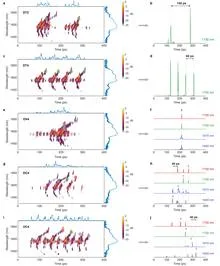
A conductor raises the baton, and the orchestra produces not just sound but a complex score: each note sounds at its own moment, at its own pitch, with the right volume. Light can also be a score, if you control its spectrum and timing. Previously, this required bulky setups that could not be reconfigured after assembly.
In a hall of mirrors, a person walks up to a curved mirror and sees themselves now as a dwarf, now as a giant. Popular machine learning models behave in much the same way when asked to guess biological age from blood tests or brain scans: they stretch age at the extremes, underestimating it in older people and overestimating it in younger ones.
In an aquarium the size of a dining table, two schools of black neon tetras swim in adjacent compartments separated by a transparent wall. They cannot touch each other, but they see every movement. And here's the surprising part: when one school decides to turn left, the other does the same a moment later. It's like two pendulums hanging behind glass, starting to swing in rhythm.
Inside the wall of every artery, a concert plays without pause. Smooth muscle cells, which line the vessel from within, simultaneously build a supporting scaffold of collagen, remodel their own internal skeleton and extract energy from glucose. Conducting this orchestra is the NOTCH3 protein, which sits on the cell surface and catches signals from its neighbors.
A clot grows like a snowball rolling down a mountain: small at first, it picks up new layers, and predicting when it will turn into an avalanche is tricky. In the blood, a long chain of reactions, the coagulation cascade, unfolds, where one substance activates another, and the clot gains mass.
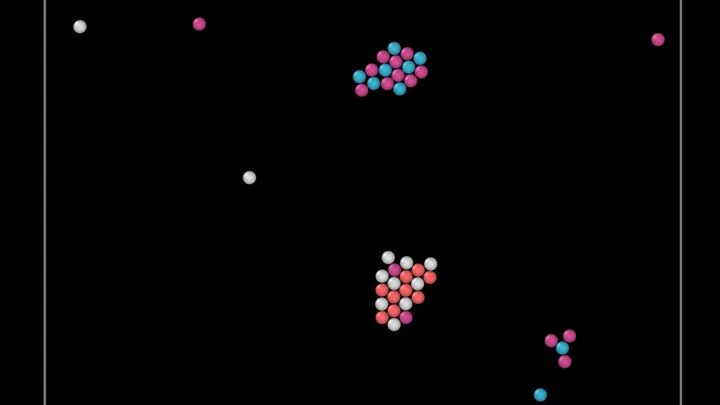
A cluster of glowing dots drifts through the darkness, now compressing into islands, now spreading out in waves. These are not fish or birds: this is a mathematical model of active matter, where each particle spends its own energy on movement, and also is born, dies, and competes with neighbors for space.
A drop of water on glass trembles and shimmers: it seems to have a life of its own. Similar behavior can now be observed in the world of colloids: tiny particles suspended in a liquid. Researchers simulated particles that emit chemical signals. These signals, like scents in the air, spread around and cause neighbors to either draw closer or move apart.
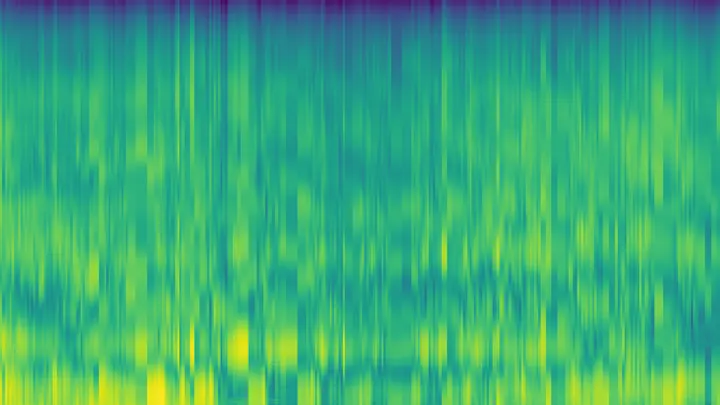
In any complex community, whether an orchestra or a colony of microbes, you can notice a rhythm. In the mouse gut, bacteria change their abundance every day, and for a long time it seemed they were syncing their internal clocks with the host's. But when researchers looked closely at hourly measurements, the familiar picture fell apart.
A mosquito swarm resembles a living cloud — hundreds of bodies circle together, but no one lines up or mimics a neighbor's movements like starlings or fish. For a long time, it was unclear what held such unity together. The authors of a new study suggested that the insects communicate by sound.
A stadium packed with fans hears the announcer’s voice for the first time, and instantly the whole place erupts. The message sounds again and again. Only a handful of people in nearby rows respond. That’s roughly how neural networks behave in brain organoids — tiny lab-grown replicas of the brain.
A bacterial biofilm is like a city made of slime. The houses are the microbes themselves. The streets and bridges are long polymer molecules that bacteria secrete outside. This whole construction is not static: the bridges are constantly breaking and re-forming.
The authors built a "toy" computer model of such a city.
The cells of an organism are like twin chefs sharing a kitchen. They have the same cookbook (DNA), but when copying the recipe to a cheat sheet and assembling the dish, random errors occur. This unpredictability, entropy, means that in identical cells, protein levels are sometimes high, sometimes low.
Every tumor writes its own cosmology. Its cells are galaxies, and mutations are stellar flares marking the branches of a genealogical tree. The key to its history is the rhythm of accumulating genetic typos.
In the microscopic world, noise, random fluctuations, usually destroys fragile quantum states, much like ripples on water break the reflection in a puddle. However, in some systems, collective, coordinated noise from many particles produces the opposite effect: a stable unidirectional flow emerges.
A neuron is like a complex musical instrument. To understand how it responds to a touch, you used to have to connect to each string directly — a delicate, slow procedure that only works for individual cells.
In embryonic development, a cell resembles a musician in a vast orchestra: it must play its part, following a conductor — the gradient of signaling molecules. But the conductor is unreliable: morphogen concentrations constantly fluctuate. How then does a cellist not veer into a violin melody?
Imagine a book being simultaneously copied by trillions of scribes. As long as most of them check against the original, the narrative remains meaningful. But once control weakens, the text accumulates typos, which multiply until the manuscript turns into gibberish.
The heart doesn't beat like a metronome: its rhythm dances to the time of day. Each of us has a moment when our pulse hits its peak. This peak is like the hand of an internal clock, and it shifts from person to person.
But what moves that hand? Researchers gave people smartwatches and tracked them for nearly a month.
A neuron resembles an electrical circuit with batteries and variable resistors. The resistors are played by ion channels — protein pores in the membrane that open and close, letting charged particles through. Whether a nerve impulse fires depends on how fast and at what voltage these pores operate.
A living sheet of cells resembles a crowd on an escalator. In a calm state, everyone moves smoothly, but as soon as a crush occurs, movement comes to a halt. Similarly, cell layers under load can suddenly stiffen, turning from a pliable mass into an elastic scaffold.
Population growth from a distance looks like a train picking up speed: it crawls at first, then gains momentum. But look closely at the data, and the picture blurs. One measurement shows a dozen individuals, another a hundred. Classical models wipe away this scatter like annoying smudges on a lens. They assume the noise is uniform and simply ignore it.
When the conductor leaves the orchestra, the musicians keep playing from memory for a while. But without a unified rhythm, each one starts to speed up or slow down on their own, and the harmonious symphony turns into disjointed noise. According to new research, the brain and heart behave much the same way in the last hours of a person's life.
A cell crawls over a gel (sometimes viscous, sometimes elastic) and decides on its own when to speed up. It doesn't just glide: its internal chemical motor (noise in gene expression can affect the production of 'fuel') pushes the leading edge, while the rear detaches from the substrate.
A drop of ink in a glass of water spreads quickly and evenly. But if the water is squeezed between tightly packed spheres, the ink cloud crawls slowly and erratically: it dodges obstacles and gets stuck in narrow necks. Water molecules in living tissue move in much the same way.
An orchestra plays without a conductor. Each musician has a score: that's the genes. But the volume and tempo depend on the acoustics of the hall, the mood, and the neighbors on stage. That's roughly how heredity and daily life together shape a teenager's behavior.
After a heart attack, the dead section of heart muscle can be replaced with living cells grown from stem cells. But a common problem arises: the fresh transplant starts acting as its own pacemaker, and the heart falls out of its proper rhythm. Doctors see the arrhythmia on an ECG, but what exactly happens at the junction between 'self' and 'foreign' remains hidden.
A doctor holds a stack of test results taken at different times. Each sheet on its own is just a snapshot of a single day, but what you want is a whole movie of how the disease unfolded. A neural network called Tempo learns to glue these scattered frames into a smooth reel.
When a person breathes, air doesn't flow in a steady stream but in waves. Previously, doctors and scientists only looked at overall numbers: how much air entered per breath, what the peak flow was. But within a single breath, there are nuances — small variations that speak to the workings of nerves and muscles. The new approach breaks a breath into parts, much like a musician breaks a chord into individual notes.
Your hand rests on the table, and two short vibrations arrive at your wrist — one after the other. You need to say which is stronger. The task seems simple, but the answer depends on which vibration came first. If the first is weak and the second is strong, the difference feels larger than when they are swapped.
Each heartbeat can be drawn as a point on a sheet of paper. Thousands of these points merge into a cloud. The Mapper algorithm turns this cloud into a network: it connects points that behave similarly and colors them according to blood flow strength. The result is not just a pile of numbers but a colored map showing which parts of the heart work in sync and which are out of step.
Holding a phone number in your head while you dial it: that's working memory. In the brain, a group of cells is responsible for this, sending signals to each other like people passing a bucket along a chain. But every transfer has a cost: it requires messenger substances that get used up.
Music relies on repetition: we expect the beat to return, like a chorus coming back. But if you repeat the same thing for too long, it gets boring. The composer seems to walk a tightrope between the familiar and the unexpected.
Scientists translated this balance into the language of physics.
A pathologist stains a tissue section with hematoxylin and eosin — cells turn blue and pink, and under the microscope you can see their shape and arrangement. But which genes are active in each cell cannot be read from such an image. That requires a separate, expensive assay that reveals the activity of thousands of genes at once, but it is rarely performed.
Modern microscopes see the brain in exquisite detail: not just the synapses themselves, the contact points between neurons, but also the molecules they are made of. Such images are becoming more common and cheaper to produce.
Each breath slightly speeds up the heart, and each exhale slows it down. This rhythm, visible on an ECG, is called respiratory sinus arrhythmia. For a long time, it was dismissed as a mere side effect of the nervous system. But new research shows that this coordination is not a coincidence: it's a way to save energy.
A piece of dough, when pulled from the sides, doesn't stretch evenly: in one spot it thins and tears. Living tissue behaves similarly, but instead of a tear, shear bands appear — narrow zones where cells begin to slide past each other, like cards in a deck when cut.
Deep in the brain lies a tiny region called the suprachiasmatic nucleus. It's the conductor that sets the rhythm for the whole body: when to sleep, when to wake, when to release hormones. Scientists took the real connection map of this region from a mouse and made copies — one bigger, one smaller.
A tiny particle floats in a laser beam like a speck of dust in a flashlight's glow. Water molecules constantly jostle it — randomly, from all sides. Usually these bumps are a nuisance: the particle twitches, and precise measurements turn into a lottery. But physicists have figured out how to turn the interference into an advantage.
The heart doesn't contract all at once but as a wave: an electrical signal travels through the muscle, and behind it, like ripples spreading on water, a contraction rolls through. In arrhythmia, this wave goes awry: it stalls in one spot, loops in another, and the pump starts working in a disorganized way.