Cosmic Metronome: Binary Stars Search for Axion Dark Matter
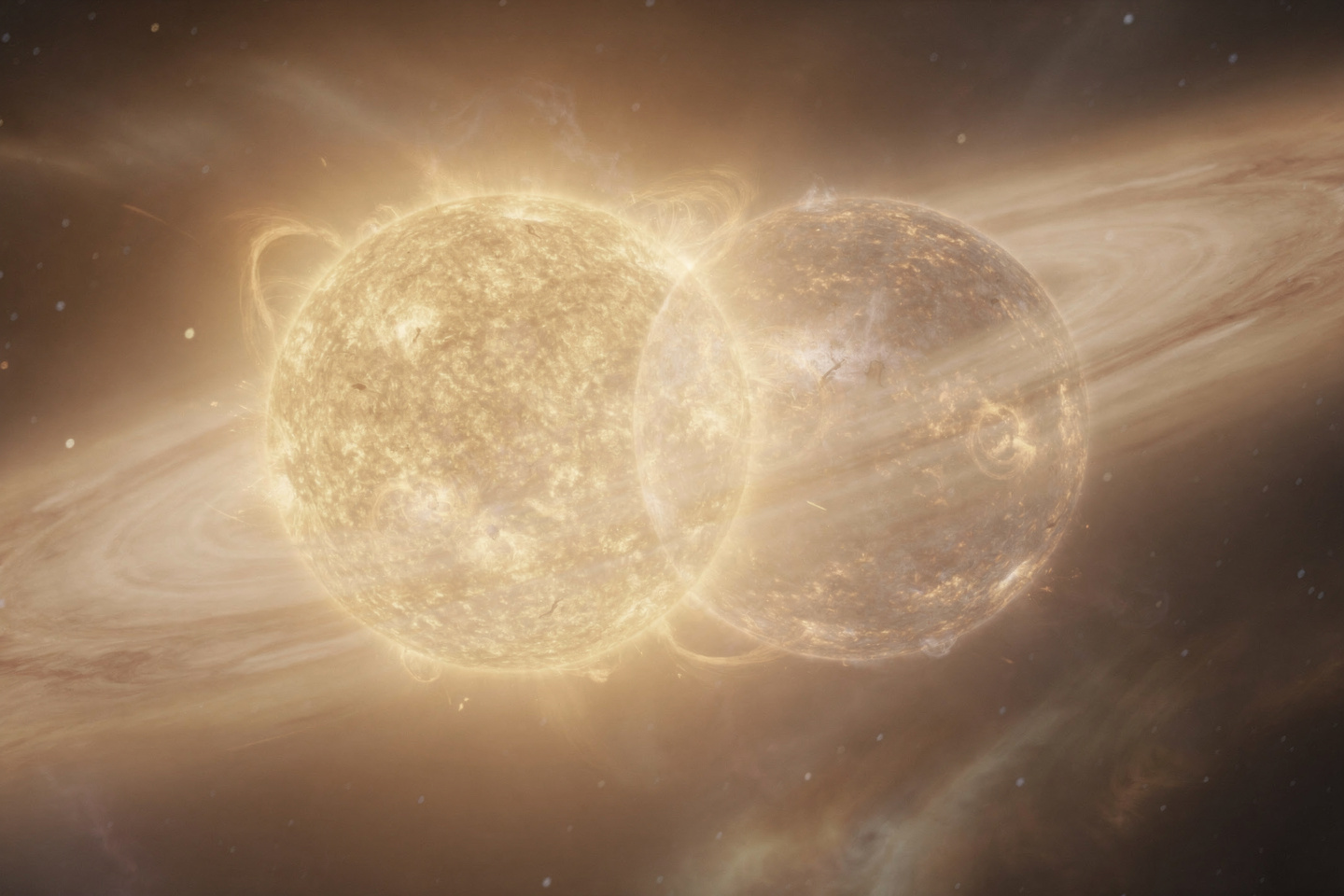
The polarization of light from binary stars oscillates in sync with orbital motion, like a cosmic metronome. But if an invisible field of axions—dark matter—passes through this metronome, its hand will tremble almost imperceptibly, creating a silent accompaniment. Capturing this whisper means touching for the first time the substance that may make up a quarter of the Universe. And for that, you don't need giant accelerators—just look closely at the dance of light.
🎯 The polarization degree of Spica is just 0.02%—like spotting a candle through frosted glass from a kilometer away.
🎬 Using polarized light to detect elusive fields remotely echoes the attempts of the characters in Stanisław Lem's novel 'Solaris' to decipher signals from a sentient ocean. Only in our case, the 'ocean' is dark matter, and the 'signals' are microscopic oscillations of the polarization angle.