How a Gene Map Learns from Nature Itself express
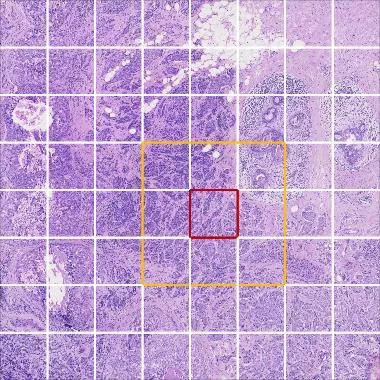
A huge orchestra without a conductor. Each musician is a gene, and the melody is the cell's complex work. Previously, looking at a tissue photo, a computer tried to guess each instrument's part individually. It didn't know that violins usually play with violas, and trumpets with trombones. The program just output a list of notes, without sensing the harmony.
A team of developers proposed giving the program a "score"—a scheme of gene relationships. It's called the Gene Ontology (GO). This isn't just a list, but a true family tree. Genes are grouped by "families" and "professions," from the most general tasks to narrow specializations. The new system MSGR (Multi-Scale Gene Refiner) uses this tree as a hint. It starts with a rough sketch — which major biological processes are underway. Then, step by step, like an artist, it fills in details, refining the activity of each individual gene. Each next level of the tree adds precision, correcting errors from the previous one.
This "smart" add-on can be attached to already working algorithms. Like a new processor for an old computer. You don't need to change the program's "eye" that analyzes the image. Experiments on thousands of samples from nine different collections showed: predictions with this tree-like hint are consistently more accurate than without it. The improvement was nearly three hundredths on the key metric — a small but confident win. The trick is that it's the real biological hierarchy that works. When scientists shuffled the genes in the tree randomly, stripping it of biological meaning, all the advantage vanished. Structure matters not on its own, but only when it reflects real connections honed by evolution. And then the orchestra finally sounds in harmony.
Original abstract
as written by the authors arXiv:2608.00405v1
Predicting spatial gene expression from histopathology images enables large-scale transcriptomic profiling without the cost of direct measurement. Existing methods decode the target gene set as a flat, unstructured vector, ignoring the inter-gene dependencies arising from shared biological pathways and regulatory programs. Without explicit structural guidance, models must infer these dependencies entirely from limited paired data, constraining prediction quality. We propose MSGR (Multi-Scale Gene Refiner), which bridges this gap by incorporating the Gene Ontology (GO), a curated functional hierarchy of genes, as an explicit structural prior. MSGR organizes target genes into a four-level GO tree. Its GO-guided decoder then progressively refines predictions from coarse functional domains to fine individual genes via residual corrections under scale-weighted supervision. Operating solely on the gene side, the GO-guided decoder serves as a seamless plug-in replacement that consistently improves existing architectures without requiring any image-side modifications. Extensive experiments on nine datasets from the HEST-1k benchmark provide empirical evidence for two central claims: GO-structured decoding consistently outperforms flat decoding, even against a state-of-the-art generative baseline, and the gain is attributable to biological ontology structure rather than hierarchical decomposition per se, as confirmed by a +0.027 margin over a structurally equivalent random hierarchy.
The Gene Ontology is one of the most successful crowdsourcing projects in biology. Hundreds of scientists worldwide contribute to and curate it, and it's used in tens of thousands of studies each year.