A gene is a segment of DNA containing information about the structure of a polypeptide chain (protein) or functional RNA. Each gene has a specific location on a chromosome (a compact packaging of DNA). It consists of exons (coding regions) and introns (non-coding inserts removed during splicing—a cutting process). Gene expression is its transformation into function: first transcription (copying the gene into messenger RNA), then translation (converting the nucleotide sequence into an amino acid chain). Regulatory sequences control when and in which cells a gene is active. Alleles are variants of the same gene that determine, for example, different eye color.
History
The origin of the concept of the gene is associated with the work of Gregor Mendel (1866), who described discrete hereditary factors. The term 'gene' was introduced by Johannsen in 1909 to denote the unit of heredity. In 1910, Thomas Morgan proved that genes are located on chromosomes. The unraveling of the nature of the gene as a segment of DNA belongs to molecular biology of the 1940s–1950s, culminating in the discovery of the double helix by Watson and Crick in 1953. Erwin Schrödinger in his book 'What is Life?' (1944) predicted that hereditary information should be stored in an 'aperiodic crystal,' which stimulated the search for the structure of DNA.
How it works
The mechanism of gene action involves several stages. Transcription initiation begins with the binding of RNA polymerase to the promoter. With the participation of transcription factors, it unwinds the double helix and synthesizes pre-mRNA complementary to the template DNA strand. Processing includes capping, polyadenylation, and splicing—removal of introns and joining of exons. Mature mRNA is exported to the cytoplasm, where the ribosome, with the help of tRNAs carrying amino acids, carries out translation: the sequence of nucleotide triplets (codons) determines the sequence of amino acids in the protein. Post-translational modifications give the protein its final shape and activity. Regulation of gene expression occurs at all these stages and is critically important for cell differentiation and response to the environment.
In practice
Genetic tests allow predicting predisposition to diseases, and gene therapy is already correcting defective genes to treat hereditary diseases.
Fun fact
Genetically, humans and bananas are 60% identical because many basic genes necessary for cell life are highly conserved across different species.
Four old maps were lying in different desk drawers. Each one marked genes linked to cellular aging, but the maps did not match: different names, different scales, different legends. A scientist hunting for a gene to test had to cross-check them by hand, at the risk of missing an important mark.
SenSASP stitched those maps into one.
Picture biological age as a counter ticking away inside every cell. Sometimes it runs fast, sometimes it lags behind your passport age, and scientists have learned to read its numbers from chemical marks on DNA. Those marks are like pencil lines on a doorframe tracking a child's growth: from them you can tell how much the body has aged on the inside.
The hot air of a sauna makes your heart beat faster and your blood vessels widen. But under the skin something less obvious happens: heat leaves marks on the packaging of DNA. These marks are chemical tags that do not change the text of the genes themselves, but they influence which pages get read. For the first time, scientists have checked how regular sauna use rewrites such marks in living people.
A translator who has finally turned off the noise in the hall hears every word for the first time. In much the same way, urinary aging clocks long confused the noise of the kidneys with the signal of age: the kidneys filter urine, and their work changes the mix of protein fragments by which we judge the wear and tear on the body.
A thousand candidates are sitting in the interview room, but only two hundred will be hired. It used to seem that to accurately estimate age from DNA, you had to interview every one of the thousand sites where a chemical mark alters gene activity. Now it's clear: you can hear out just a fifth of them, and the final decision barely changes.
A gas target is like a funnel: the steeper its walls, the stronger the flow. But in this funnel, it is not water that flows, but ultraviolet light, born when a powerful laser pulse passes through a cloud of argon. The efficiency of this conversion is usually minuscule, about 0.001%: out of a thousand laser photons, only one turns into useful ultraviolet.
A forensic examiner arrives at a crime scene and lifts fingerprints. Epigenetic clocks work the same way: from chemical marks on DNA they determine how much a cell has aged. A tumor leaves its own "fingerprints," and almost always they point to decrepitude.
The researchers took 5528 samples from the TCGA database, which holds DNA methylation data for eight cancer types.
The ovarian clock does not run by the calendar. Two women of the same age can differ severalfold in their egg supply, and doctors have long sought a way to peer inside this mechanism. It turns out that sand gets into the clockwork: chemical contaminants that accumulate in the fluid surrounding the egg.
The liver is an orchestra in which every cell plays its part from a shared score. Males and females have different scores: in males, the genes responsible for detoxifying foreign substances and steroid hormones sound louder, while in females, the genes for fat metabolism and bile acids do.
As you slowly turn the tuning knob of an old radio, the sound doesn't fade in gradually from the static: it bursts forth in a sudden jump, the moment the antenna hits resonance with the wave. Genes in a living cell behave much the same way.
A huge orchestra without a conductor. Each musician is a gene, and the melody is the cell's complex work. Previously, looking at a tissue photo, a computer tried to guess each instrument's part individually. It didn't know that violins usually play with violas, and trumpets with trombones. The program just output a list of notes, without sensing the harmony.
A protein slides along the DNA strand like a key along a keyring, searching for its lock. One wrong turn and a gene stays switched off. To know where a protein will grip firmly, you need to measure the strength of that grip — the binding energy.
Blood stem cells are like spare keys to a house: they open the door to any room, but over time they wear down and start to stick. In an elderly person, such keys handle the locks worse, and the blood renews itself more slowly. Scientists have long been searching for a way to make a duplicate that stays new even after heavy use.
Ordinary models assume that infection is like a steady flow of water that washes over everyone equally. In reality, the stream from a sick person fluctuates: right after infection it barely trickles, then turns into a raging downpour, and later subsides. The chance of catching the virus depends on the strength of this flow at the moment of contact.
Imagine a cookbook that gets rewritten from generation to generation. One day, the borscht recipe receives a secret ingredient from a pastry chef, and from that moment, the taste remembers not only ancestors but also a neighbor. In the Standard Model of evolution, genes behave the same way.
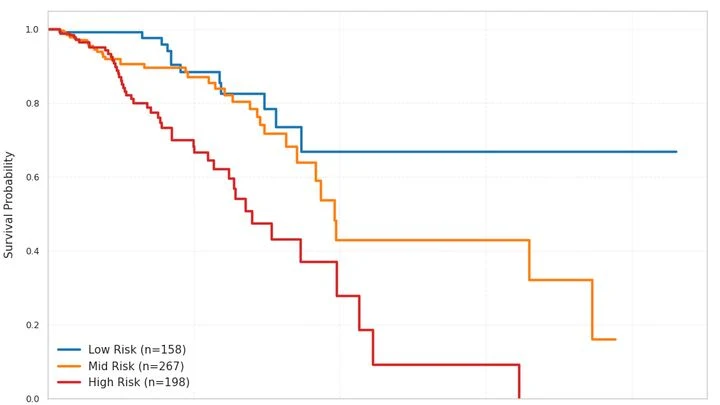
Genes are like houses in a city: in some, life bustles; in others, silence reigns. This 'urban' genetic landscape was analyzed in a thousand women with breast cancer.
When biologists measure the activity of thousands of genes, they usually just see a list of coincidences, like two ingredients in a soup that often end up together. The standard method looks for such pairwise connections but doesn't show who influences whom.
A new approach, like a detector of dark matter, uncovers hidden threads of causation.
Data on gene activity usually looks like a long string of numbers, like a rainbow stripe (spectrum) with no visible connections. In the scVision model, these numbers are turned into a meaningful picture — not a list of ingredients, but a photo of a finished dish.
You get a report: one 'letter' in your gene has been swapped. But what does that change? A protein isn't a flat string: it's a dense tangle, where each loop sits in its own pocket. A change deep inside that tangle is like a crack in the foundation, while one on the surface is like a scratch on the facade.
DNA methylation consists of tiny chemical marks on our genes. Over the years, they change on a fairly strict schedule. Standard epigenetic clocks look at these marks and output a single number: biological age. But a number can't tell you how the pattern of marks rearranged day by day, year by year. The authors of this work decided to turn a static photograph into a continuous film.
In embryonic development, a cell resembles a musician in a vast orchestra: it must play its part, following a conductor — the gradient of signaling molecules. But the conductor is unreliable: morphogen concentrations constantly fluctuate. How then does a cellist not veer into a violin melody?
60 mice, 1,980 samples, 234 lung cancer patients. Behind each number lie thousands of genes. Their activity is measured to understand the disease. But the data aren’t uniform: for one patient, you assess a protein level (a continuous number), make a diagnosis (yes/no), and determine the tumor subtype (a category).
In 1944, Erwin Schrödinger asked the question "What is life?", foreshadowing quantum explanations of biology. Almost a century later, physicists return to this puzzle, armed with the apparatus of quantum field theory.
Imagine a book being simultaneously copied by trillions of scribes. As long as most of them check against the original, the narrative remains meaningful. But once control weakens, the text accumulates typos, which multiply until the manuscript turns into gibberish.
Inside every cell, a complex network of genes determines what it will become — a nerve cell, a muscle cell, or part of the skin. This choice often resembles flipping a toggle switch: two stable positions, and the cell decides which way to tip. But cells have a feature rarely considered in such models: they divide.
An engineer tunes an antenna: pull one segment, the frequency drifts; change the angle, the gain drops. Developing therapeutic peptides (short protein chains) works much the same way.
Imagine a flashlight that only lights up when you're near a road sign: that's roughly how drug discovery works when scientists follow genetic clues. A team of researchers examined over 26,000 target-disease pairs: combinations of a protein that a drug acts on and the disease it treats.
You buy a new kitchen scale, but instead of exact weight, it only shows deviations from some "norm." To find out how much an apple weighs, you first have to weigh dozens of other apples and calculate the average.
A translator doesn't learn a language from a textbook but by listening to live speech and immediately seeing what people do in response to words. That's exactly how the new method C3P reads bacterial DNA. Standard genomic models try to learn the rules by simply "rereading" billions of letters of the genetic code, and often get confused.
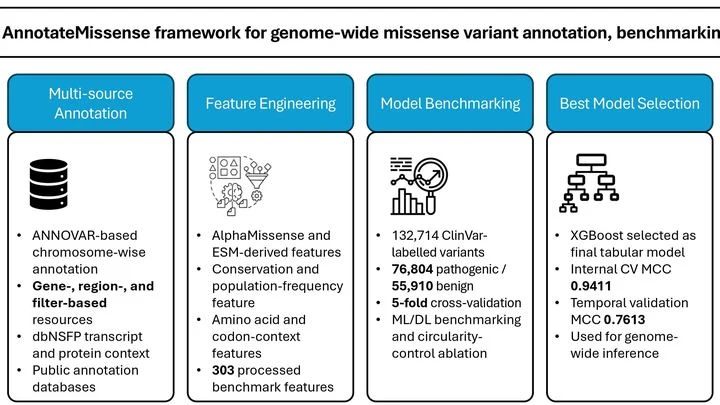
In a vast library where each book is a gene, you need to find a single typo. The error might be harmless, or it might completely change the meaning of the sentence. That's roughly what geneticists do when they hunt for harmful mutations among millions of harmless differences.
The program, named AnnotateMissense, works like a meticulous proofreader.
On one side of the scale are the genes you inherited from your parents. On the other is how many hours you actually sleep. For a long time, it seemed genetics pulled harder. But a new study covering more than 200,000 people shows that real sleep can tip the balance, especially when it comes to excess weight and diabetes.
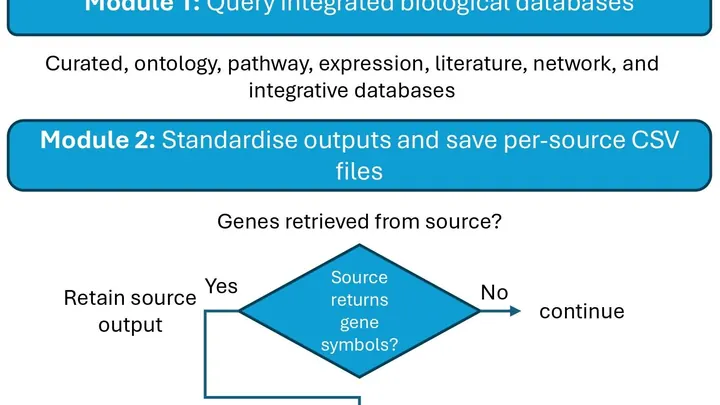
Assembling a puzzle when the pieces are scattered across 13 boxes with different numbering systems: that's roughly what it's like to search for genes linked to a specific disease. The data exist, but they're hidden in databases with their own interfaces, formats, and even descriptive languages.
An orchestra plays without a conductor. Each musician has a score: that's the genes. But the volume and tempo depend on the acoustics of the hall, the mood, and the neighbors on stage. That's roughly how heredity and daily life together shape a teenager's behavior.
The microbial community in the gut is like an orchestra: what matters is not only the musicians but how they play together. When disease strikes, it's not just the lineup of microbes that changes: their interconnections shift too. Researchers built interaction networks of microbial genes in healthy and sick individuals.
Proteins, like people, have family trees. Two proteins performing the same job in different organisms descend from a common ancestor. By comparing their sequences, you can reconstruct that history. But when proteins diverged long ago, standard methods lose the trail: so many differences pile up that the signal fades, like old photographs yellowing.
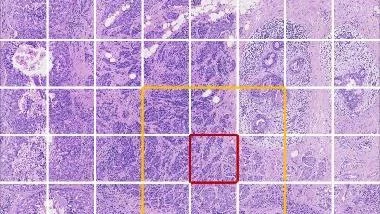
A microscopic image of tissue is like a city map: streets, houses, parks. An experienced eye can tell a lot about a neighborhood from such a map. But what if you could predict from the map which houses are noisy today and which are quiet?
An orchestra without a conductor. Each musician plays their own part, and the overall volume builds, but the melody falls apart — violins rush ahead, brass lags behind. Cells behave much the same way when their DNA is modified: they may shift, but some move far, while others stay put.
In a growing bacterium, genes that run protein factories don't drift solo. They clump into liquid droplets, like oily smears in water — no membranes, but sharp boundaries. The NusA protein fuels this condensation. When it piles up, it glues neighboring DNA stretches together, forcing them into foci.
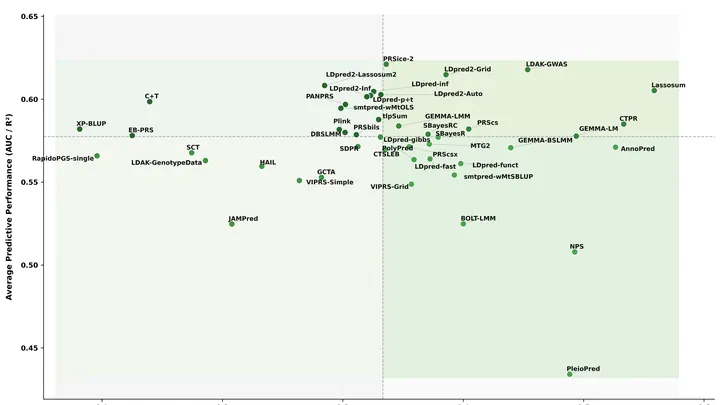
Geneticists read DNA like a long list of letters. From it, they compute a "polygenic risk score" — a number that shows how much higher or lower a person's chance of getting a disease, like diabetes, is compared to average.
Cells on the surface of an embryo resemble grains of rice that can align in one direction. This order is called nematic. It arises when cells start acting in concert, like a school of fish swimming in the same direction.