Horizontal gene transfer is the process of transferring genetic material between cells of the same generation, bypassing vertical inheritance (from parents to offspring). It is widespread among prokaryotes (bacteria and archaea) and less common in eukaryotes. It plays a key role in microbial adaptation, especially in acquiring antibiotic resistance and the evolution of virulence.
History
Griffith's classic experiment (1928) on pneumococcal transformation first demonstrated the possibility of trait transfer between bacteria. In 1944, Avery, MacLeod, and McCarty identified the transforming agent as DNA. Conjugation was described by Lederberg and Tatum in 1946. Transduction was discovered by Norton Zinder and Joshua Lederberg in 1952. With the development of genomics in the 1990s, it became clear that HGT is not an exception but the norm for the microbial world.
How it works
In natural transformation, bacteria in a state of competence bind double-stranded DNA, cleave it, transport a single-stranded fragment inside, and integrate it into the chromosome by homologous recombination. Conjugation is initiated by contact via pili, cleavage of the plasmid at oriT, and transfer of single-stranded DNA to the recipient. Transduction begins with erroneous packaging of a bacterial DNA fragment into the phage capsid during lysogenic induction. Evolutionary consequences include genome mosaicism, rapid spread of adaptive alleles, and conflict with phylogenetic signals.
In practice
Horizontal gene transfer (HGT) specifically explains the rapid emergence of superbugs in hospitals and enables the creation of genetically modified organisms (GMOs) for agriculture.
Fun fact
Genes responsible for toxins in many dangerous bacteria (for example, Vibrio cholerae) were originally brought in by horizontal transfer from harmless ancestors or viruses.
Picture a wind map over a mountain range. The wind mostly blows downhill, following elevation changes. But if you look closely, in some valleys the air swirls into little eddies that keep the wind from simply flowing down. That is exactly what the mutation field in human DNA looks like.
Two daughter cells receiving equal shares from the mother: that's the familiar picture of division. But what if one gets almost everything and the other just crumbs? Stochastic modeling shows that sometimes unequal division is more advantageous.
Each cell stores a protective reserve that helps it weather hardships. During division, this reserve is distributed between daughters.
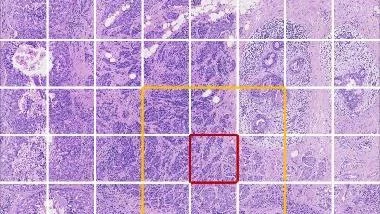
A huge orchestra without a conductor. Each musician is a gene, and the melody is the cell's complex work. Previously, looking at a tissue photo, a computer tried to guess each instrument's part individually. It didn't know that violins usually play with violas, and trumpets with trombones. The program just output a list of notes, without sensing the harmony.
A web where lions eat zebras and hyenas finish the leftovers is not just a list of dinners. It's a survival map for an entire region. When the climate shifts, animals move, and the map tears. To understand where it will tear and where it will hold, you need to find its unchanging 'skeleton'—the connections that repeat across different places.
Imagine a cookbook that gets rewritten from generation to generation. One day, the borscht recipe receives a secret ingredient from a pastry chef, and from that moment, the taste remembers not only ancestors but also a neighbor. In the Standard Model of evolution, genes behave the same way.
Evolution resembles not just a tree with diverging branches, but a woven tapestry. Threads of ancestry cross when species exchange genes — for example, bacteria pass drug resistance to each other, and plants crossbreed to produce hybrids.
Every tumor writes its own cosmology. Its cells are galaxies, and mutations are stellar flares marking the branches of a genealogical tree. The key to its history is the rhythm of accumulating genetic typos.
A doctor doesn't make a diagnosis on a whim. They open a medical reference book and point to the article they're relying on. That's roughly how the new system KG-TRACE works.
The immune system is like a tireless editor, revising antibody drafts to make them stickier to viruses and bacteria. This process is called antibody maturation: random typos (mutations) arise in the genes, and natural selection keeps those that improve target capture.
Inside every cell, a complex network of genes determines what it will become — a nerve cell, a muscle cell, or part of the skin. This choice often resembles flipping a toggle switch: two stable positions, and the cell decides which way to tip. But cells have a feature rarely considered in such models: they divide.
A hefty multi-volume reference book is the human reference genome. And the short sentence fragments scattered across the table are millions of sequenced DNA reads. The job of a navigator like BWA-MEM is to find the exact spot in the reference for each fragment.
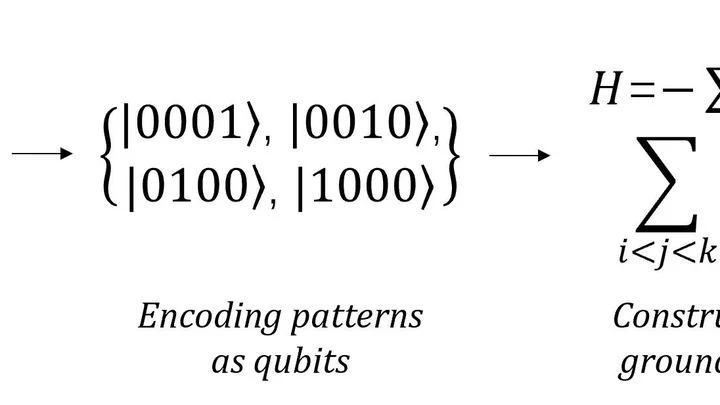
Conventional neural networks learn from thousands of examples, burning hours and gigawatts. Physicists have found a quantum workaround. As early as Max Planck showed the discreteness of energy, today this allows generation without training.
A patchy landscape isn't just a picture from a geography textbook. For microbes, cells, or animals, the world is a mosaic of patches: warmer here, more food there, and behind that rock — almost poison. When a mutant with a new trait appears in such a mosaic, its fate depends on which patch it lands on.
This new work ties two factors together.
The microbial community in the gut is like an orchestra: what matters is not only the musicians but how they play together. When disease strikes, it's not just the lineup of microbes that changes: their interconnections shift too. Researchers built interaction networks of microbial genes in healthy and sick individuals.
Every group has its unspoken trios: three friends who are always together. And there are pairs that exist on their own. It turns out that how much trios "contain" pairs determines how everything, from a virus to a new idea, spreads through the group.
Scientists introduced a measure they call the nesting coefficient.
Imagine a long corridor with many doors that open and close in a strict rhythm. If you send sound down it, the echo from each door will distort the melody, and a crooked wall at the end will throw off the entire rhythm. It would seem that understanding what's happening deep inside is now impossible.
But there's a trick.
Proteins, like people, have family trees. Two proteins performing the same job in different organisms descend from a common ancestor. By comparing their sequences, you can reconstruct that history. But when proteins diverged long ago, standard methods lose the trail: so many differences pile up that the signal fades, like old photographs yellowing.
In the mountain forests of China grows a tree that remembers the dinosaurs. Cathaya argyrophylla is a living fossil; its lineage split from pines over a hundred million years ago. But instead of a mighty long-liver, we have a vulnerable species: it grows slowly and often falls ill. Why — was long a mystery.
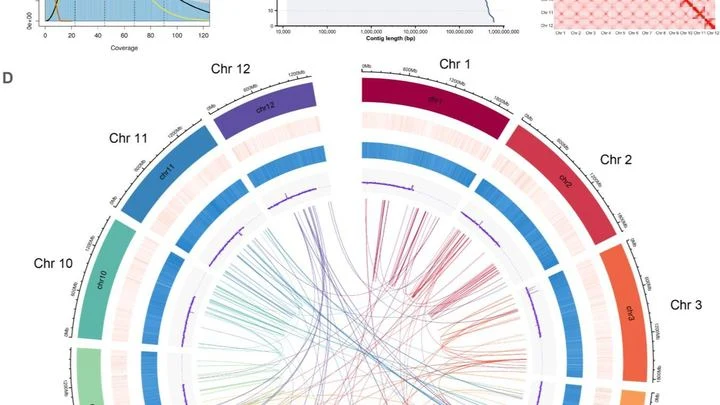
The answer was found in 22 billion letters of DNA.
A pot of water sits on the stove. The temperature drops: plus one degree, zero, minus one — the water stays liquid. But at some point, a light breath is enough to make the whole mass instantly freeze into ice. Physicists call such jumps first-order phase transitions.
Imagine a city where streets are not straight but winding, with dead ends and hidden passages. A bike courier will take much longer to deliver a package than in a city with a regular grid of roads. Similarly, molecules inside living tissue: their path depends on how "tangled" the tissue structure is.
Scientists built a model that describes the movement of molecules in such a "tangled" environment.
A rock knocked off one planet by an asteroid impact hurtles through space and lands on another. If microbial spores are hiding inside, they might survive the cold, the radiation, and the rough landing. That's panspermia — the idea that life travels between worlds. But imagining such a journey is one thing; calculating every step is quite another.
Normally, current flows equally well in both directions if there's no magnet. A magnetic field or magnetic material breaks that symmetry: electrons start to prefer one direction. But in a new study, physicists found a way to do without magnets.
In a crystal, atoms may not sit perfectly ordered but with some disorder.
Microbial communities are like a noisy orchestra: thousands of instruments, and it's hard to tell who's playing the lead. In the gut, ocean, or soil, millions of bacterial species live, and scientists need to figure out which ones truly matter for human health or soil fertility.
The new approach works like smart laundry sorting.
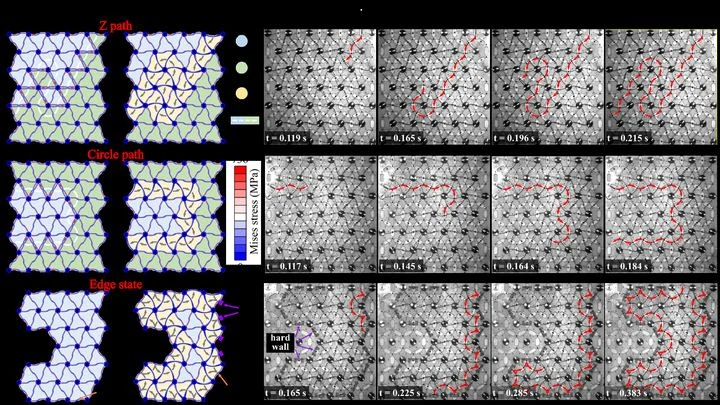
The popping lid of a jam jar is the hero of this story. Press it, and with a loud click it flips from a convex to a concave shape. Exactly the same happens with a hinged beam inside each cell of a new mechanical lattice.
Scientists assembled these snapping beams into a hexagonal grid, like honeycomb, but made of elastic plates. When one beam is sharply compressed, it snaps and pushes its neighbor.
A stag beetle the size of a fingernail stands on the ground with its legs spread wider than its own height. An elephant as tall as a room, on the other hand, towers above the ground like a tower. Why is that? Both animals walk on the same ground, but they see it differently. For a beetle, each pebble is a boulder, while for an elephant, it's a grain of sand.
Toss a handful of pebbles into a stream: some settle on the bottom, others get swept around. That's roughly how waves behave in a disordered medium — light in frosted glass, sound in porous material. Usually, disorder slows things down: the wave gets stuck, spreads out, loses direction. But in a new study, physicists built an acoustic lattice where things work differently.
In disordered materials, such as organic semiconductors or inks made from two-dimensional materials, electrons don't move smoothly like water through a pipe. Instead, they hop from one spot to another, like a ball bouncing across a rough surface. This kind of motion is called hopping transport.
Primary human cells, taken straight from the body, are the most honest material for studying diseases and testing drugs. But getting foreign genetic material into them is tricky: cells don't like intruders. Standard methods either damage the cell or work unevenly, especially when the sample is heterogeneous — which it almost always is.
The new platform tackles this with a vortex flow.