Particle Spin in a Nuclear Vortex: Why the Sign Doesn't Add Up express
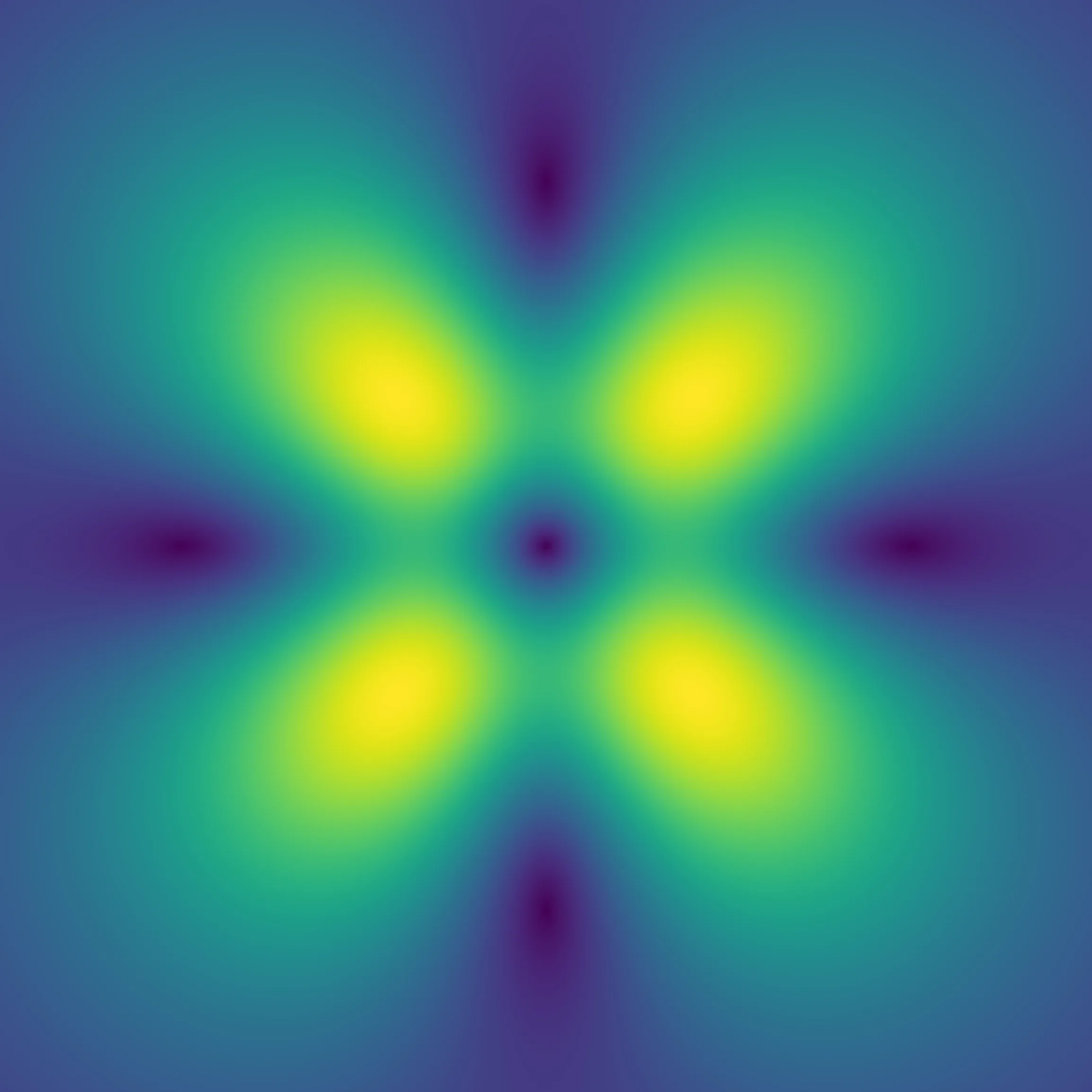
When two heavy nuclei collide in an accelerator, a tiny fireball of quark-gluon plasma is born — a special state of matter where quarks and gluons are not confined inside particles. As it expands and cools, the emitted particles often come out "spinning"—their spins align along the beam direction. Physicists call this longitudinal polarization. For a long time, it was thought that the culprit was plasma vorticity: its rotation transfers to spin, just as water spins a twig in a whirlpool.
But calculations gave the wrong sign of polarization compared to experiment. The authors of the new work took an exact solution for the plasma expansion, the Gubser flow with a small perturbation, and analytically computed the contributions of two effects: thermal vorticity (rotation) and thermal shear (layers of plasma sliding past each other). It turned out that these contributions are nearly equal in magnitude but opposite in sign. Vorticity gives a plus, shear gives a minus, and together they almost cancel each other out. The remainder determines the final polarization.
An important nuance: the result depends on which direction is taken as a reference when measuring spin. If you align with the particle's own velocity, the correct sign is obtained only for slow particles. If you fix the axis along laboratory time, the sign matches experiment over a wide range of velocities. And in a formulation where the axis is perpendicular to the freeze-out surface of the plasma, vorticity and shear cancel each other completely. The authors showed a general pattern: at leading order, polarization is determined not by acceleration but by other effects, and these can be noticeable even with strong elliptic flow.
The fireball in nuclear collisions expands almost like the Universe after the Big Bang — physicists even use a Hubble-like expansion solution to describe its behavior.