Quantum Chemistry for Hundreds of Thousands of Atoms express
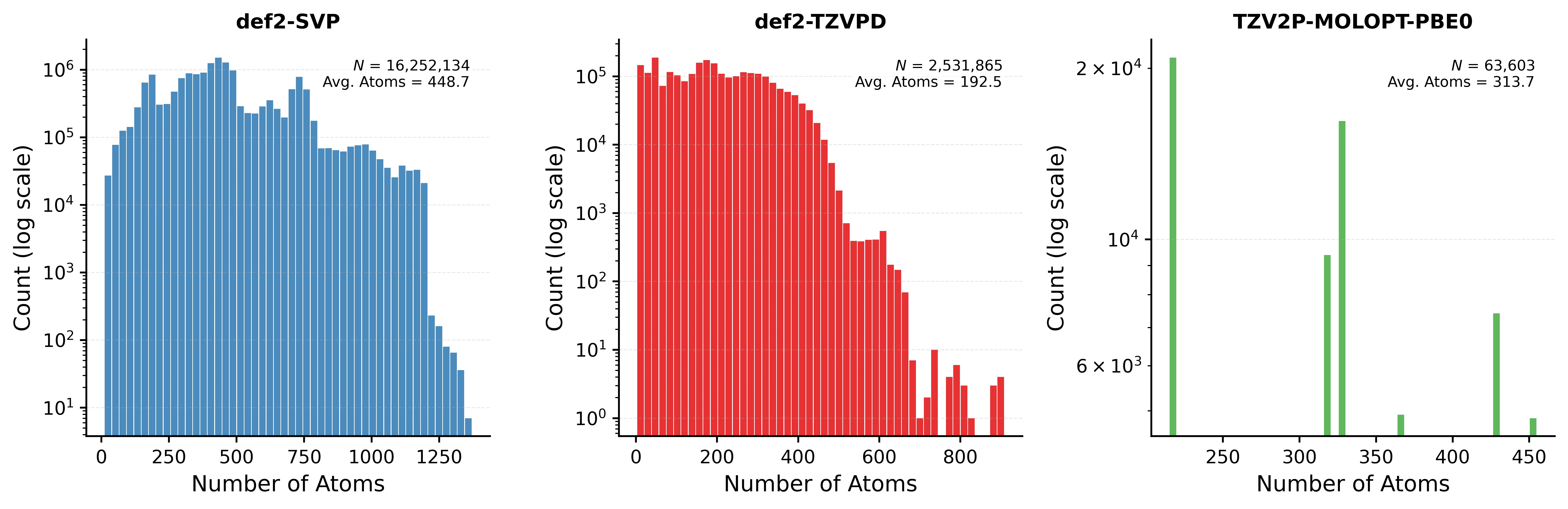
Water in a glass looks continuous, but it's actually a dance of trillions of molecules constantly breaking and forming bonds. Seeing this dance in full detail was previously impossible: accurate calculations that account for the quantum properties of electrons could only handle tiny droplets of a few hundred atoms. The new model UBio-MolFM changes the game. Trained on 160 million examples with all electronic interactions already computed, it now predicts molecular behavior almost as accurately, but for systems a thousand times larger.
The model isn't just fast: it sees what old approximate methods missed. For instance, in water it correctly reproduces the X-ray pattern, meaning the arrangement of molecules. And in cyclosporin A, a drug used to prevent organ rejection, it detects a single hydrogen bond that behaves like a finicky door: opening and closing. This door determines whether the molecule can pass through the cell membrane. Old models simply nailed the door shut, making the drug seem impermeable.
Now that quantum accuracy is accessible for huge biological systems, we can calculate how proteins, RNA, and drugs work without compromise. It's like moving from reading letters to reading whole pages: the picture becomes clear rather than guessed from fragments.
The UBio-MolFM model holds a magnesium ion in RNA without special tuning for each metal: it simply knows how electrons like to gather around charged particles.