A graphics card (GPU) is a specialized hardware component designed for massively parallel processing, originally to render images but now widely used for general-purpose computing. In the context of the provided articles, it serves as a benchmark for a new diodechip, meaning the chip's performance is compared against a GPU to evaluate its speed and efficiency. GPUs excel at tasks that can be broken into thousands of smaller operations, such as matrix multiplications, which are fundamental to graphics, scientific simulations, and machine learning.
History
The first GPU was introduced by NVIDIA in 1999 as the GeForce 256, marketed as a single-chip processor for transform and lighting in 3D graphics, though the concept of parallel graphics processing predates it in earlier hardware.
How it works
Unlike a CPU, which has a few powerful cores optimized for sequential tasks, a GPU contains thousands of smaller cores that work simultaneously. Each core handles a small piece of a large problem, and the results are combined. This architecture suits problems with high data parallelism, where the same operation is applied to many data points at once. For the diodechip mentioned, the comparison likely involves running identical computational tasks on both the GPU and the new chip to measure throughput and latency.
In practice
GPUs are used in gaming, scientific computing, artificial intelligencetraining, and as reference points for evaluating new parallel-processing technologies like the optical chips described in the articles.
Fun fact
Modern GPUs can perform over 20 teraflops (trillions of floating-point operations per second), making them faster than most supercomputers from a decade ago.
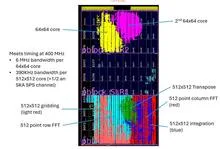
A radio telescope with thousands of antennas is like a giant ear that hears the whole sky at once. But an ear cannot draw a picture: signals from every pair of antennas must be multiplied, and in an array of ten thousand elements there are already fifty million pairs. A classical correlator does exactly that, and its complexity grows as the square of the number of antennas.
You're looking for fireflies in a dark forest. Instead of photographing the whole forest every second and then poring over the images, you carry a small device that spots the flashes on its own and cuts out only a circle around each one. The rest, the blackness, isn't saved. That's exactly how the new sensor for scientific cameras works.
Quantum computers make mistakes. Each qubit is like a ball balanced on the tip of a pencil: a slight tremor in the hand and it rolls off. To keep the balls from falling, you need someone to notice the wobble and correct it in time.
In a three-dimensional scene, each point is like a candy whose color changes depending on the viewing angle. To describe this play of shades, dozens of numbers are stored for each point — a special mathematical function invented by Joseph Fourier. Memory fills up instantly.
Three-dimensional worlds are made of millions of semi-transparent specks, like a giant tapestry woven from glowing droplets. Transmitting such a canvas usually takes ages and a beefy data pipe. SpeedyGS squeezes it into a tiny file, and it unfurls in a flash, like yanking a drawstring from a pouch.
Fiber optics transmit data with light of different colors. These beams race at nearly the speed of light. Normally, all signals go the same way, creating a jam and interference, like an orchestra where musicians are trying to outshout each other.
A city map: intersections are nodes, streets are connections. For an algorithm to understand the structure, each node needs a label. The classical approach — standard model — assigns simple tags, like house numbers.
A quantum computer holds atoms in light traps, like marbles in dimples. To read out the answer, you need to photograph each atom and determine whether it's glowing or not. Previously, analyzing such an image took so long that the computer sat idle. Now, engineers have created a specialized board that looks at the photo and instantly finds all the atoms.
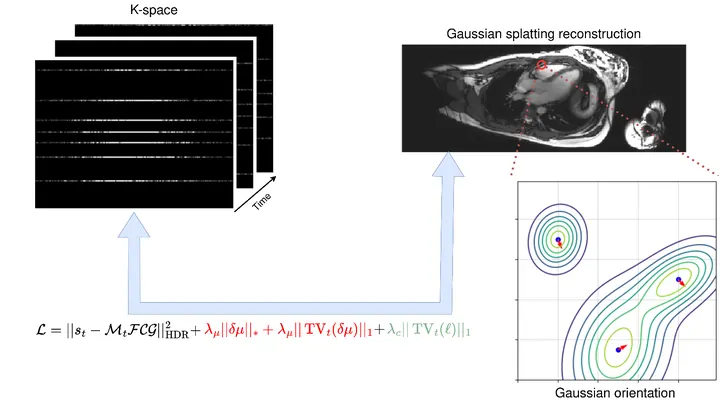
An MRI scanner is like a camera that photographs your insides, but very slowly. The patient has to lie still for several minutes while the heart keeps beating. If the person moves or the rhythm goes off, the image blurs. Doctors then have to repeat the scan, wasting time and nerves.
Light passing through ripples on a water surface paints dancing patterns on the bottom of a pool. Engineers have used a similar idea to make light compute. They fabricated a tiny plate with a wavy relief: each ridge and groove deflects rays in its own way. When an image falls on such a surface, the light transmitted through it converges at different points behind it.
In a silicon carbide crystal, which looks like a transparent stone, there are hidden defects — places where atoms are out of line. One such defect acts as a quantum node: an electron inside it spins and processes information, while the nucleus of a neighboring atom quietly stores it.
A light pulse in an optical fiber is like a starter's pistol shot: short, sharp, and unmistakable against the silence. It is exactly such pulses that the new artificial neuron, built on a silicon chip, produces.
A graphene transistor works like a microscopic switch: a molecule lands on its surface, and the current changes. But a bare graphene surface catches nothing. You need a "bait"—antibodies that recognize only viral proteins.
Graphs are considered identical if their 'terrain' matches. Imagine two maps with mountains and valleys: even if drawn differently, the heights and steepness of slopes can be the same.
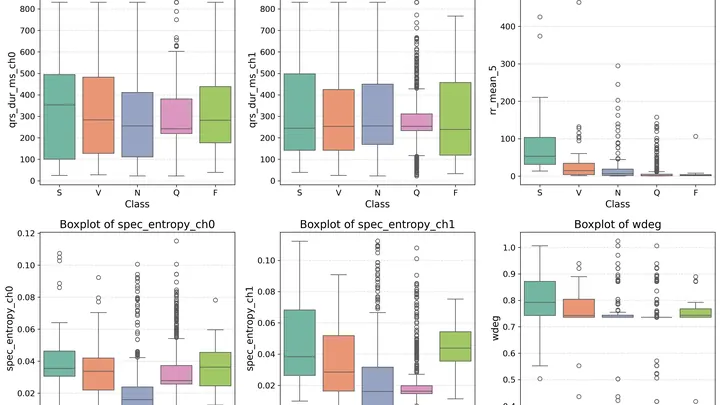
An electrocardiogram is like a musical score, where each note is a heartbeat. A doctor hears the melody and spots the off-notes — arrhythmia. But listening to the score for hours is tiring, so a smart monitor is placed by the patient's bedside.
A single quantum processor is like a solo musician. It can play a simple tune, but a symphony requires an orchestra. To solve problems that demand enormous computational power, processors must be networked.
A supercomputer simulating laser plasma is like a kitchen where hundreds of chefs are preparing a single dish. If ten people crowd around one stove while another stands empty, the work grinds to a halt. The same happens in simulations: plasma particles bunch up in certain regions of space, leaving others nearly empty.