A Star That Burned Like Gunpowder ✛
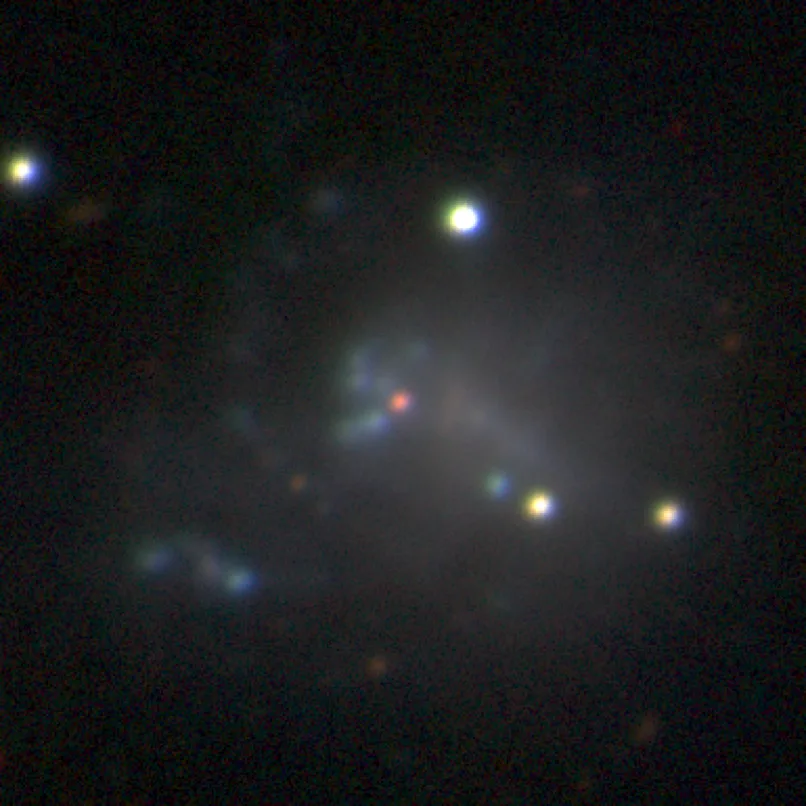
Imagine a furnace used to smelt metal. An ordinary furnace yields an ordinary amount of metal. But if you load too much fuel into the furnace, it cannot withstand the heat and blows apart. That is roughly how the star SN 2024afyu died. Its ejecta contained so much sulfur that no ordinary star could have produced it.
When a star 70–100 times more massive than the Sun reaches the end of its life, pairs of particles and antiparticles begin to form in its core. This process drains energy, and the core contracts sharply. The compression drives the temperature up so high that all the oxygen and silicon explode at once. The star is completely blown apart. Such an explosion is called a pair-instability supernova.
Astronomers monitored the supernova for two years and obtained 48 spectra. They found two sulfur lines that should shine in a strictly defined ratio. The observations almost matched the theory, which allowed them to precisely measure the sulfur mass. It turned out to be about three solar masses. Such an amount can only be forged in a pair-instability explosion.
Now astronomers have a simple recipe: if the sulfur and silicon lines in a supernova spectrum are too strong, then the star burned like gunpowder. SN 2024afyu is the first one found by this signature. Now such furnaces can be searched for across the entire sky.
The [S II] lines at 4070 Å and 1.03 μm arise from the same energy level, so their luminosity ratio must be strictly fixed. The observed ratio of 1.41–1.44 almost exactly matched the theoretical value of 1.55, providing a strong argument for the identification.