The supernova that forged too much sulfur ✛
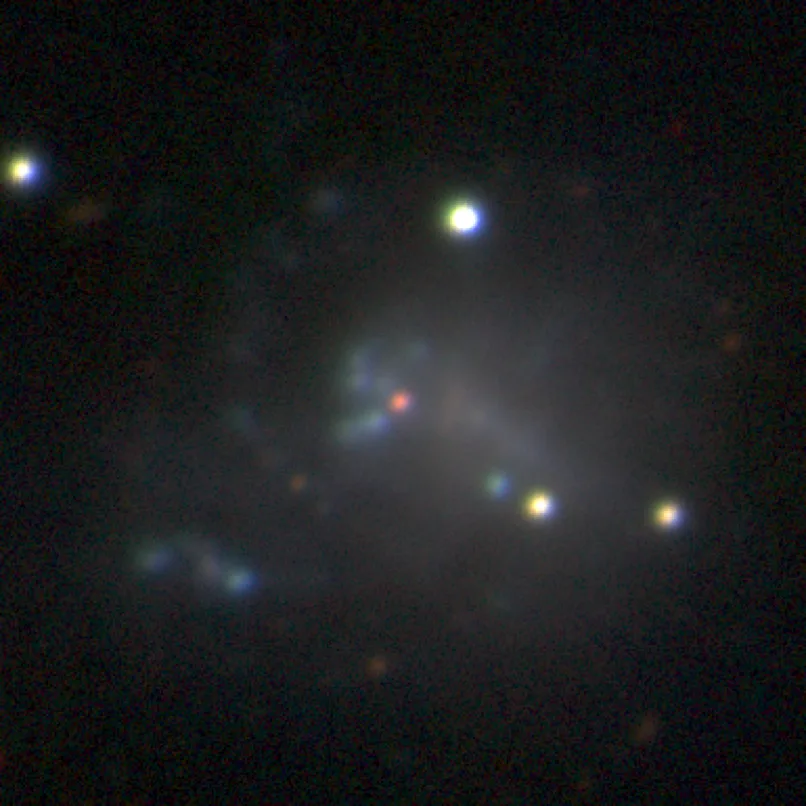
In the cosmic forge, stars do not melt iron but atomic nuclei. An ordinary furnace can do that, but sometimes the heat becomes so intense that the furnace blows itself apart. That seems to be exactly what happened with supernova SN 2024afyu. Its spectrum shows sulfur and silicon lines that leave no doubt: several solar masses of these elements were forged inside. For a normal supernova, that is an unbearable load.
When a star with a mass 70–100 times that of the Sun reaches the end of its life, pairs of particles and antiparticles begin to be born in its core. This process drains the energy that held the star against collapse. The core contracts sharply, the temperature skyrockets, and all the oxygen and silicon suddenly undergo thermonuclear reactions. The explosion leaves behind neither a neutron star nor a black hole, only an expanding cloud of debris. Such an event is called a pair-instability supernova.
Astronomers tracked SN 2024afyu for nearly two years and obtained 48 spectra with eight telescopes. The key was two sulfur lines that arise from the same energy level. Their brightness must be strictly linked, and the observed ratio almost matched theory. This allowed a confident measurement of the sulfur mass and the temperature of its zone: about three solar masses at 3700 kelvins. These numbers do not fit the standard core-collapse picture, but they align well with pair-instability explosion models.
Previously, astronomers searched for such supernovae by luminosity and light-curve shape. But SN 2024afyu turned out to be fainter than all known candidates, and it could have been missed. Now there is a more direct method: look at the sulfur and silicon lines. If they are too strong, it means the furnace forged more than an ordinary star could handle.
In the cosmic forge, only dispersing dust remains. But in that dust is written the story of a star that burned not like coal but like gunpowder. SN 2024afyu is the first case where spectral lines themselves pointed to a pair-instability explosion. Now we have a recipe to find such furnaces across the sky.
The [S II] lines at 4070 Å and 1.03 μm arise from the same energy level, so their luminosity ratio must be strictly fixed. The observed ratio of 1.41–1.44 almost exactly matched the theoretical value of 1.55, providing a strong argument for the identification.