Cómo un remolino en una taza se convierte en una bomba de agujero negro exprés
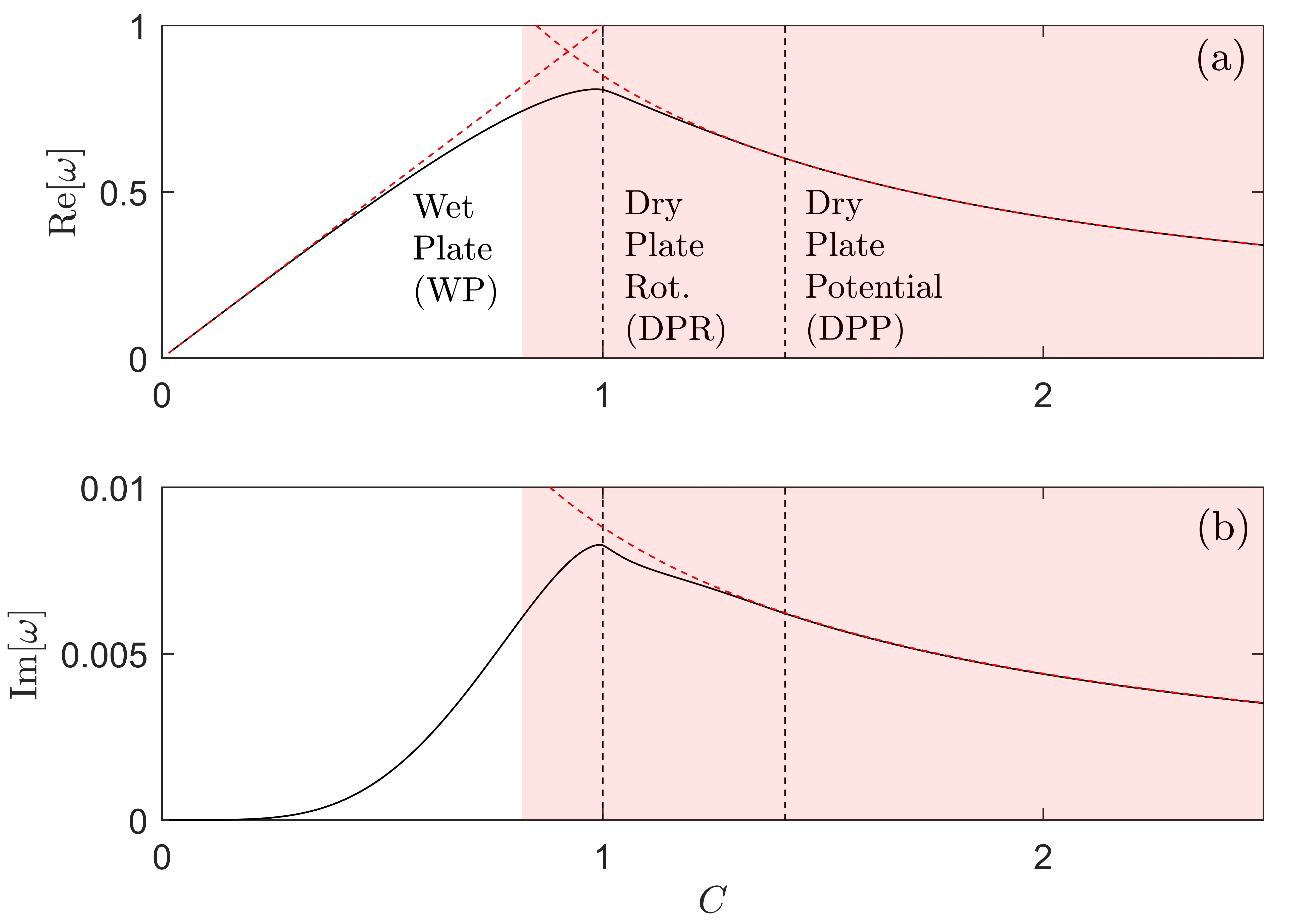
Cuando se hace girar un líquido en una taza, se forma un remolino con un centro vacío. En ese centro hueco, las ondas encuentran una trampa: al reflejarse en las paredes, le roban energía al vórtice y crecen como el fuego a lo largo de una mecha: cada ola es más fuerte que la anterior, hasta que estalla un pico.
La mayor sorpresa del experimento: el mejor análogo de mesa de un agujero negro resultó ser un vórtice con el centro completamente vacío. Precisamente ese vacío interior, como en un tornado, hace que su comportamiento sea casi cósmico. Así, una simple olla con agua se convierte en un portal hacia abismos lejanos.
Resumen original
tal como lo escribieron los autores, en inglés arXiv:2511.05351
Draining vortices provide a powerful platform for simulating black hole phenomena in tabletop experiments. In realistic fluid systems confined within a finite container, low-frequency waves amplified by the vortex are reflected at the walls, rendering the system unstable. This process, known in the gravitational context as the black hole bomb, manifests as a sloshing motion of the free surface. The analogy, however, becomes more nuanced when a realistic vortex core with a non-singular vorticity distribution is considered. We investigate this by analysing a non-draining Rankine vortex in the shallow-water and inviscid limits. At low circulation, the sloshing corresponds to an instability of the vorticity field, whereas at high circulation where fluid is expelled from the vortex core, the destabilising mechanism coincides with that of the black hole bomb. Our variational framework distinguishes the energetic contributions of vorticity and irrotational perturbations, offering new insight into the rotating-polygons instability reported by, e.g. Jansson et al. (2006). From the analogue-gravity perspective, we identify hollow core vortices as an optimal regime for exploring black-hole-like instabilities in fluids.
Los tornados y las trombas marinas replican exactamente la estructura de los agujeros negros: su centro vacío actúa como trampa para las ondas; basta con que se reflejen y se desata una avalancha.