Un láser dibuja finos canales para el agua exprés
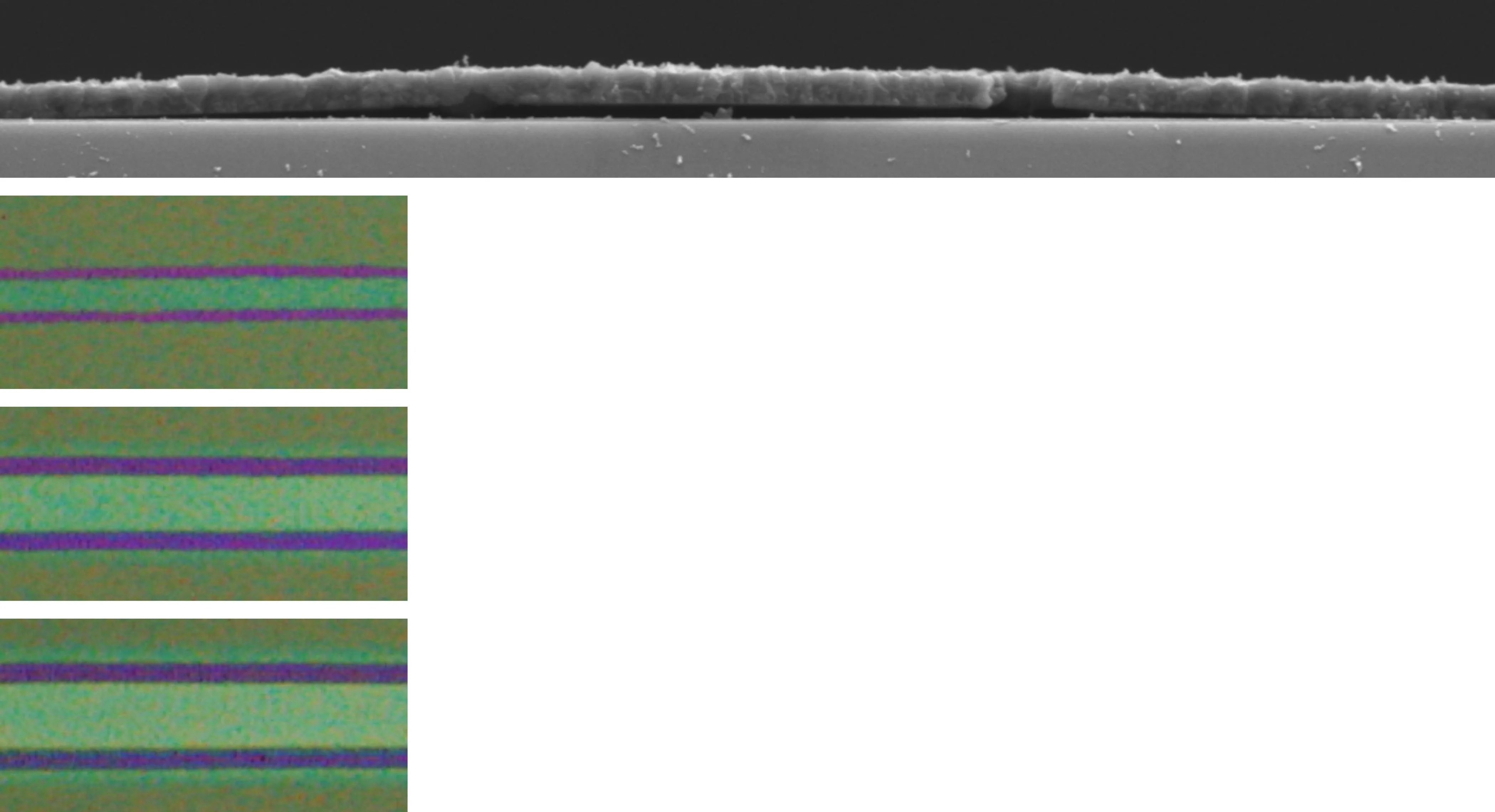
El haz del láser atraviesa el vidrio y toca una fina película de diamante. En el punto de contacto, la película se convierte en una tira estrecha que se eleva ligeramente. Colocamos una segunda tira similar al lado, y entre ambas queda un corredor vacío. Eso es el canal: su anchura puede ser cincuenta veces mayor que su altura, como una hoja de papel sobre la mesa.
El agua entra en el canal por sí sola, como en un papel secante. No se necesita ninguna bomba: el líquido avanza por la rendija gracias a la atracción de las paredes. El canal no se destruye, incluso cuando está completamente lleno. A través del vidrio transparente se ve cómo se mueve el agua en su interior: la luz se refleja de manera distinta en las zonas llenas y vacías.
Este método es como dibujar con láser sobre vidrio. Dos líneas y entre ellas queda listo el canal. Nada de ensamblajes complejos ni pegamentos. Esto abre el camino a dispositivos baratos y fiables donde los líquidos fluyen por rendijas planas ultrafinas.
Resumen original
tal como lo escribieron los autores, en inglés arXiv:2602.06316
Nanochannels with high width-to-height aspect ratios are desirable for many applications, particularly those requiring optical access, but remain challenging to fabricate. In this work, the direct laser writing of such channels between diamond films and glass substrates is introduced. As previously reported, laser light can transform a portion of diamond film into a nanostrip. The strip induces delamination of the surrounding film, causing the formation of two nanochannels with triangular cross-sections. Here, it is demonstrated that nanochannels with rectangular cross-sections and width-to-height aspect ratios exceeding fifty can form between pairs of nanostrips. With atomic force microscopy, the maximum strip spacing that produces these nanochannels is investigated, and it is demonstrated that the reflectance of the channels can be measured by microspectrophotometry. The microstructure of the nanochannels, including nanostrips, and processes that occur during laser writing are inferred from transmission electron microscopy and electron energy loss spectroscopy. By fabricating a nanofluidic device and using microspectrophotometry, it is found that the nanochannels fill with water through capillary action, are resistant to clogging, and are mechanically stable against water filling. A versatile platform for producing high-aspect-ratio nanochannels that are optically accessible and fluidically functional is presented, thereby expanding opportunities for advanced applications.
El agua entra en este canal por sí sola, sin bomba, como en una esponja seca que se sumerge en un charco.