El espejo que no confunde la luz exprés
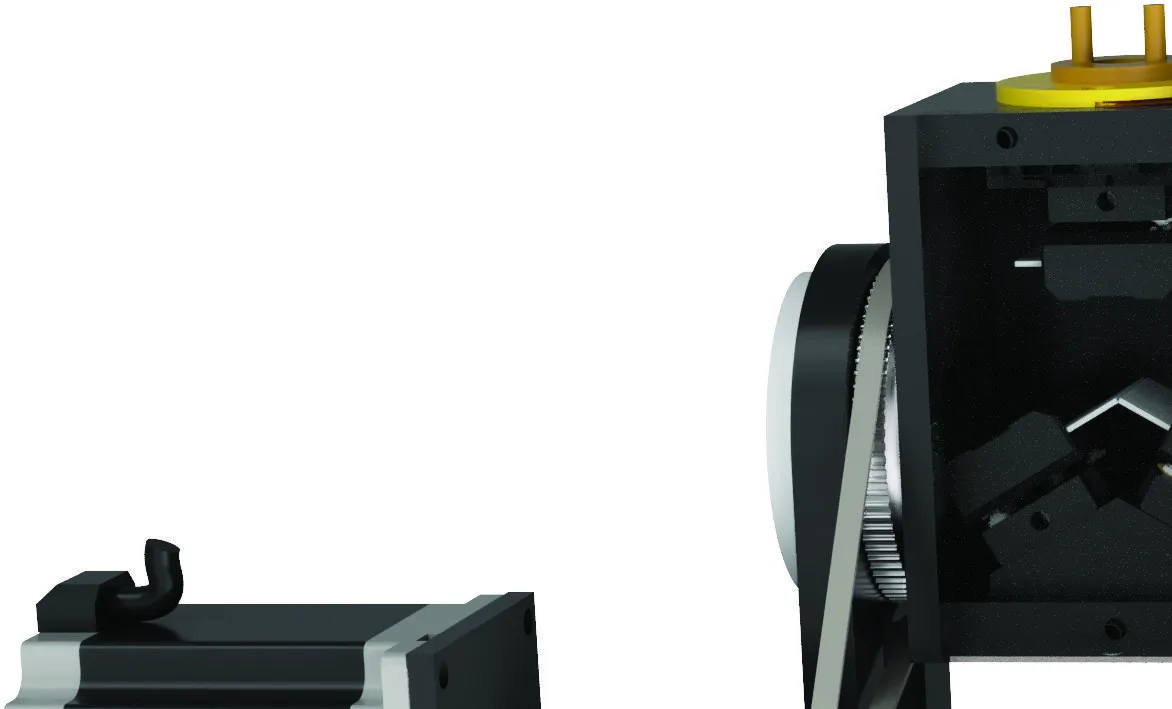
La luz, como una cuerda que se sacude, oscila en un plano determinado. Los astrónomos e ingenieros suelen rotar la imagen con un sistema de tres espejos, el llamado espejo K, pero al hacerlo, el plano de oscilación de la luz también rota involuntariamente. Para mediciones precisas, eso es un problema.
Los autores del nuevo trabajo encontraron una salida simple: colocaron una placa transparente antes del espejo y otra después, que rotan el plano de oscilación, y las hicieron girar a la mitad de velocidad que el propio espejo. Así, todos los giros extra se compensan entre sí, y la luz sale con la misma orientación de oscilación con la que entró.
Este truco funciona para cualquier ángulo del espejo, cualquier material y cualquier estado de la luz. Esto significa que los astrónomos podrán ver el cielo con más nitidez, y los ingenieros cuánticos, controlar con mayor precisión las partículas de luz.
Resumen original
tal como lo escribieron los autores, en inglés arXiv:2604.25475
A K-mirror rotates the wavefront of an incident optical field. However, the rotation always introduces polarization changes in the transmitted field. This is a serious concern for applications ranging from astronomical image derotation to orbital angular momentum spectrum characterization in photonic quantum technology. Recent efforts have shown that the polarization change can be minimized significantly, but these require either a very small base angle that limits the field of view, or mirrors with a customized refractive index. Making the transmitted polarization state completely independent of the rotation angle has remained an open problem. In this work, we show that placing half-wave plates before and after a K-mirror and rotating them synchronously at half the K-mirror rotation angle makes the polarization change in the transmitted field exactly independent of the rotation angle. This works for any wavefront rotator, any base angle, any mirror refractive index, and any input state of polarization. We experimentally demonstrate the approach using a K-mirror with a base angle of $$30^{\circ}$$, which gives the largest field of view among practical designs, and find a mean polarization error of ~1%, limited only by the retardance imperfection of commercially available half-wave plates. This has significant practical implications for applications that require precise wavefront rotation without polarization change.
La polarización de la luz se puede ver a través de unas gafas de sol comunes: dejan pasar solo las oscilaciones en un plano, por eso el cielo se ve más oscuro.