Una reacción nuclear delimita el abismo de los agujeros negros exprés
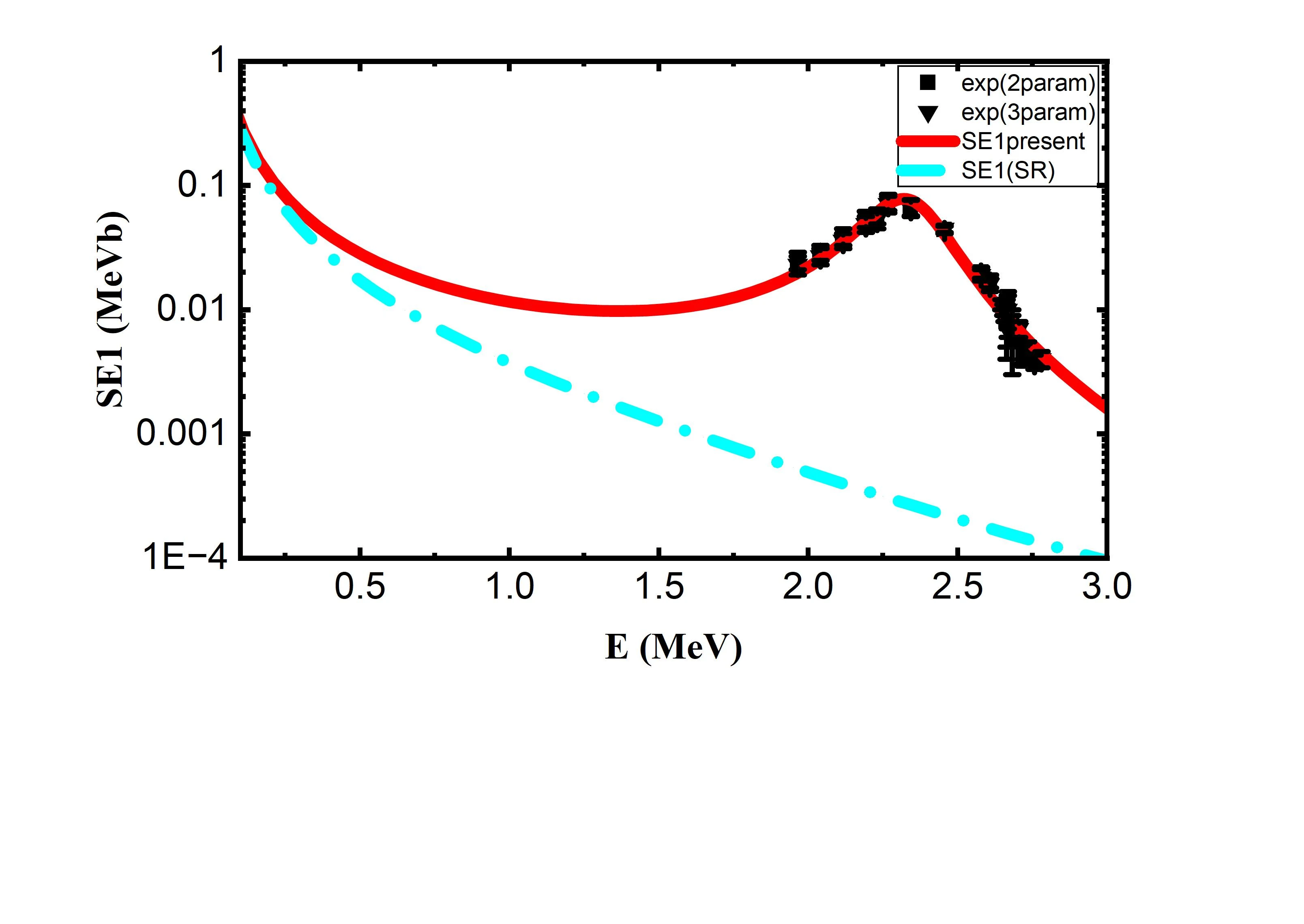
Las ondas gravitacionales han desvelado el abismo: casi no nacen agujeros negros con masas entre 60 y 120 soles. Esta brecha la crean las supernovas por inestabilidad de pares, explosiones que no dejan ni una mota de polvo de la estrella. Que la estrella caiga en el abismo o sobreviva al borde lo decide la reacción del carbono con el helio, que controla la composición del núcleo.
Este proceso transcurre sin prisa: un pequeño aumento de velocidad bastaría para que todo el carbono se convirtiera en oxígeno, dejando al Universo sin vida. Fred Hoyle fue el primero en comprender que la reacción está ajustada con una precisión extrema; de lo contrario, habría cientos de veces menos carbono. Los nuevos datos han reducido las velocidades posibles casi a la mitad. Resulta que el borde del abismo está más lejos de lo que se creía: los agujeros negros comunes más ligeros empiezan entre las 61 y 75 masas solares. Un cambio de apenas un par de porcentajes y la frontera se desplaza decenas de masas.
Resumen original
tal como lo escribieron los autores, en inglés arXiv:2605.07027v1
Gravitational-wave observations have renewed interest in the black-hole mass gap and in the maximum mass of first-generation black holes below its lower edge. The \(^{12}{\rm C}(\alpha,\gamma)^{16}{\rm O}\) reaction plays a central role in this problem because it determines the carbon-to-oxygen ratio after core-helium burning and thereby affects the later evolution of massive stars toward pulsational pair instability and pair-instability supernovae. Recent attempts to constrain \(S(300~{\rm keV})\) from gravitational-wave population inferences face important limitations, because the lower edge of the black-hole mass gap is not directly measured. It is inferred model dependently from assumptions about stellar evolution, metallicity, mass loss, rotation, binary evolution, hierarchical mergers, selection effects, priors, and the adopted population model. Therefore, values of \(S(300~{\rm keV})\) inferred from black-hole populations must remain consistent with independent nuclear-physics constraints. In this work we reanalyze the low-energy \(^{12}{\rm C}(\alpha,\gamma)^{16}{\rm O}\) \(S\) factor using updated information on the subthreshold \(1^{-}\) and \(2^{+}\) ANCs and on the ground-state ANC of \(^{16}{\rm O}\), together with direct capture data. These constraints favor a lower \(S(300~{\rm keV})\) than the older central evaluation and disfavor very large values required by some black-hole-population interpretations. Using the resulting ANC-constrained \(S(300~{\rm keV})\) range and the transformed relation between this quantity and the lower edge of the pair-instability mass gap, we estimate \[ \frac{M_{\rm BH}}{M_\odot}\simeq 61\text{--}75 . \] Thus, the present nuclear-physics constraints favor a relatively high lower edge of the first-generation black-hole mass gap.
La reacción entre el carbono y el helio es tan lenta que la menor aceleración dejaría al Universo sin vida basada en carbono.