Un laser dessine de fins canaux pour l'eau express
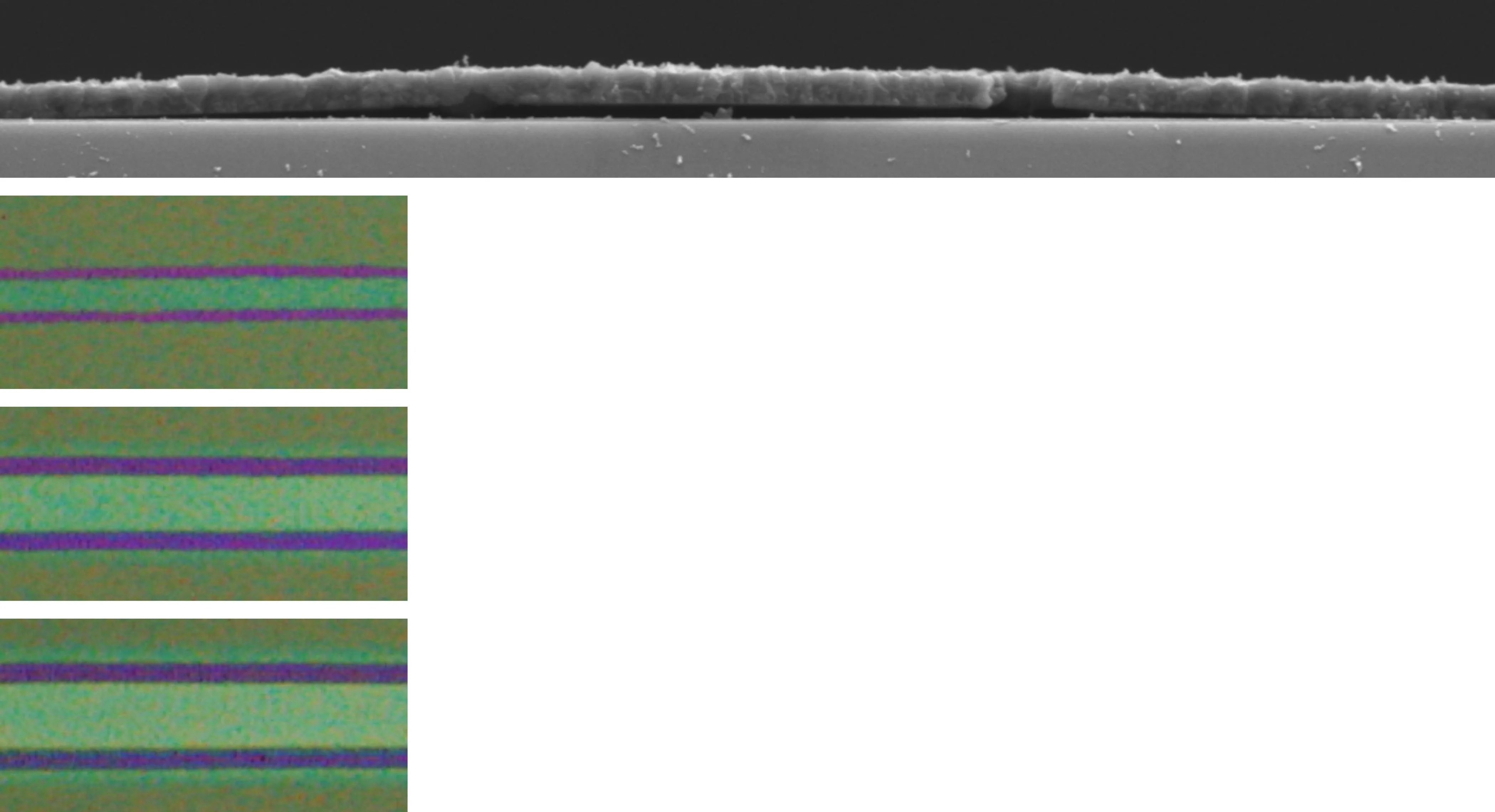
Le faisceau d'un laser traverse le verre et touche un mince film de diamant. Au point de contact, le film se transforme en une étroite bande qui se soulève légèrement. On place une deuxième bande de ce type à côté, et il reste entre elles un couloir vide. C'est cela, le canal : sa largeur peut être cinquante fois plus grande que sa hauteur, comme une feuille de papier posée sur une table.
L'eau s'écoule dans le canal toute seule, comme dans un buvard. Aucune pompe n'est nécessaire — le liquide rampe le long de la fente grâce à l'attraction des parois. Le canal ne se détruit pas, même lorsqu'il est complètement rempli. À travers le verre transparent, on voit l'eau se déplacer à l'intérieur : la lumière se réfléchit différemment sur les zones remplies et vides.
Cette méthode, c'est comme dessiner au laser sur du verre. Deux lignes, et le canal est prêt entre elles. Aucun assemblage complexe, aucune colle. Cela ouvre la voie à des dispositifs bon marché et fiables où les liquides s'écoulent dans des fentes plates extrêmement fines.
Résumé original
tel que rédigé par les auteurs, en anglais arXiv:2602.06316
Nanochannels with high width-to-height aspect ratios are desirable for many applications, particularly those requiring optical access, but remain challenging to fabricate. In this work, the direct laser writing of such channels between diamond films and glass substrates is introduced. As previously reported, laser light can transform a portion of diamond film into a nanostrip. The strip induces delamination of the surrounding film, causing the formation of two nanochannels with triangular cross-sections. Here, it is demonstrated that nanochannels with rectangular cross-sections and width-to-height aspect ratios exceeding fifty can form between pairs of nanostrips. With atomic force microscopy, the maximum strip spacing that produces these nanochannels is investigated, and it is demonstrated that the reflectance of the channels can be measured by microspectrophotometry. The microstructure of the nanochannels, including nanostrips, and processes that occur during laser writing are inferred from transmission electron microscopy and electron energy loss spectroscopy. By fabricating a nanofluidic device and using microspectrophotometry, it is found that the nanochannels fill with water through capillary action, are resistant to clogging, and are mechanically stable against water filling. A versatile platform for producing high-aspect-ratio nanochannels that are optically accessible and fluidically functional is presented, thereby expanding opportunities for advanced applications.
L'eau s'écoule dans ce canal toute seule, sans pompe, comme dans une éponge sèche qu'on plonge dans une flaque.