L'Univers aurait pu rester figé dans un état brûlant express
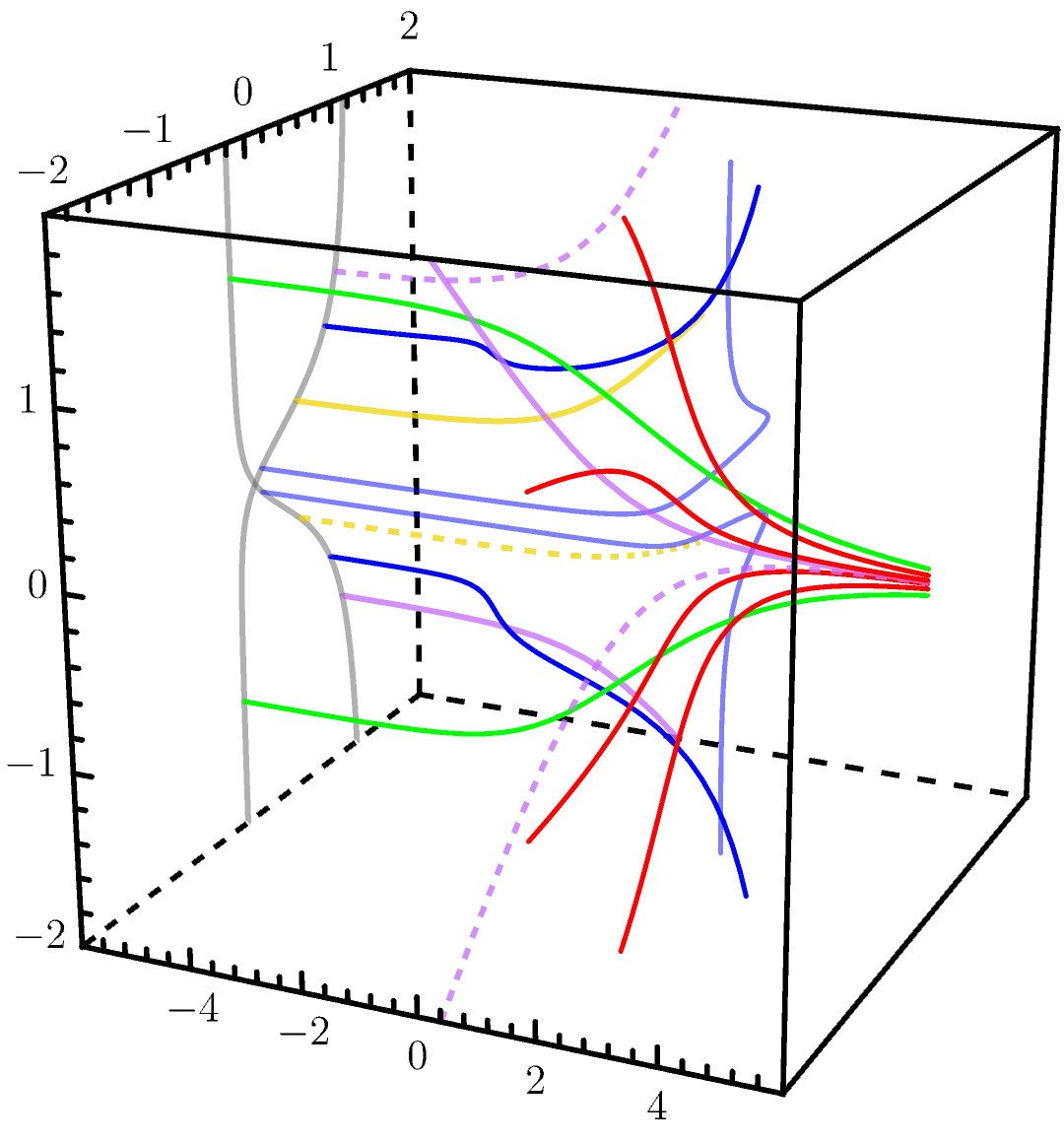
Le cosmos est en expansion, et cette expansion s'accélère. Mais que se passerait-il si, dans les premiers instants après le Big Bang, la gravité agissait différemment ? Les auteurs de cette nouvelle étude ont ajouté aux équations d'Einstein un champ invisible qui capte l'énergie de la matière et du rayonnement ordinaires. Au lieu de courber l'espace-temps, cette énergie est absorbée par le champ — comme un ressort qui se comprime sans pousser sur les parois.
Dans l'Univers primordial, un tel champ aurait pu presque stopper l'expansion. La lumière aurait eu le temps de traverser de nombreuses fois tout le volume accessible, homogénéisant la température. Cela résout l'énigme de l'horizon : des régions opposées du ciel se ressemblent, alors que, selon les calculs habituels, elles n'ont jamais été en contact. Ce scénario a été baptisé « Univers chaud statique primordial » — par opposition à l'inflation, où l'espace s'est dilaté plus vite que la lumière.
Le champ a également été testé sur le problème de la constante cosmologique — cette fameuse énergie noire qui repousse le cosmos actuel. En théorie, le champ pourrait l'absorber, la rendant invisible à la courbure de l'espace. Mais pour l'instant, le modèle ne sait pas passer de cette phase à l'expansion chaude ordinaire — il reste bloqué dans le passé, comme un disque rayé sur un même sillon.
Résumé original
tel que rédigé par les auteurs, en anglais arXiv:2608.07318v1
Gravitational caloric theory (GCT) extends general relativity by introducing a vector field $$S_\mu$$ that is sourced by and non-minimally coupled to the fluid sector, while preserving covariant conservation of the standard fluid energy-momentum tensor. The initial motivation is to trigger early dark energy (EDE) using the total fluid equation of state that encodes the cosmic radiation-matter transition, thereby addressing the associated coincidence problem. The EDE dynamics are analyzed in detail by recasting the background evolution equations as a two-dimensional dynamical system. Poincar\'e compactification probes the global structure of this system and illustrates the role of critical points at infinity in shaping the phase portrait. There are two cosmological applications beyond EDE, both belonging to a broader family of energy-cancelling solutions in which conventional energy components (e.g., the cosmological constant $$\Lambda$$ or an ideal fluid) preferentially excite $$S_\mu$$ rather than sourcing spacetime curvature. First, the $$\Lambda$$-cancelling solution corresponds to the so-called self-tuning mechanism proposed to address the old cosmological constant problem. A major limitation is that our present realization cannot enter the standard hot Big Bang phase and therefore should not be regarded as a complete self-tuning solution. Second, inspired by a nontrivial critical point at infinity in the EDE phase portrait, we propose an \textit{Early Static Hot Universe} in which $$S_\mu$$ offsets the gravitational effect of ordinary hot gas, yielding quasi-static expansion with a decreasing comoving Hubble radius that can address the horizon problem. This scenario offers an alternative to inflation. This paper opens several avenues for further investigation of GCT, including cosmology, gravitational waves, and compact objects. (Abstract abridged to meet arXiv limits.)
L'horizon en cosmologie n'est pas un bord de gouffre, mais simplement la distance que la lumière a parcourue depuis le début des temps. Si l'Univers a un jour presque fait du sur-place, l'horizon a pu englober bien plus de matière que lors d'une expansion rapide.
Dans le roman « Le Dernier Problème » d'Asimov, les humains cherchent un moyen d'inverser la mort thermique de l'Univers — ici, le cosmos primordial trouve lui-même un équilibre temporaire, comme s'il suspendait son souffle avant l'élan.