الكون يفقد تجانسه على مقياس 138 ميغابارسيك سريع
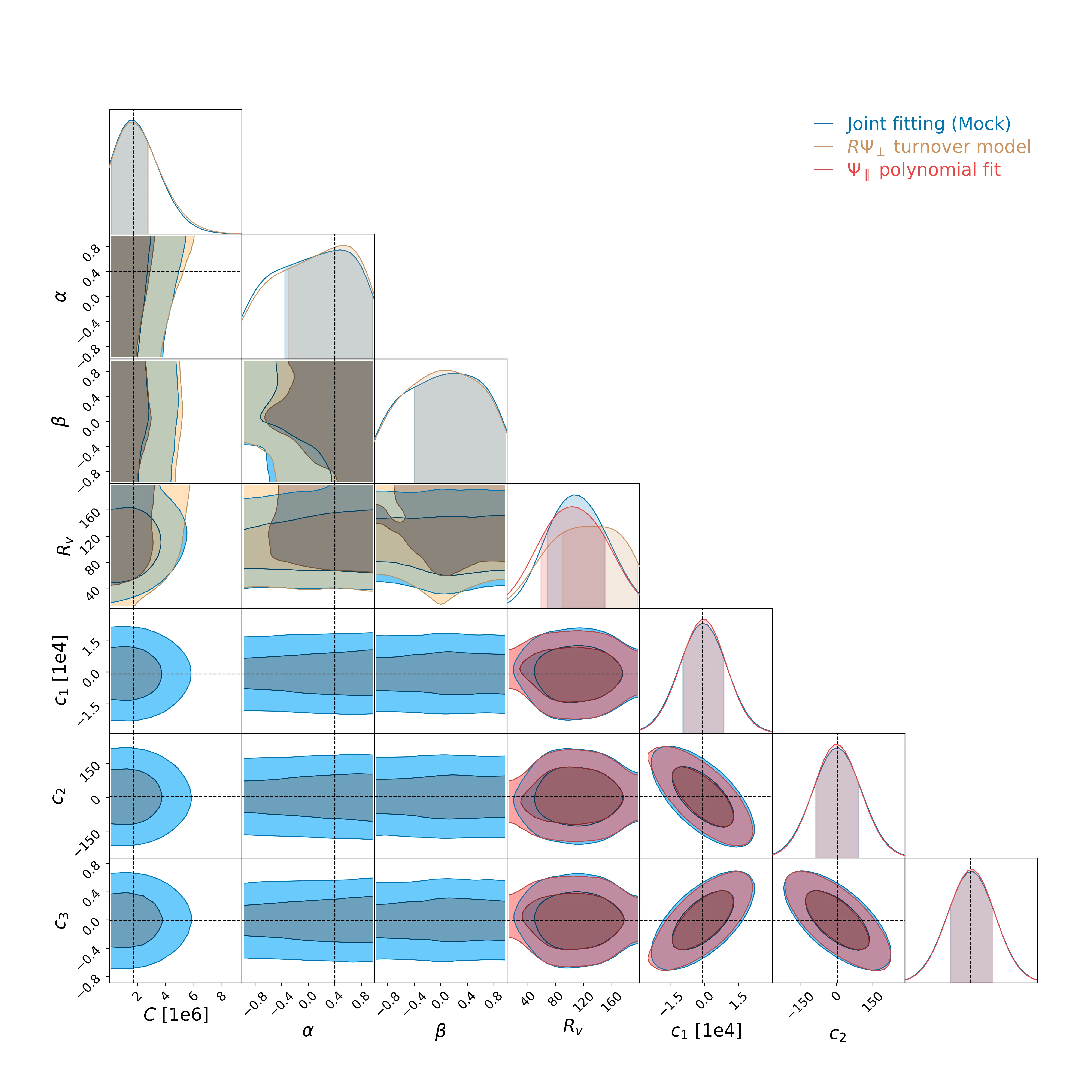
المجرات في الكون ليست متناثرة عشوائياً: فالمجرات المتجاورة تتحرك في اتجاه واحد، مثل سرب من الأسماك، أما البعيدة فلكل منها حركتها المستقلة. أين يقع الحد الفاصل بين «معاً» و«منفصلة»؟ كان ذلك غير واضح حتى الآن. ابتكر علماء الفلك مقياساً جديداً — وهو المقياس الذي عنده يتوقف متوسط حركة المجرات على طول الخط الواصل بين زوج منها عن كونه متسقاً ويبدأ بالتناقض مع بعضه.
سُمّي هذا المقياس بمقياس تماسك السرعات. يمكن حسابه عبر كمية خاصة — أثر موتر ارتباطات السرعات المتوسط على كرة. يبدو الأمر معقداً، لكن الجوهر بسيط: نأخذ كرة حول نقطة ما، وننظر كيف تتحرك المجرات داخلها بالنسبة للمركز. في الكرات الصغيرة، تبتعد في المتوسط عن المركز أو تقترب منه بشكل متسق. في الكرات الكبيرة، تصبح الحركة عشوائية، مثل حشد في ساحة بعد حفل موسيقي.
الأمر الأكثر إثارة للاهتمام هو أن هذا المقياس لا يعتمد تقريباً على الزمن. في الكون المتوسع، يظل ثابتاً في الإحداثيات المتوافقة (comoving coordinates) — وكأن المسطرة تنمو مع الفضاء نفسه. لذلك يمكن استخدامه كـ«مسطرة قياسية» لقياس المسافات الكونية. كما أنه مرتبط ارتباطاً وثيقاً باللحظة التي تعادلت فيها كثافات المادة والإشعاع في الكون — وهو حدث رئيسي في تاريخه.
حالياً، دقة القياسات محدودة: سرعات المجرات معروفة بشكل أقل دقة من مواقعها. لكن المسوحات السماوية الجديدة، التي تعمل بالفعل أو قيد الإعداد، ستسمح بتحسين هذا المقياس. عندها سيكون لدى علماء الكونيات أداة موثوقة إضافية لاختبار تصوراتنا حول بنية الكون.
الملخص الأصلي
كما كتبه المؤلفون، بالإنجليزية arXiv:2601.02886
We introduce the velocity coherence scale $$R_v$$, the scale at which the spherical volume average of the trace of the velocity correlation tensor transitions from scaling faster than the sphere radius to scaling more slowly. This corresponds to the radius at which the average motion of galaxies along their separation vectors transitions from correlated to anti-correlated. We derive a theoretical estimator for $$R_v$$ by defining the bulk in spheres $$B_R$$, a velocity-field analogue of the mean scale counts used in density-field correlation analyses. We show that, for a statistically homogeneous matter distribution, the logarithmic derivative of $$B_R$$ and the correlation dimension $$D_2$$ share the same asymptotic behaviour and therefore can be used to estimate the scale of transition to statistical homogeneity. Furthermore, we show that in standard $$\Lambda$$CDM cosmologies the velocity coherence scale is tightly connected to the matter-radiation equality scale $$k_{eq}$$, and that its value in comoving coordinates is redshift-independent. These results highlight the potential of $$R_v$$ both as a standard ruler and as a physically motivated scale characterising the onset of cosmic homogeneity. We present a proof of concept using measurements of the PV correlation functions from SDSS. We show that the main challenge in determining $$R_v$$ is the limited precision of PV measurements compared to density ones, as they typically rely on smaller samples with larger uncertainties that scale roughly linearly with survey depth. Fitting our theoretical estimators for $$R_v$$, we obtain $$R_v \approx 138^{+23}_{-54}\,\mathrm{Mpc}/h$$. Finally, we show that more precise determinations should be achievable with current and upcoming peculiar velocity surveys.
مقياس تماسك السرعات أكبر بنحو 300 مرة من قطر درب التبانة.