كيف تُطفئ العناقيد نجومها سريع
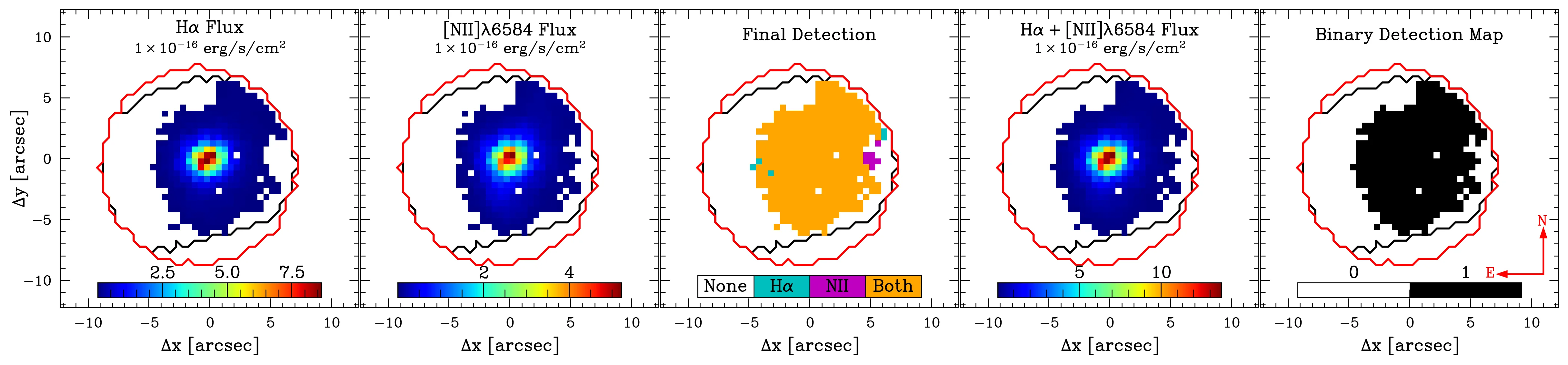
العنقود المجري يشبه تقاطعًا مزدحمًا حيث تندفع المجرات-السيارات عبر رياح معاكسة من الغاز الساخن. هذه الرياح، المسماة بضغط الدفع (ram pressure)، تقتطع من المجرات مخزونات الغاز البارد — وقود ولادة النجوم. تابع علماء مسح SAMI كيف يحدث هذا لدى مئات المجرات في ثماني عناقيد قريبة.
قسّموا المجرات إلى ثلاث مجموعات حسب شكل الهيدروجين المتوهج: هادئة، مائلة، ومبتورة. المائلة هي التي تتعرض حاليًا للضغط: يُدفع غازها إلى ذيل، مثل دخان نار في مهب الريح. المبتورة فقدت بالفعل غازها الخارجي، وأصبحت منطقتها المتوهجة أقصر. الهادئة لم تدخل بعد في تيار قوي.
مقارنة معدل ولادة النجوم أظهرت أن أطراف المجرات المتضررة تخمد أولًا. في المركز يستمر تكوين النجوم كالمعتاد، بينما المناطق الخارجية تفقد غازها وتتوقف عن صنع النجوم. هذا أوضح في المجرات "المبتورة" — تلك التي مرت بالفعل بذروة الضغط.
هكذا تتضح الصورة التطورية: مجرة هادئة تدخل العنقود، فتصبح مائلة، ثم مبتورة. يتلاشى تكوين النجوم من الخارج إلى الداخل، كما تجف بركة من الأطراف نحو المنتصف. ولهذا تكثر في العناقيد المجرات الحمراء القديمة التي توقفت منذ زمن عن ولادة النجوم.
الملخص الأصلي
كما كتبه المؤلفون، بالإنجليزية arXiv:2602.03088
Cluster environments influence galaxy evolution by curtailing star formation activity, notably through ram-pressure stripping (RPS). In this study, using spatially resolved spectroscopic data from the SAMI Galaxy Survey, we identify galaxies undergoing or recently affected by RPS in eight nearby clusters ($$0.029 < z < 0.058$$), through a visual classification scheme based on the ionised gas ($$\rm H\alpha + [NII]\lambda 6584$$) morphologies, split into unperturbed, asymmetric, and truncated. The projected phase-space analysis shows that asymmetric galaxies are found in a narrow region in cluster-centric distance ($$\rm 0.1 < R/R_{200} < 0.6$$) and have a larger dispersion in line-of-sight velocity ($$\sigma(|v_{pec}|)_\mathrm{Asym} = 0.71^{+0.09}_{-0.07}\ \sigma_{200}$$) compared to the truncated and unperturbed samples. In terms of star formation activity, RPS candidates yield a much steeper resolved star-forming main sequence (rSFMS; $$\Sigma_\mathrm{SFR} - \Sigma_\ast$$) relation compared to the unperturbed counterparts, primarily emerging from having lower $$\Sigma_\mathrm{SFR}$$ values for the low mass density regime, with the steepest gradient deriving from the truncated sample. Moreover, radial star formation profiles reveal that star formation in RPS candidates is suppressed in the outskirts relative to unperturbed galaxies and is more prominent for the truncated sample. In contrast, central ($$\rm r/r_{eff}<0.5$$) star formation activity in RPS candidates is comparable with that in their unperturbed and field counterparts, suggesting no elevated activity. Taken together, this suggests an evolutionary trend linked to the RPS stage, where unperturbed galaxies likely represent recently accreted systems (pre-RPS), while asymmetric and truncated galaxies may correspond to populations undergoing RPS and post-RPS phases, respectively, favouring outside-in quenching.
في العنقود المجري كمية غاز هائلة تجعله يتوهج بالأشعة السينية، وتصل حرارته إلى عشرات الملايين من الدرجات.
في مسلسل "ستار تريك"، كثيرًا ما تُصوَّر المجرات كجزر معزولة، لكن في الواقع حياتها تعتمد بشدة على البيئة المحيطة، كما يظهر في هذا البحث.