تفاعل نووي يرسم حدود الهاوية للثقوب السوداء سريع
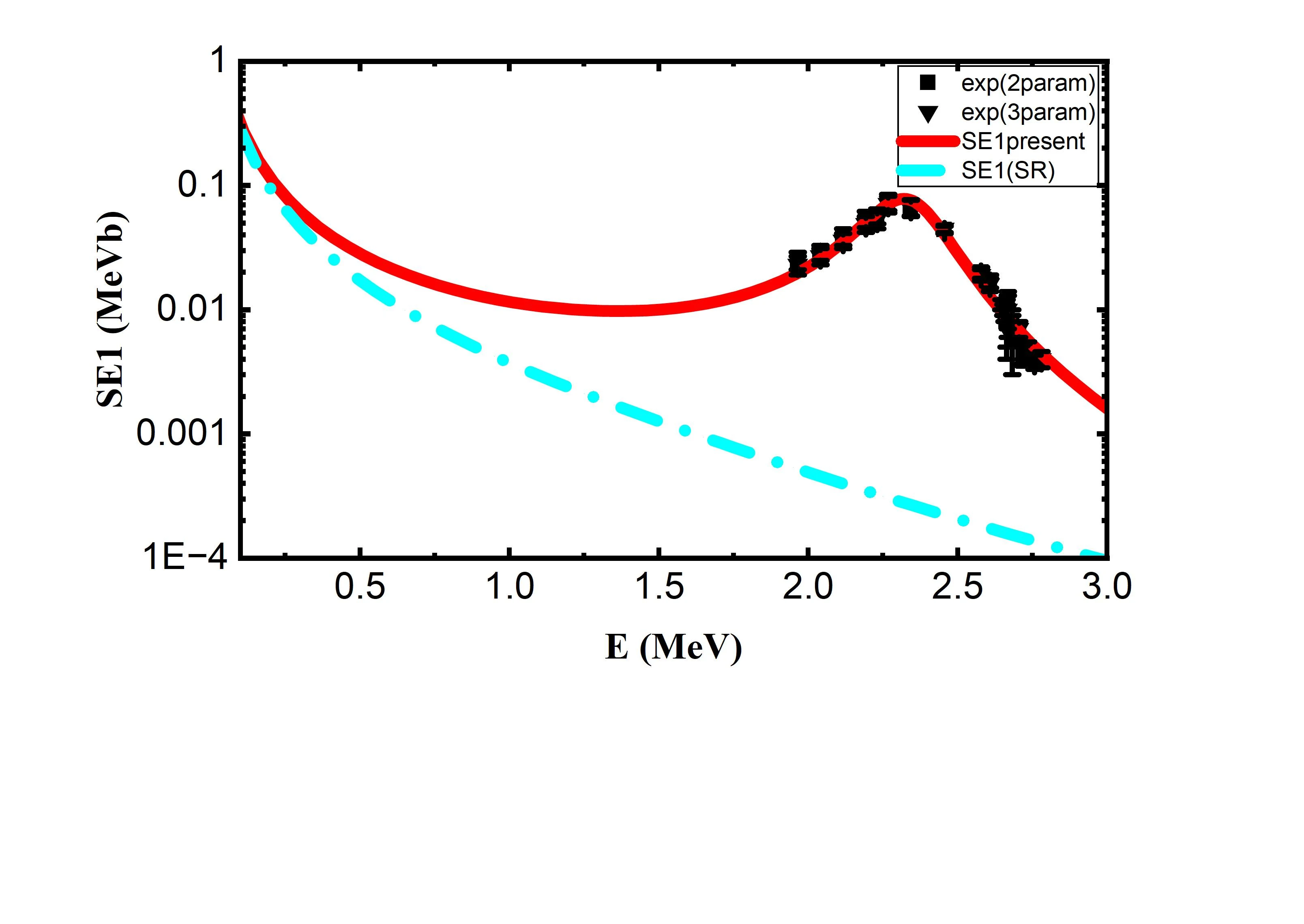
كشفت الموجات الثقالية عن الهاوية: تكاد الثقوب السوداء التي تتراوح كتلها بين 60 و120 كتلة شمسية ألا تولد. تنحت هذه الفجوةَ مستعراتٌ عظمى من نوع عدم الاستقرار الزوجي — انفجارات لا تبقي من النجم حتى ذرة غبار. إن مصيرَ النجم، سواء سقط في الفجوة أم نجا على الحافة، يقرره تفاعلُ الكربون مع الهيليوم الذي يتحكم في تركيب النواة.
تسير هذه العملية بهدوء: حتى تسارعٌ طفيف لكان كل الكربون قد تحول إلى أكسجين، حارماً الكون من الحياة. كان فريد هويل أول من أدرك أن التفاعل مضبوط بدقة بالغة، وإلا لكان الكربون أقل بمئات المرات. وقد ضيّقت البيانات الجديدة نطاق السرعات الممكنة إلى النصف تقريباً. واتضح أن حافة الهاوية تقع أبعد مما كان يُعتقد: أخف الثقوب السوداء العادية تبدأ من 61–75 كتلة شمسية. مجرد إزاحة بنسبة قليلة في المئة — والقفزة في الحدود تبلغ عشرات الكتل.
الملخص الأصلي
كما كتبه المؤلفون، بالإنجليزية arXiv:2605.07027v1
Gravitational-wave observations have renewed interest in the black-hole mass gap and in the maximum mass of first-generation black holes below its lower edge. The \(^{12}{\rm C}(\alpha,\gamma)^{16}{\rm O}\) reaction plays a central role in this problem because it determines the carbon-to-oxygen ratio after core-helium burning and thereby affects the later evolution of massive stars toward pulsational pair instability and pair-instability supernovae. Recent attempts to constrain \(S(300~{\rm keV})\) from gravitational-wave population inferences face important limitations, because the lower edge of the black-hole mass gap is not directly measured. It is inferred model dependently from assumptions about stellar evolution, metallicity, mass loss, rotation, binary evolution, hierarchical mergers, selection effects, priors, and the adopted population model. Therefore, values of \(S(300~{\rm keV})\) inferred from black-hole populations must remain consistent with independent nuclear-physics constraints. In this work we reanalyze the low-energy \(^{12}{\rm C}(\alpha,\gamma)^{16}{\rm O}\) \(S\) factor using updated information on the subthreshold \(1^{-}\) and \(2^{+}\) ANCs and on the ground-state ANC of \(^{16}{\rm O}\), together with direct capture data. These constraints favor a lower \(S(300~{\rm keV})\) than the older central evaluation and disfavor very large values required by some black-hole-population interpretations. Using the resulting ANC-constrained \(S(300~{\rm keV})\) range and the transformed relation between this quantity and the lower edge of the pair-instability mass gap, we estimate \[ \frac{M_{\rm BH}}{M_\odot}\simeq 61\text{--}75 . \] Thus, the present nuclear-physics constraints favor a relatively high lower edge of the first-generation black-hole mass gap.
تفاعل الكربون مع الهيليوم بطيء لدرجة أن أقل تسارع كان ليحرم الكون من الحياة القائمة على الكربون.