جيمس ويب يصطاد كوكبًا خفيًا من قرص الغبار سريع
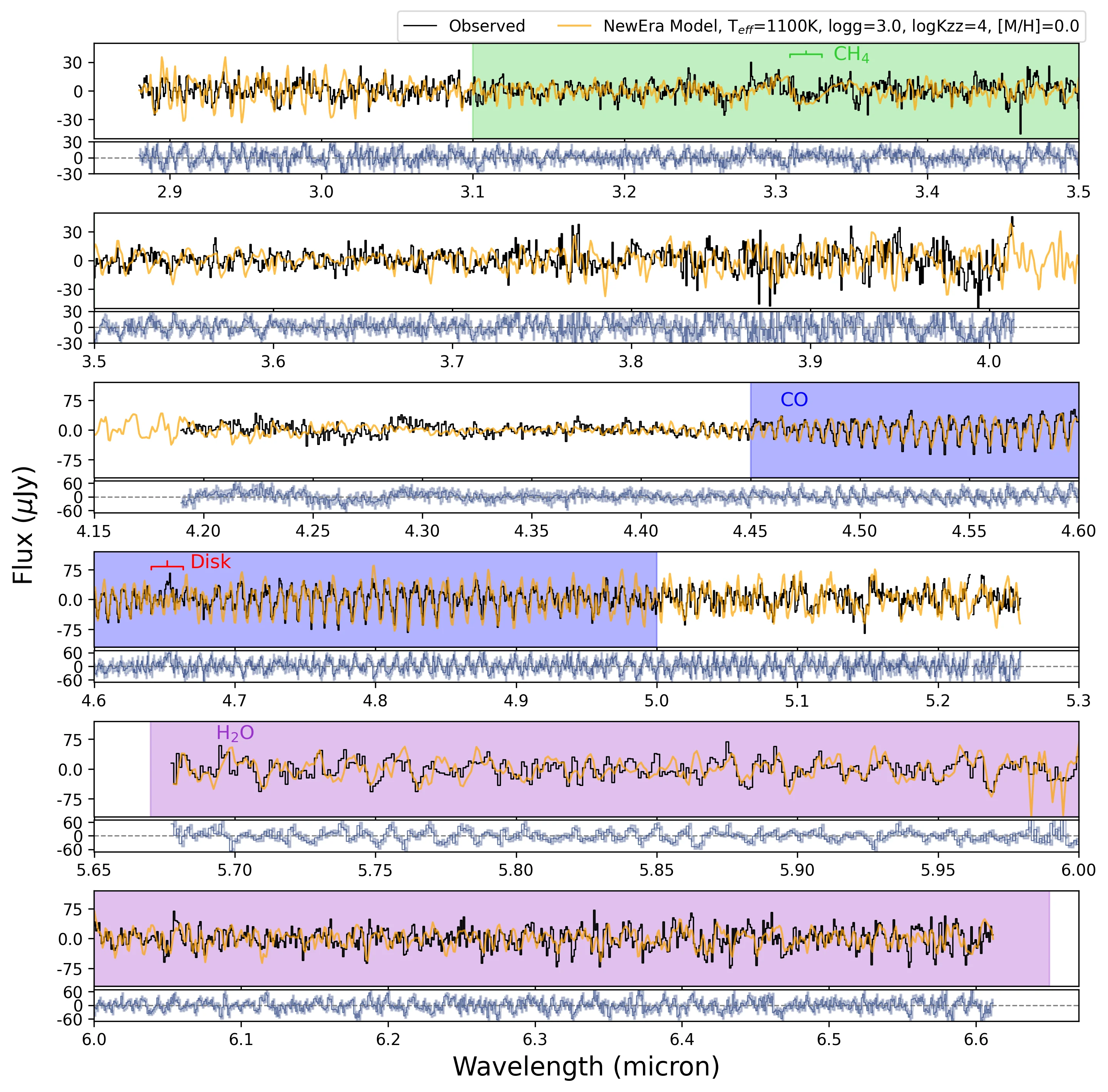
اصطاد علماء الفلك بمساعدة جيمس ويب كوكبًا عملاقًا ثالثًا من قرص الغبار المعتم للنجم بيتا بيكتوريس. كانوا يعرفون كوكبَين آخرين، لكن هذا الكوكب كان مختبئًا في الضوء الساطع، مثل سمكة في المياه الموحلة.
لم تفلح تقنيات التصوير المعتادة، لذا استُخدم تحليل الضوء إلى ألوانه: فأظهرت بصمات الماء والميثان وأول أكسيد الكربون. يشبه ذلك الصيد باستخدام 'الرائحة' الكيميائية: فبدلًا من إلقاء الشبكة عشوائيًا، استُخدم طُعم دقيق — نموذج الخطوط الجزيئية.
الكوكب المُصطاد بيتا بيكتوريس d أكبر من المشتري بمرتين إلى أربع مرات، ويدور بعيدًا جدًا — أبعد من بُعد نبتون عن الشمس. بثقله، يجرف الحافة الداخلية لـقرص الغبار، كما لو أنه يزيل الطمي. تدوم سنته أكثر من مئة سنة أرضية، ويفتح هذا الأسلوب البصيرة: البحث عن عوالم حيث لم نكن نرى سوى العكارة.
الملخص الأصلي
كما كتبه المؤلفون، بالإنجليزية arXiv:2606.23789
We report the discovery of $$\beta$$ Pictoris d ($$\beta$$ Pic d), a third giant planet in the $$\beta$$ Pictoris system, which now becomes only the second directly imaged system with more than two confirmed planets. $$\beta$$ Pic d was serendipitously detected in JWST/NIRSpec IFU observations. A second epoch of NIRSpec and MIRI/MRS observations confirm the initial discovery. The extracted spectrum shows clear CH$$_4$$, CO, and H$$_2$$O absorption features, and $$\beta$$ Pic d's measured radial velocity is consistent with its orbital position. Radial velocity and astrometry measurements combined with orbital stability simulations suggest a semi-major axis $$>$$30 au, consistent with $$\beta$$ Pic d being responsible for carving the inner edge of the $$\beta$$ Pictoris debris disk. Using effective temperature estimates from atmosphere model grid fits combined with evolutionary models, we estimate a mass of 2--4 $$M_\mathrm{Jup}$$. $$\beta$$ Pic d is the first planet discovered using spectral template matching with moderate-resolution spectroscopy, highlighting its sensitivity to planetary molecular features hidden within bright extrasolar debris disks that are difficult to access with broadband imaging.
السنة على الكوكب بيتا بيكتوريس d تدوم قرنًا ونصف على الأقل: فالكوكب بعيد جدًا لدرجة أن دورة واحدة حول النجم تستغرق أكثر من 100 سنة أرضية.