آلة تبتكر نظريات حول التفكير سريع
حلقة مفرغة: الآلة تطرح فكرة، وتختبرها على البشر، وترى الإخفاقات، وتولد تخمينًا جديدًا أكثر دقة. هكذا يعمل AutoCog — العالم المعرفي الآلي. في السابق، كان أصعب جزء في علم التفكير (العلوم المعرفية) — وهو ابتكار النظرية — حكرًا على البشر فقط. كانت الآلات تجمع البيانات، وتقوم الحواسيب بحساب النماذج، بينما تظل الخطوة الإبداعية للإنسان. ولأول مرة، يغلق AutoCog هذه الدورة بالكامل.
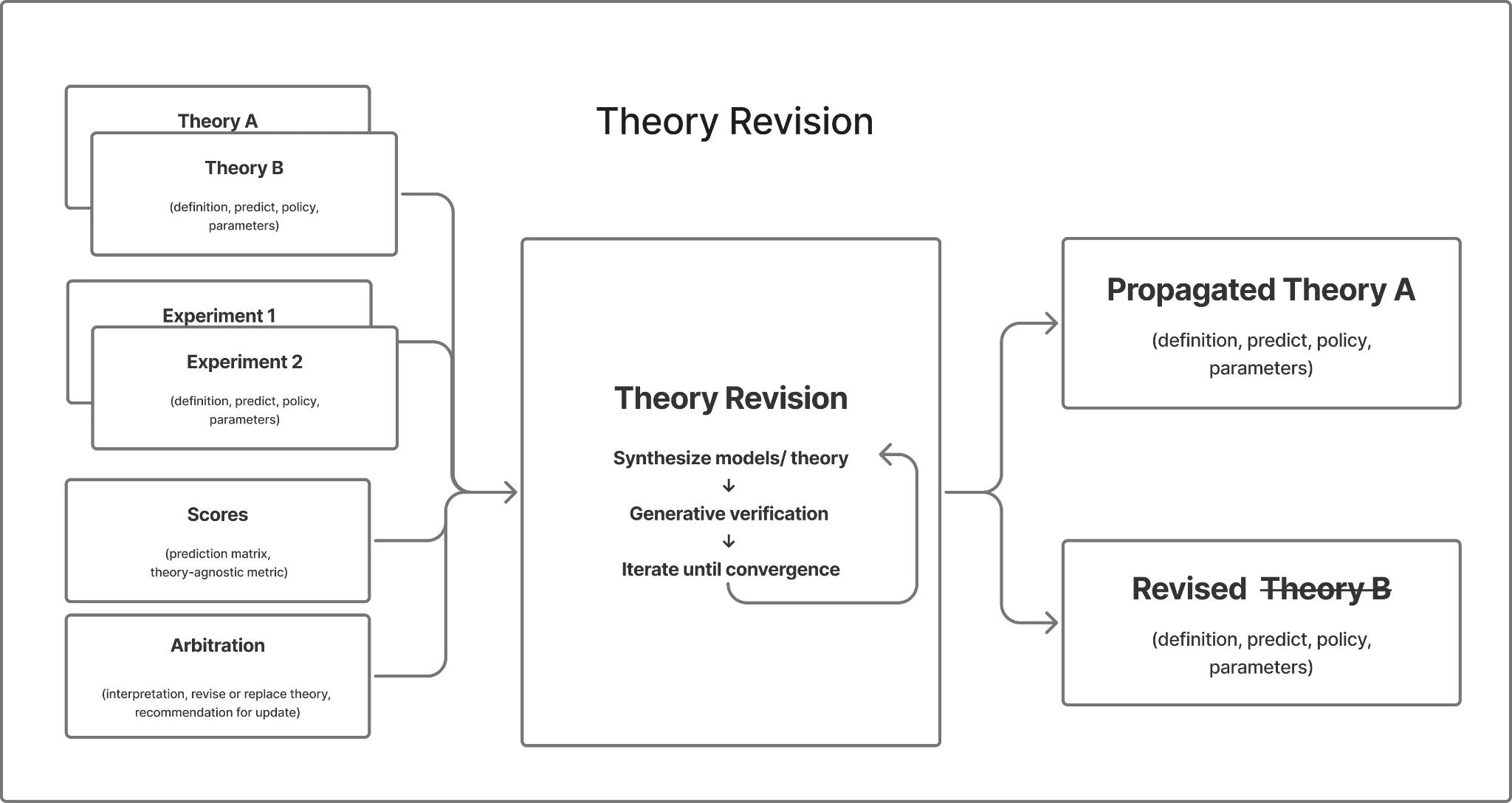
النظام مبني كمناظرة بين عدة وكلاء يعتمدون على نماذج لغوية كبيرة. يقترح كل وكيل نموذجه الخاص لاتخاذ القرار — ليس مجرد نص، بل برنامجًا يعمل. ثم يبتكر AutoCog تجربة是最好的 للفصل بين المتناظرين، ويجمع متطوعين عبر الإنترنت، ويجمع إجاباتهم. تُقيَّم النظريات بناءً على مدى دقة توقعها لسلوك البشر. تحلل النماذج الخاسرة أخطاءها وتتحول إلى نسخ محسّنة. تتكرر الدورة.
لم يكن هذا الاكتشاف مبرمجًا مسبقًا. عندما شُغِّل النظام على بيانات محاكاة، استعاد حتى الاستراتيجيات غير المعتادة التي تناقض «الفطرة السليمة» للنموذج اللغوي. هذا يعني أن AutoCog يستمع حقًا إلى البيانات، ولا يكرر أنماطًا محفوظة. في تجارب مع بشر حقيقيين، كانت نظرياته أدق من النظريات المقبولة عمومًا، ونجحت في مهمتين مختلفتين. خضعت النظرية الجديدة لاختبار نهائي: تأكدت توقعاتها في تجربة مسجلة مسبقًا مع مشاركين جدد.
اكتملت الدائرة. يحول AutoCog بناء نظريات حول التفكير من فن غامض إلى علم شفاف وقابل للتكرار وتراكمي.
الملخص الأصلي
كما كتبه المؤلفون، بالإنجليزية arXiv:2606.26448
Across the sciences, autonomous systems are increasingly being used in closed-loop discovery, proposing new theories and designing and running experiments to test them. This approach is yet to be applied in the field of cognitive science, where the central bottleneck is theory-building: the creative step of turning the accumulated failures of existing models into better ones. Theory generation has remained manual even as data collection, modeling, and experiment design have been automated. We present the Automated Cognitive Scientist (AutoCog), a fully autonomous agentic-AI system that closes this loop. Large-language-model agents advocate competing theories, each expressed as an executable cognitive model, design experiments that best discriminate them, collect behavioral data from participants recruited online, score theories against collected data based on their generative performance, diagnose why they fail, and synthesize a better successor. Repeating this cycle allows them to search the space of theories, models, and experiments. In the domain of decision-making, AutoCog recovered known decision-making strategies from simulated behavior, including unconventional ones, showing that its discoveries are ultimately driven by the data rather than strictly bound by the priors of the underlying language models. When run with human participants, it produced theories that outperformed the established theories it was seeded with and generalized to held-out studies in two different experimental settings. It also surfaced a novel theory of multi-cue decision-making in which choices show diminishing sensitivity to feature values. The distinctive predictions of this theory were confirmed in a preregistered study with new participants. AutoCog demonstrates how an automated discovery system can be used to turn cognitive theory-building into an explicit, executable, and cumulative science.
نظام AutoCog مبني كمناظرة: تتنافس عدة نماذج لغوية حول أي نظرية تفسر سلوك البشر بشكل أفضل، ثم «تتحور» النماذج الخاسرة إلى نسخ جديدة.
يوصف نهج مشابه في قصة «السؤال الأخير» لإسحاق عظيموف، حيث تحسّن آلة إجاباتها بشكل متكرر حتى تحقق اختراقًا.