Why did CO₂ rise so fast in 2023 when we burned almost the same amount of fuel? ✛
The planet breathes. Forests and oceans take carbon dioxide out of the air, while factories, cars, and fires release it back. In 2023, that natural inhale became very weak. Instruments at the Mauna Loa station showed that CO₂ in the air grew faster than at any time since 1958. Meanwhile, people burned only slightly more coal, oil, and gas than in 2022. So where did the extra gas go? It simply stayed in the atmosphere, because the land stopped absorbing it.
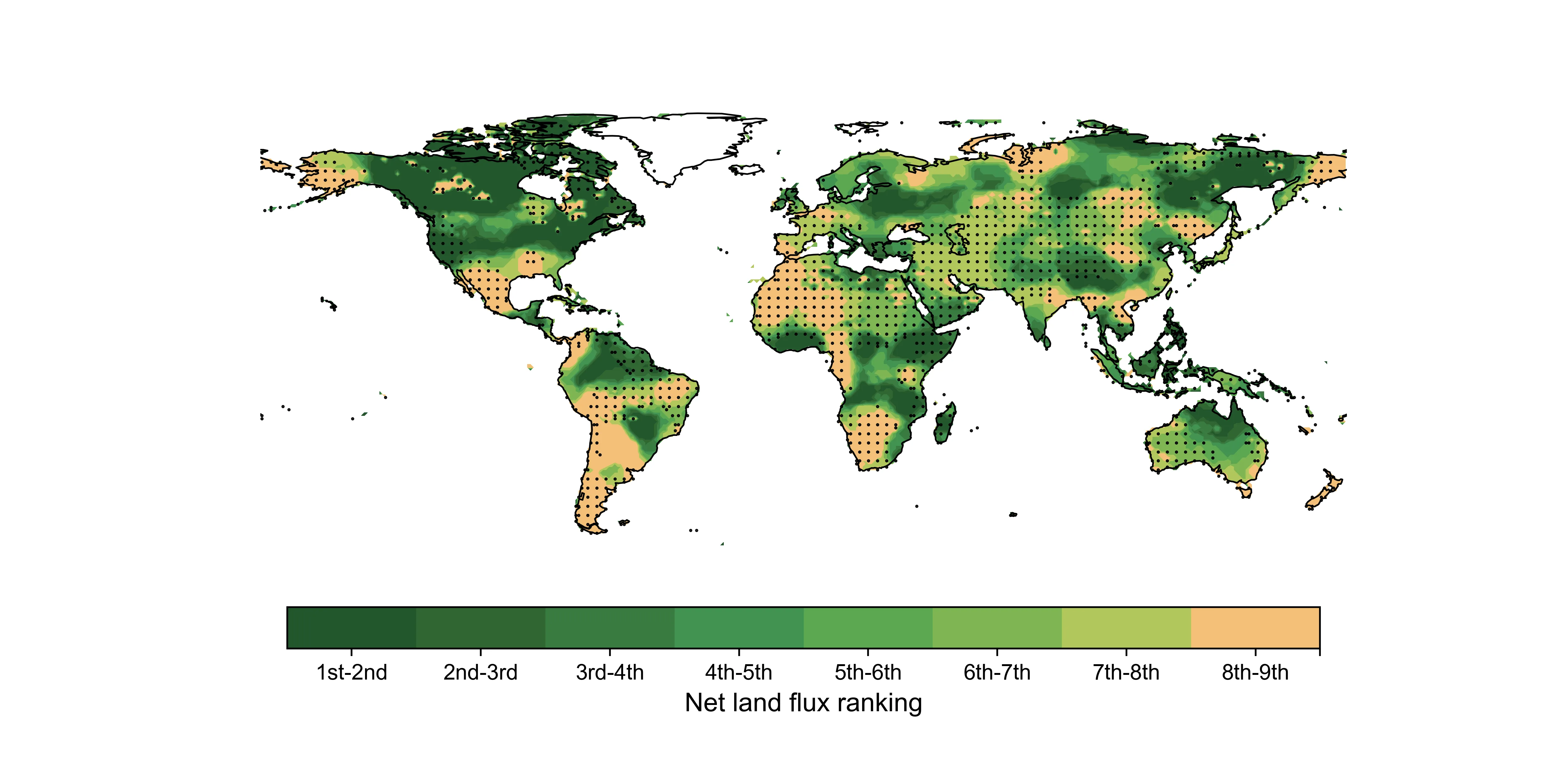
Usually, forests and soils take up about half of the CO₂ we emit. But in 2023, they absorbed four times less than usual: only 0.44 gigatonnes of carbon. For comparison, one gigatonne is about the weight of 200 million elephants. The drought in the Amazon dried out trees, and they stopped growing. Fires in Canada burned vast areas of forest and released carbon that had been stored there for decades. Even northern forests, in Siberia and Scandinavia, absorbed less because of the heat.
Scientists were able to understand what happened so quickly because they combined satellite data, computer models of plant growth, and simplified ocean simulations. Previously, such an analysis took years, but now the diagnosis was made in a few months. The conclusion is simple: when the planet warms, its natural helpers weaken. If heatwaves and droughts become more frequent, forests will stop saving us from excess CO₂, and the climate will change even faster.
In 2023, the CO₂ growth rate at Mauna Loa was 86% higher than in 2022, even though fossil fuel emissions rose by only 0.6%. This is the largest gap between emissions and concentration growth in the entire observational record.
A scenario where natural carbon sinks stop working is explored in Kim Stanley Robinson's novel 'The Ministry for the Future': there, heat waves and droughts lead to massive forest dieback and a sharp acceleration of CO₂ rise. The 2023 study shows that such a scenario may already be starting to unfold.