Drops That Hang by a Hair express
A drop of water squeezed between two close surfaces turns into a tiny bridge. Such bridges are everywhere: they hold sand grains together in wet sand, make hair clump after a shower, and even help insects walk up walls.
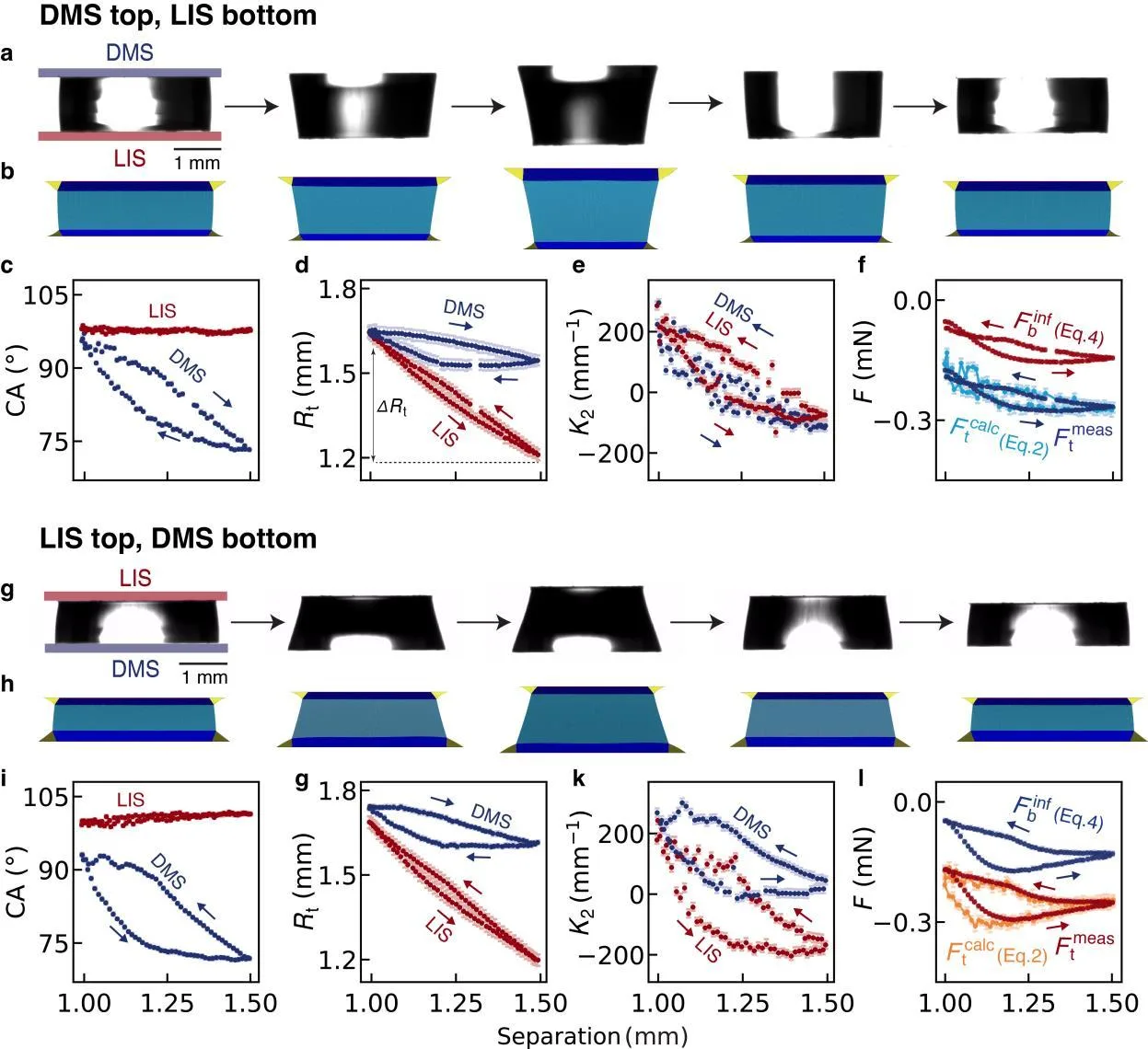
Scientists took three kinds of surfaces: plain glass, glass with a water-repellent coating, and glass infused with silicone oil. They slowly moved the surfaces together and apart, watching how the bridge changed and how much force it exerted. On plain glass, the bridge sticks to one spot and moves in jerks, like a drop stuck to a table. On the water-repellent coating, it slides more freely, but as it moves back and forth, its edges stretch and compress. On the oil-infused surface, the bridge barely clings: it slides easily and even changes shape under gravity.
Such experiments help us understand how to control tiny drops. This could be useful in microfluidics, where liquids move through narrow channels, and in creating coatings that clean themselves of water.
Capillary bridges hold sand grains together in wet-sandcastles: that's why building them by the sea is so much fun.