Liquid is one of the four fundamental states of matter, characterized by a definite volume but no fixed shape. Unlike a solid, which holds its shape, a liquid flows and conforms to the shape of its container, while unlike a gas, it does not expand to fill the entire volume. This intermediate behavior arises from the balance between intermolecular forces, which keep molecules close together, and thermal motion, which allows them to slide past one another.
History
The concept of liquid as a distinct state of matter has ancient roots, with early Greek philosophers like Empedocles and Aristotle listing it among the classical elements. The modern scientific understanding emerged in the 17th and 18th centuries with the development of kinetic theory and thermodynamics, notably through the work of figures like Daniel Bernoulli and James Clerk Maxwell.
How it works
In a liquid, molecules are in constant motion, but they are held together by cohesive forces strong enough to maintain a fixed volume. The kinetic energy of the molecules is sufficient to overcome some of these forces, enabling them to move and rearrange, which gives the liquid its fluidity. This dynamic equilibrium explains phenomena like surface tension, viscosity, and capillary action, where the interplay of forces at interfaces and within the bulk determines the liquid's behavior.
In practice
Liquids are ubiquitous in technology and daily life, from hydraulic systems and cooling fluids to solvents in chemical processing and the water that sustains biological life.
Fun fact
In the near-zero-gravity environment of the International Space Station, water forms perfect spheres that wobble and oscillate, demonstrating how surface tension dominates when gravity is absent.
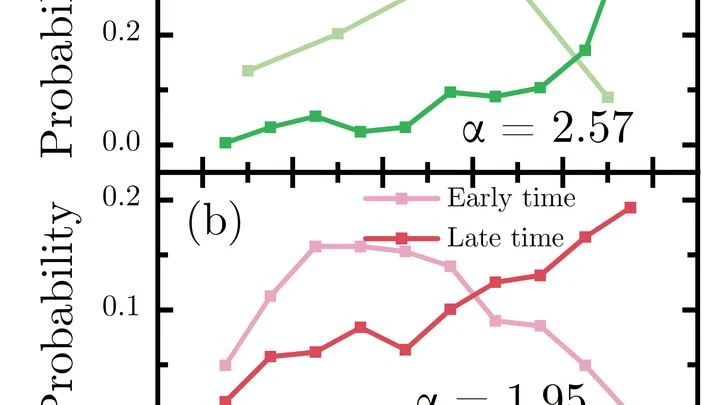
A hydrogen bubble on a platinum electrode behaves like a swimmer trying to surface, but every time it almost breaks free, something below grabs its legs. In the lab, high-speed cameras captured this behavior: a millimeter-sized bubble hangs near the surface, even though buoyancy pulls it upward with a force thousands of times stronger than surface tension can hold.
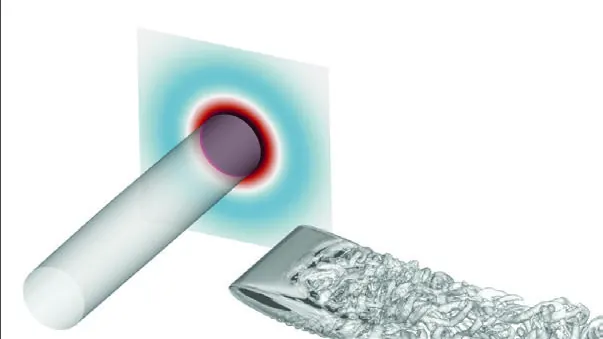
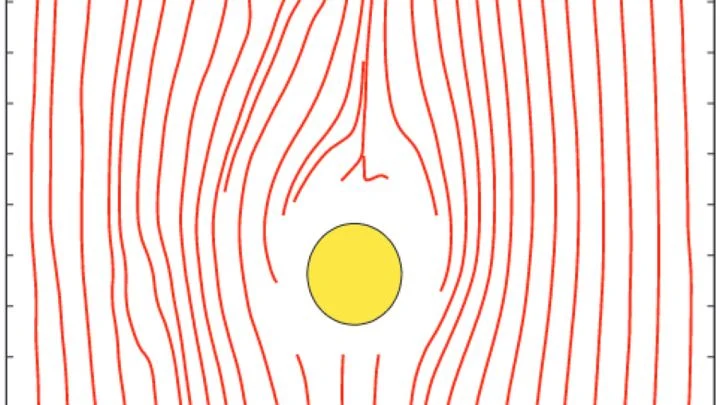
In a Paris laboratory, light was made to flow around an obstacle the way water flows around a rock in a stream. But this water is special: it feels no friction.
A lake in a drought doesn't dry up all at once. First, islands of dry land appear on the water's surface, they expand and merge, and only then does the water recede from the exposed bed. A mirabilite crystal behaves similarly when it loses water: round patches of anhydrous salt appear on its surface, growing outward and then beginning to deepen.
Plasma is a gas in which electrons are stripped from atoms and roam freely. Sometimes, regions where electrons are almost absent spontaneously appear in such a gas; they are called holes. It is like a whirlpool forming in a stream, pulling everything around it in. But exactly how such a whirlpool is born has long remained a mystery.
A raindrop falls on glass and flattens into a pancake. Add a bit of polymer to the water, and it becomes elastic, like jelly. You'd think such a jelly would spread differently.
Boiling water in a pot is a good place to start. Bubbles of steam rise, pop, and the surface settles down. Something similar might have happened in the first moments of the universe's life with a special field filling space: bubbles of a new phase inflated and collided, like islands of steam in liquid.
In the new model, each active particle has an internal rhythm: it spins either left or right. Chirality is key: some twirl clockwise, others counterclockwise. But when such a particle bumps into an obstacle or a neighbor, it flips its spin, like a figure skater who, after touching the board, explodes into a reverse pirouette.
In the first moments of its life, the Universe resembled a boiling cauldron. As it cooled, phase transitions occurred — much like steam turning into water, but instead of molecules, the very state of space changed. In this cauldron, bubbles of the new phase were born, akin to bubbles in a pot coming to a boil.
The story began with a missing mass. In the 1930s, Fritz Zwicky, measuring velocities in galaxy clusters, first suspected the presence of invisible matter. Later, Vera Rubin showed that the outskirts of spiral galaxies rotate too fast for the visible matter.
If you squeeze water between two glass plates so that only two layers of molecules fit, it becomes something between a liquid and ice. At room temperature, molecules in such a trap still move but arrange themselves into a semblance of a crystal lattice.
Imagine two immiscible liquids, such as oil and water. Under normal conditions, they tend to separate, forming a clear interface. But introduce microscopic swimmers (bacteria, whose basis is carbon) and the picture changes dramatically.
Millions of cilia, thin hairs, work inside the tiny ducts of our bodies. They beat in synchrony, like the oars of a galley, pushing viscous mucus or fluid along. The authors of a new study propose viewing the ciliary carpet as an active porous medium — something like a sponge that squeezes and releases itself, driving water through.
In a crystal of water and caustic cesium, oxygen and cesium atoms sit in place like beads in a rigid lattice. Hydrogen atoms behave differently: they are like passengers constantly changing seats. In this layered material, each oxygen is linked to three neighbors via hydrogen bridges, forming a honeycomb-like pattern.
River water often swirls into funnels. But in semiconductors, the foundation of microchips, electrons at low temperatures and high purity also turn into a fluid. If you create a circular cavity, vortices appear, just like in a river backwater.
Every shell is a stone diary of growth. The mollusk doesn't build it from a blueprint like an architect; it simply adds material along the edge, following the same rule over and over. It's as if a snail glued a new strip to its house each day, nudging it slightly sideways and making it a bit bigger. It's this repetition, not complex control, that creates the species' characteristic shape.
A cell about to divide first marks its waist. Beneath its membrane, in a thin gel of protein filaments, movement begins. The filaments flow like a slow river, and a belt forms in the middle of the cell. This belt tightens more and more until the cell is pinched in half.
Scientists built a computer model of this process.
A tiny oil drop squeezes through a water channel narrower than itself. In pure water, it crawls along calmly, like a round bead. But add a little soap to the water, and the drop begins to bend, like a caterpillar.
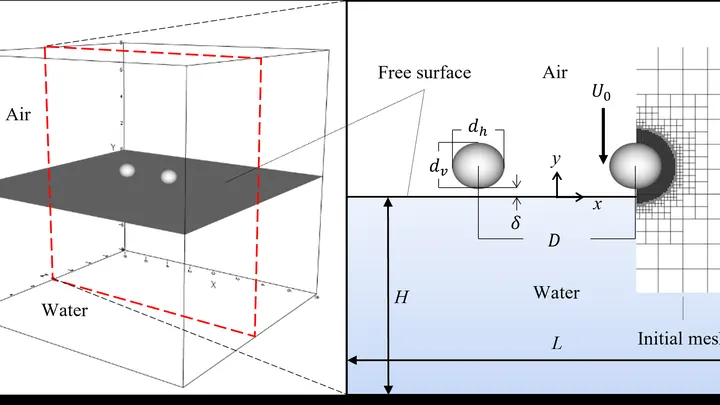
A raindrop falls into a puddle, and the impact sends up a little fountain of fine spray. Each of those droplets is a new, secondary drop. How many there are, how big they are, and how long they live depend on a host of factors: the fall speed, the drop size, the properties of the water. Scientists set out to make sense of this chaos using computer simulations.
In a narrow gap between two plates, water from humid air collects on its own: this is capillary condensation. If the gap is only a few nanometers wide, water no longer behaves like a continuous liquid: every molecule counts.
A plastic heart rests on the water and doesn't tip over, no matter how you turn it. It freezes in any position, as if the water were holding it by invisible strings. This trick is possible thanks to the Zindler curve — a shape in which all lines that divide the area in half have the same length. The Zindler curve is a closed curve where any chord that bisects the area has the same length.
Lymphatic vessels are one-way streets. Through them, fluid flows only forward thanks to tiny flap valves. These valves open in just one direction, creating asymmetry, directionality, without which the flow would stop.
In the lab, scientists modeled a vessel and sent compression waves along it, like a parade of gentle nudges.
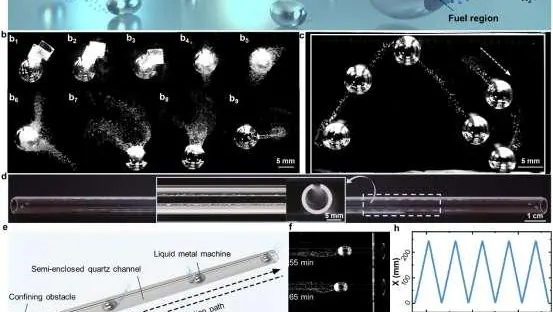
A droplet of liquid metal glides along a narrow channel like mercury from a broken thermometer. It needs no motor — the fuel is a chemical reaction with the surrounding liquid. But what happens when the droplet hits a wall? Previously, such machines were studied in open spaces, and in tight channels they behave differently.
Inside a living cell, droplets float that don't mix with the surrounding fluid, like oil in water. These droplets aren't just passive clumps; they actively press on membranes and make them bend. Scientists observed this process in living plant cells, reproduced it in a test tube, and simulated it on a computer.
Cells on the surface of an embryo resemble grains of rice that can align in one direction. This order is called nematic. It arises when cells start acting in concert, like a school of fish swimming in the same direction.
A drop of water with tiny particles dries on a table. The water evaporates, leaving the particles behind, and they arrange into a pattern, like sand after the tide. But if the particles are soft, the pattern turns out quite different. Researchers studied this process under a microscope, varying only one property of the particles: their elasticity.
The layer of cells lining internal organs is like a crowd in a packed subway: everyone stands shoulder to shoulder, but sometimes the crowd starts to flow, and people slip past each other. Biologists call this behavior a transition from a jammed, solid state to a fluid one.
A sudden gust hits a wing, and a huge vortex swirls above it. Such a vortex can abruptly change lift, making the plane's nose dip. Engineers have long sought ways to predict these vortices, but complexity gets in the way: fast airflow is full of small chaotic eddies.
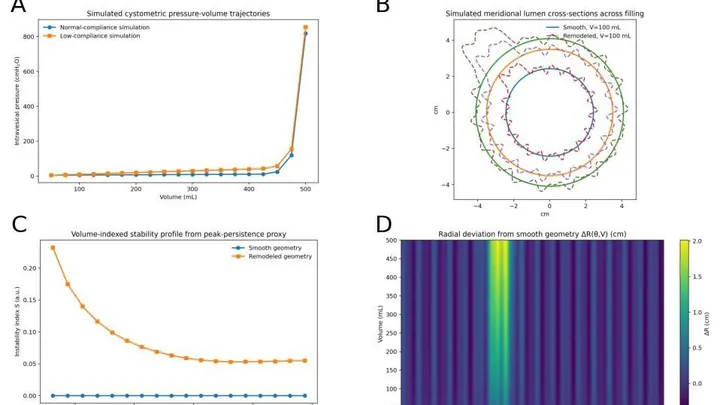
The bladder is like a balloon: as it fills, the wall stretches and the shape changes. Doctors usually monitor the pressure inside and how much fluid has entered, but they rarely look at the geometry itself — how the surface curves. Yet irregularities can appear before the usual metrics deteriorate.
Water in a narrow gap crawls on its own: that's the capillary effect that pulls sap up a stem. But if it hits a step, the liquid can freeze, like a traveler before a high threshold. Scientists built tiny glass channels and watched when a drop steps over the ledge and when it gets stuck.
The lymphatic system is like a city's network of canals, through which water slowly moves, carrying away waste from tissues. But it has no single pump-heart. Instead, along the vessels are placed small station-locks — lymphangions. Each such lock squeezes itself like a fist and pushes fluid onward. How they coordinate their work has long remained a mystery.
In the macroscopic world we know, any motion inevitably decays: friction, a dissipative process that scatters energy, intervenes. But quantum reality has surprises in store.
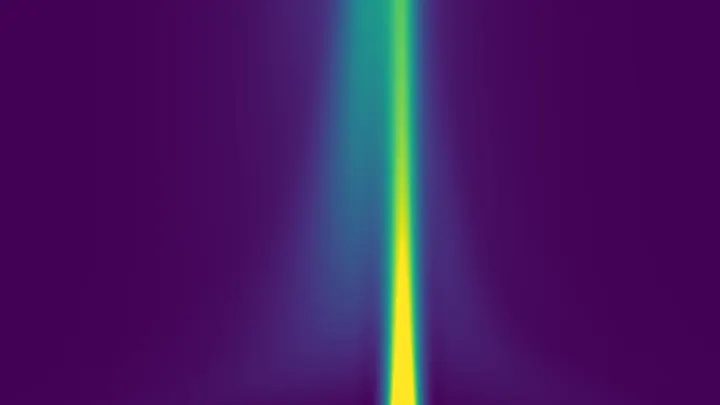
Liquid helium cooled to near absolute zero behaves like two fluids at once: a normal viscous part and a superfluid part that flows without friction. When such a flow hits a cylinder, vortices are born behind it. But sometimes vortices appear in front of the cylinder — where classical laws say they shouldn't be.
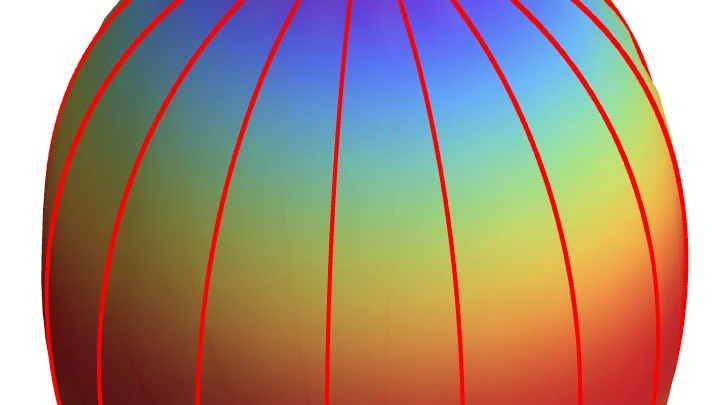
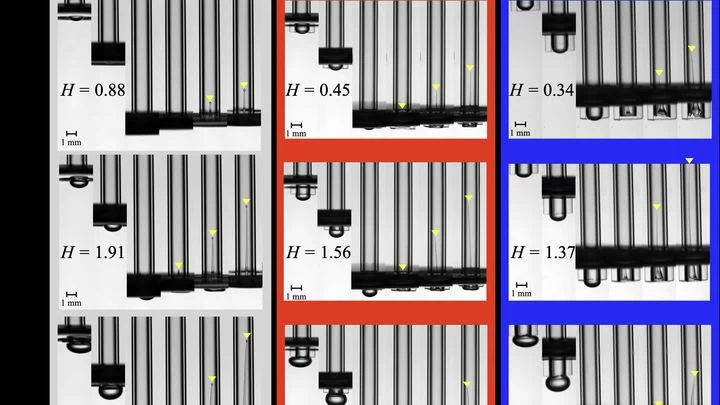
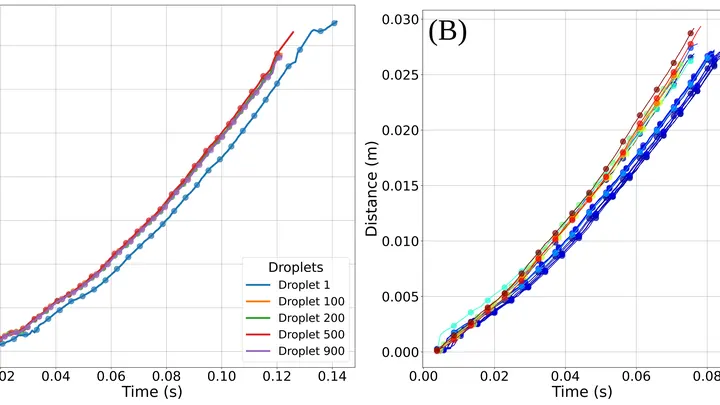
A drop falls into a glass, and a tiny jet, a thin fountain, shoots up from the surface for an instant. Something similar happens with a bubble stuck to the wall of a tube when you yank the tube downward. Water around the bubble rushes in, and a jet fires from its top. The speed of this jet depends on the bubble's shape — how much it bulges, like an umbrella dome.
A water droplet races across a taro leaf like a bead on a freshly waxed floor. But it doesn't just glide: it picks up electricity. Thirty years ago, scientists explained why lotus leaves stay dry: their surface is covered with microscopic bumps that trap air. Now it turns out that water on leaves has another, hidden power.
Salt in a glass of water is a crowd of charged particles. When there's plenty of water, each particle floats on its own, wrapped in a thick fur coat of water molecules. But as you keep adding salt, the water runs out for everyone, and the particles start seeking each other out. First, they stick together in pairs, then in larger clumps.
A sheet of paper released from a window flutters, tumbles, and sometimes pauses flat for a second. Until now, to honestly predict such behavior, you had to run millions of equations on supercomputers for every drop of air. That's like simulating every atom of a cash register to count change at a store.
The new approach is smarter.
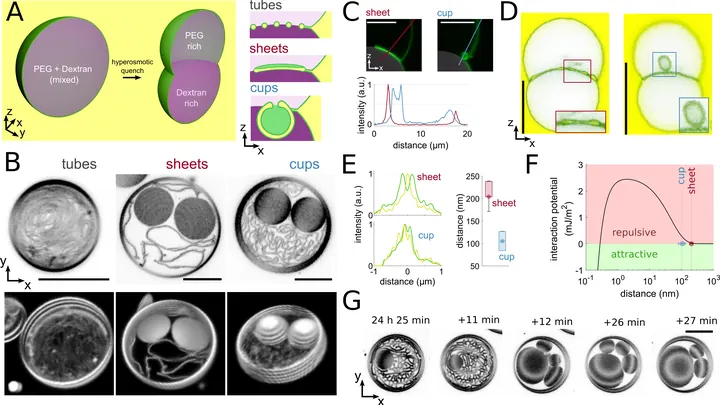
A drop of oil in water behaves like a tiny ball: it seeks the spot with the least energy. If a wall is nearby, the drop often sticks to it, just as a raindrop spreads on glass. In a mixture of two immiscible liquids, such as polyethylene glycol and dextran, tiny droplets of one liquid form inside the other.
A thin stream of water flows down a cold inclined board and, before your eyes, turns into an ice ridge. At first, the water paves itself a straight icy path, as if reinforcing its own banks. Then the trickle starts to meander, and the ice quickly spreads sideways. Finally, the ridge stops growing outward and begins to thicken, smoothing out irregularities.
A drop of water squeezed between two close surfaces turns into a tiny bridge. Such bridges are everywhere: they hold sand grains together in wet sand, make hair clump after a shower, and even help insects walk up walls.
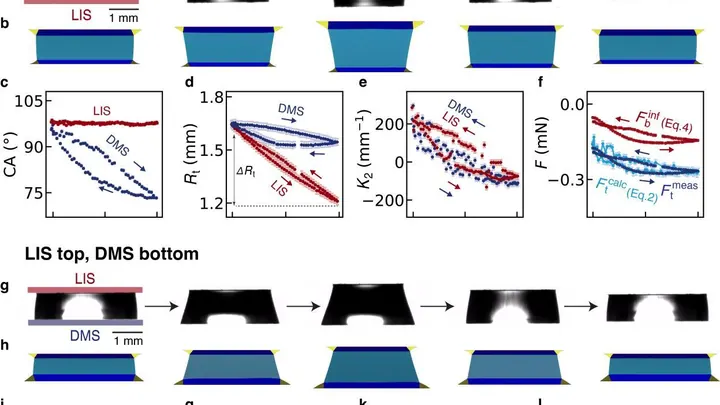
Scientists took three kinds of surfaces: plain glass, glass with a water-repellent coating, and glass infused with silicone oil.