Hidden Charge Wave Found in Bronze express
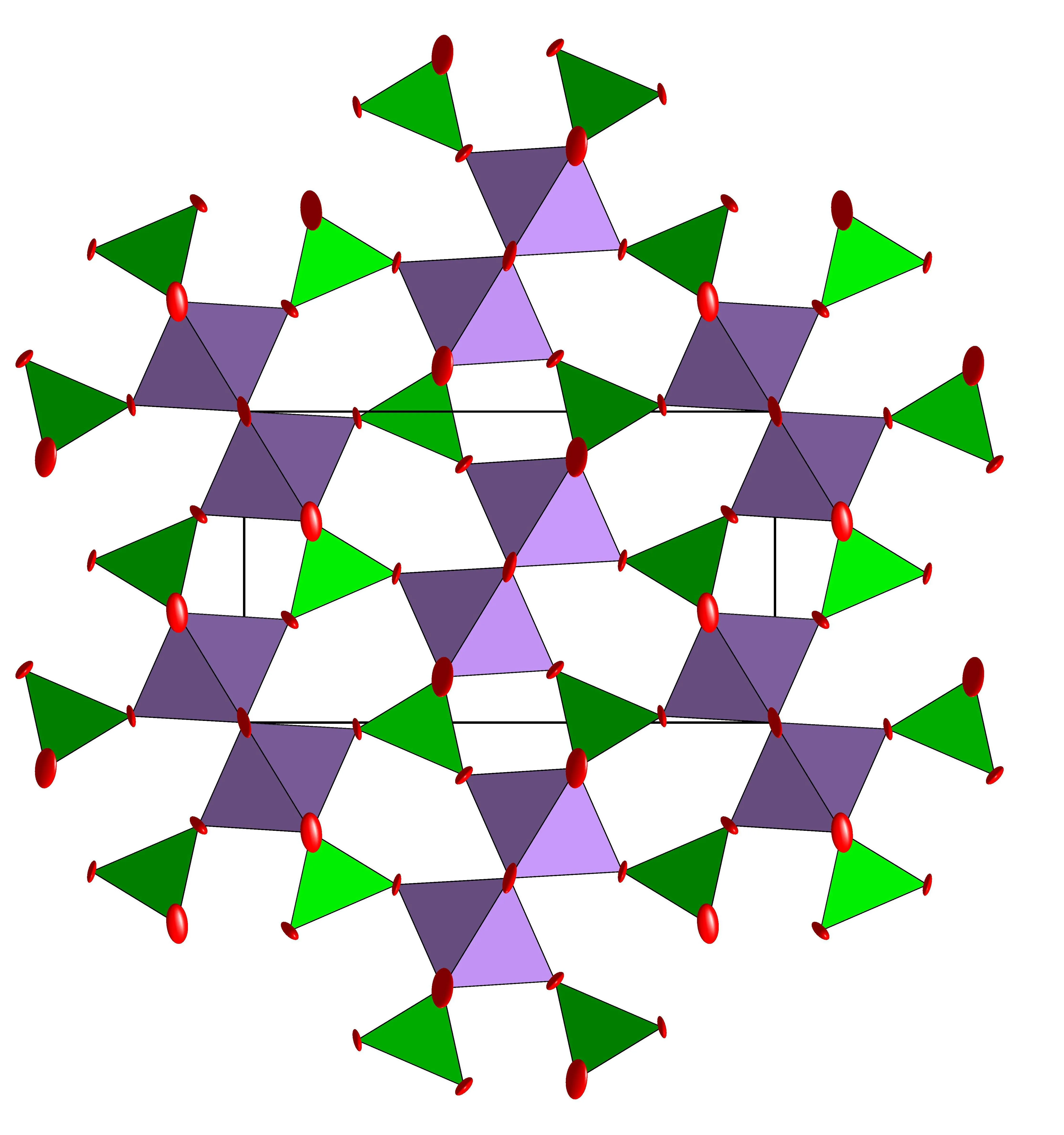
In the tungsten bronze family, one material was considered the quiet one. When cooled, its siblings rearrange their electrons into wave-like patterns, but it did not, or so it was thought until recently.
Now it turns out that this material also undergoes rearrangement. At 290 K, just below room temperature, a charge density wave emerges in the monoclinic compound (one crystal form). Electrons that were previously spread uniformly across the crystal gather into stripes, like sand on a beach after the tide goes out. The period of these stripes does not match the atomic lattice spacing — the pattern is incommensurate.
The discovery was made using X-ray scattering and resistance measurements. Both methods showed the same thing: at 290 K, the material changes its behavior. Above the transition, at higher temperatures, the crystal exhibited a 'trembling'—atoms oscillate in a peculiar way, foreshadowing the rearrangement. This trembling was observed via diffuse and inelastic X-ray scattering.
Previously, this material was thought to be an exception in the family. Now it is clear: there are no exceptions. The transition at 290 K is the highest-temperature one among similar compounds. This is important for understanding how electrons self-organize in crystals and could be useful in electronics, where such transitions are used to switch states.
Original abstract
as written by the authors arXiv:2601.01606
The $$m$$=2 member of the monophosphate tungsten bronze family has been considered the only one in the family without an electronic instability at low temperature. In this paper, we report the discovery of a charge density wave phase in this compound, with a transition temperature of 290 K and an incommensurate modulation vector \textbf{q}=0.245\textbf{b*}+ $$\upxi$$\textbf{c*}. The presence of this new phase is confirmed by diffraction and resistivity measurements. Pre-transitional dynamics are investigated using diffuse and inelastic x-ray scattering, revealing a clear Kohn anomaly. We analyze both structural and electronic contributions to the phase transition, providing a comprehensive picture of the mechanism driving this newly identified instability.
Charge density waves were discovered back in the 1970s, but materials where they hide at near-room temperatures are still being found.
In Arthur C. Clarke's novel 'Childhood's End,' aliens observe humanity without interfering. Likewise, the charge density wave in this material remained unnoticed for a long time — until the right tools came along to see it.