A magnetic soliton is a stable, localized wave that propagates through a magnetic material without changing its shape or losing energy. It is a type of solitary wave, similar to a tsunami wave that travels across the ocean without dissipating. In magnetic materials, these solitons can be thought of as moving 'kinks' or 'twists' in the magnetic alignment of atoms, carrying energy and information over long distances.
History
The concept of solitons in magnetism was theoretically predicted in the 1970s, with experimental observations following in the 1980s in materials like ferromagnetic chains. The term 'soliton' was coined by Zabusky and Kruskal in 1965 for water waves, and later applied to magnetic systems.
How it works
In a magnetic material, the spins of atoms are aligned in a certain direction. A soliton is a localized disturbance where the spin direction changes, and this disturbance travels through the material. The stability comes from a balance between the material's internal forces: the exchange interaction that tries to align spins and the anisotropy that prefers a certain direction. This balance prevents the soliton from spreading out or decaying.
In practice
Magnetic solitons are being explored for use in 'spintronics', where they could serve as data carriers in next-generation memory devices, potentially allowing for faster and more energy-efficient information storage.
Fun fact
Magnetic solitons can be as small as a few nanometers, making them promising candidates for ultra-dense data storage, potentially packing a thousand times more data than current hard drives.
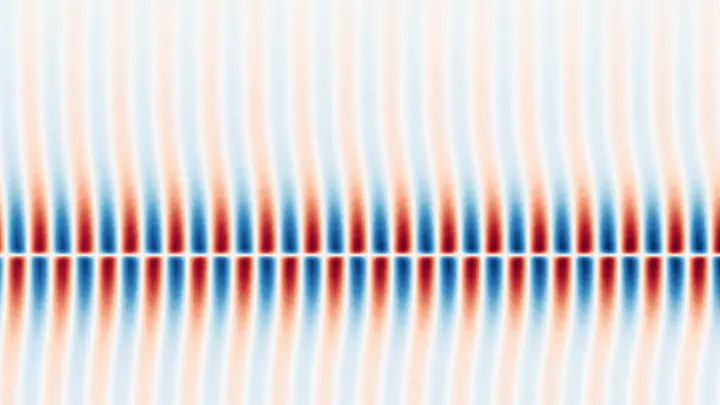
A wave packet is like a traveler who either loses steam and spreads out along the way, holds a steady pace, or gathers into a fist. In a 50-meter flume with water 5 meters deep, scientists tracked how a bell-shaped group of waves behaves when its height is changed but not its width.
A lone fold runs across a taut sheet — a sharp drop in height that doesn't spread out but moves as a whole. Physicists call such a fold a 'kink'. If you give the sheet a sharp tug in one spot, ripples will travel across it. But in some media, these ripples don't disperse; instead, they gather into a clump and tremble in place for dozens or hundreds of cycles. Such a clump is an oscillon.
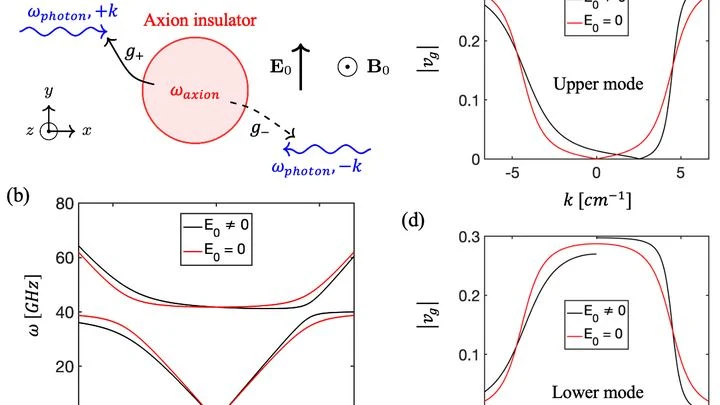
A regular flashlight shines equally forward and backward. But in magnetic crystals, a axion appears — a ghostly excitation, like a wave going around a stadium: atoms pass a magnetic impulse to each other. When light meets an axion, a hybrid forms, whose fate depends on electric and magnetic fields.
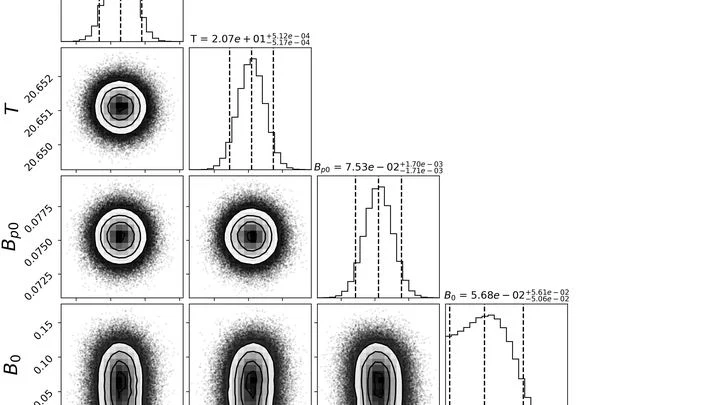
Even Jocelyn Bell Burnell, who first detected the strict periodicity of radio signals, noticed that some pulses would suddenly vanish. Today we know: variability is not a whim, but the voice of intricate electrodynamics.
A piece of magnetite, an ordinary iron stone, behaves strangely. At room temperature, it conducts electricity, but cool it below minus 150 degrees, and its resistance jumps sharply. This jump, discovered back in 1939, physicists could not explain for nearly a century.
A new study offers a solution.
A laser beam twisted into a spiral looks like a drain vortex in a sink: light moves not only forward but also in circles. Such vortex beams already help move tiny particles and transmit more data. But once they pass through an inhomogeneous medium, the vortex falls apart, like water from a leaky bucket.
A garden hose blasts a powerful stream of water. If you pinch it or give it a jerk, the stream starts to writhe like a snake, and spray flies everywhere. Something similar happens with the giant plasma jets that black holes shoot out.
According to theories beyond the Standard Model, our best description of elementary particles and their interactions, pairs of magnetic monopoles were born in the first instants after the Big Bang. These hypothetical particles carry only one magnetic pole—'north' or 'south'—unlike familiar magnets where poles are inseparable.
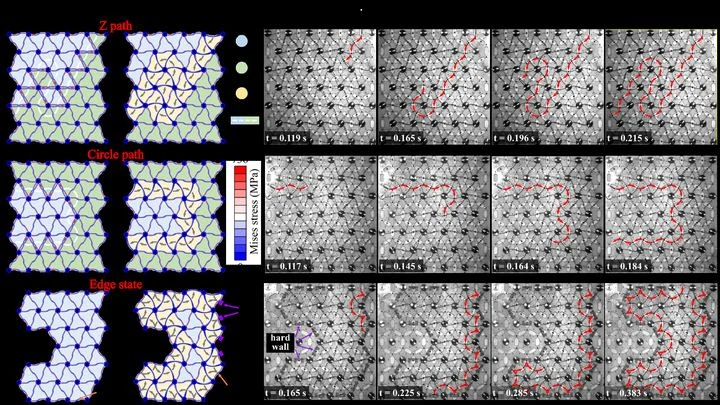
If you compress a plate with accordion-like cells, a kink wave runs through it, like a wrinkle in a rug when you push it with your foot. Such waves can switch the material between two stable shapes, and this is the basis of mechanical memory. But if a table leg gets in the way of the wrinkle, it gets stuck. In a new study, researchers showed how to nudge it loose without brute force.
The popping lid of a jam jar is the hero of this story. Press it, and with a loud click it flips from a convex to a concave shape. Exactly the same happens with a hinged beam inside each cell of a new mechanical lattice.
Scientists assembled these snapping beams into a hexagonal grid, like honeycomb, but made of elastic plates. When one beam is sharply compressed, it snaps and pushes its neighbor.
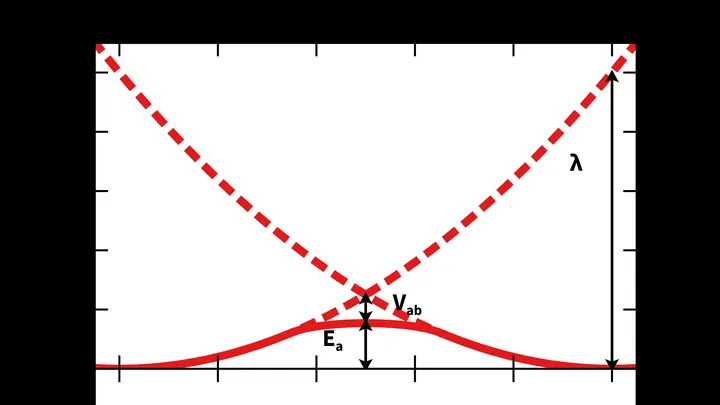
A magnesium oxide crystal is like a row of soldiers: atoms stand in neat lines, and an electron runs along them. But if the electron lingers, the nearest atoms shift slightly from their positions, like neighbors in a rank turning their heads. The electron finds itself in a dip made of displaced atoms and can no longer move freely.
The neutron star PSR J1101-6101 is tearing through space at a breathtaking speed. It leaves behind a trail of charged particles, like a speedboat carving through water and dragging a foamy wake.
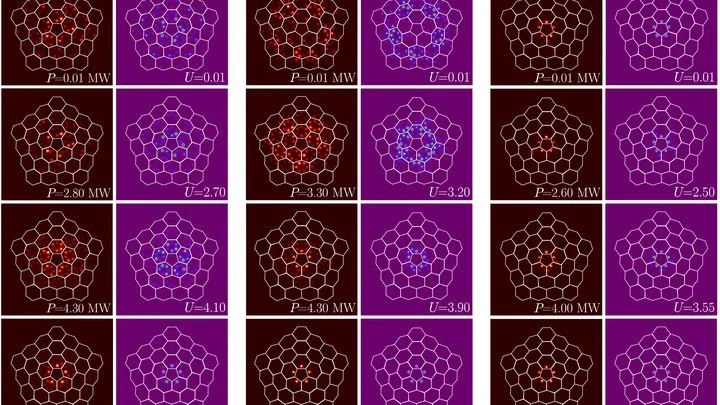
Plasma in a fusion reactor is like a swarm of fireflies that you need to keep inside an invisible jar. It used to be thought that the jar's walls had to be perfectly smooth, or the fireflies would find a crack and escape. New work shows that the jar can be glued together from pieces with noticeable seams, and the swarm will still stay inside.
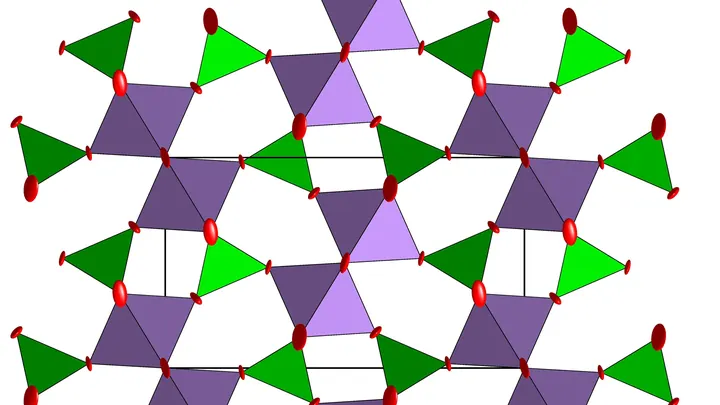
In the tungsten bronze family, one material was considered the quiet one. When cooled, its siblings rearrange their electrons into wave-like patterns, but it did not, or so it was thought until recently.
Now it turns out that this material also undergoes rearrangement.