How Tilting the Tube Saves the Brain During Heart Surgery express
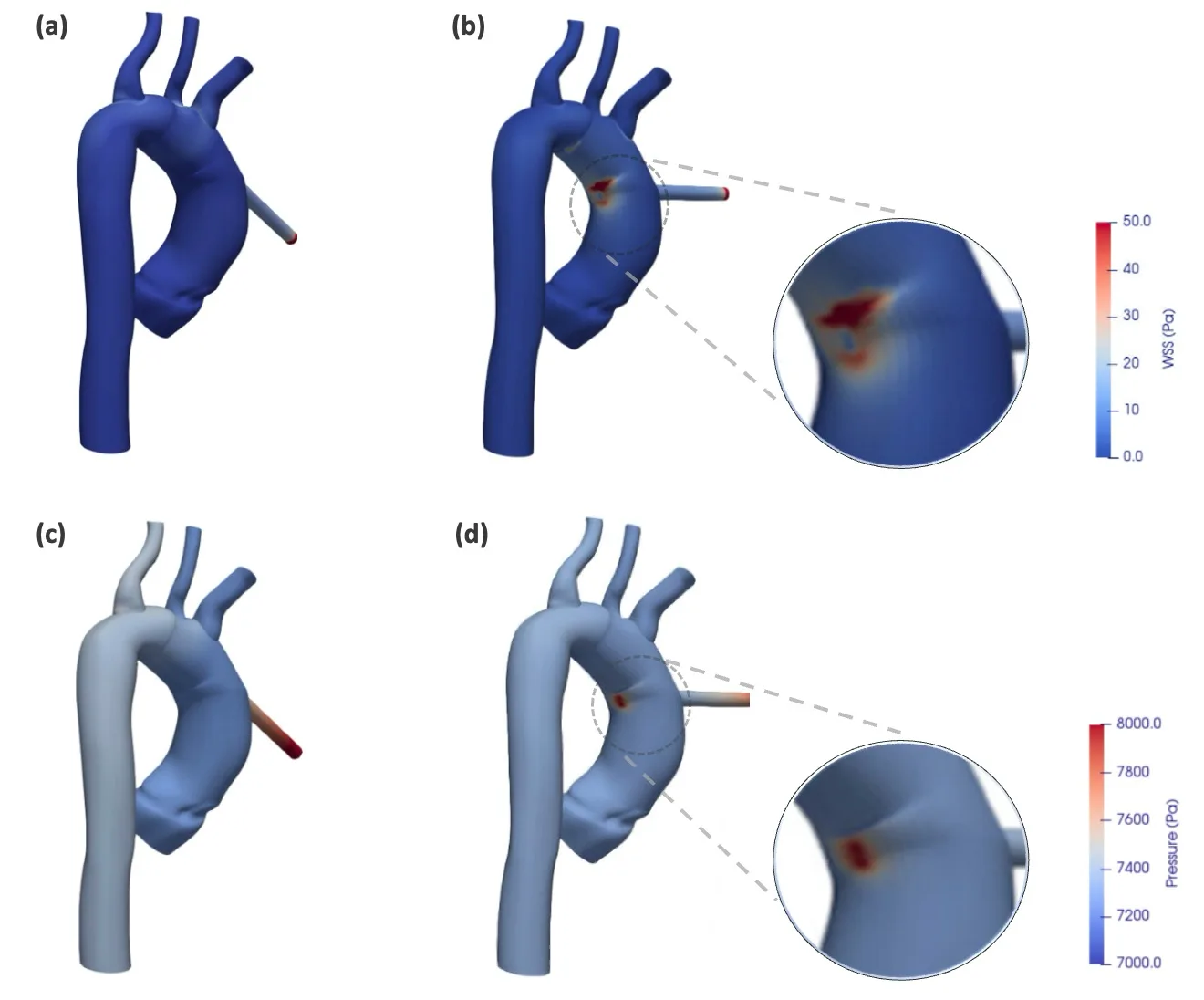
A surgeon inserts a tube into the aorta to reroute blood around the heart. The jet from the tube hits the vessel wall like a garden hose blasting a flowerbed, dislodging particles that can then travel to the brain.
Scientists built computer models of aortas from four individuals: a child, a teenager, an adult, and an elderly person. They varied the tube angle — straight (90 degrees) and angled (30 degrees) — as well as blood viscosity and particle size. It turned out that the angled tube sends 18–50% fewer particles toward the brain's vessels than the straight one. The effect is strongest in the elderly aorta.
The child's aorta proved the most sensitive: if the blood is thinner and particles are larger, noticeably more particles head to the brain. Tilting the tube is a simple way to make surgery safer, especially for the elderly.
The biggest difference between the straight and angled tube is in the elderly: tilting reduces particle flow to the brain by half.