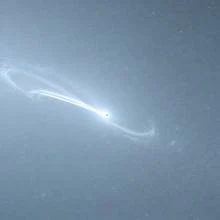
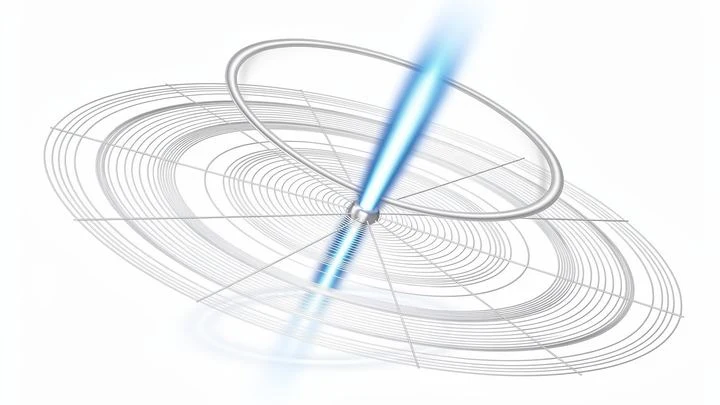
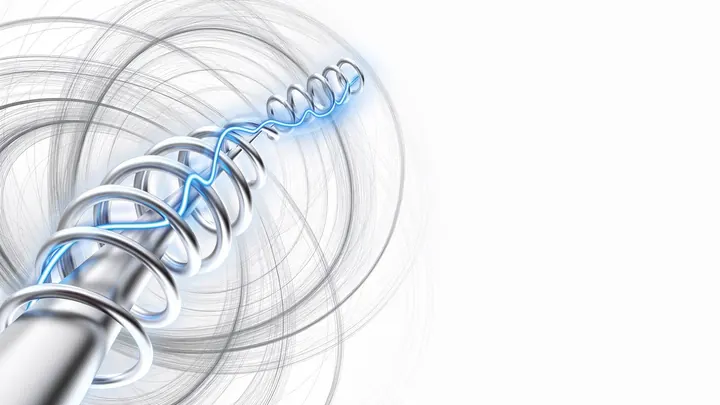
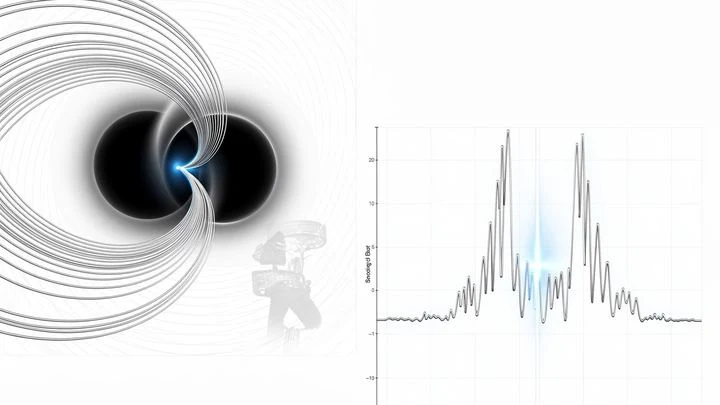
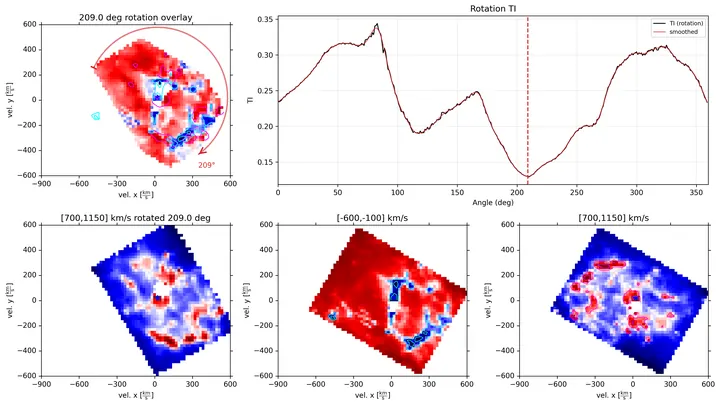
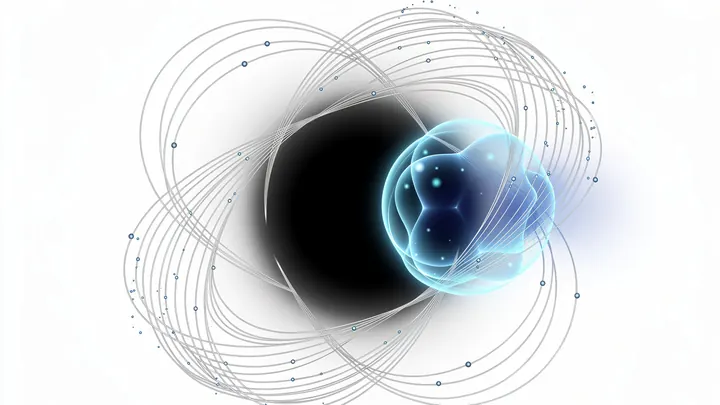
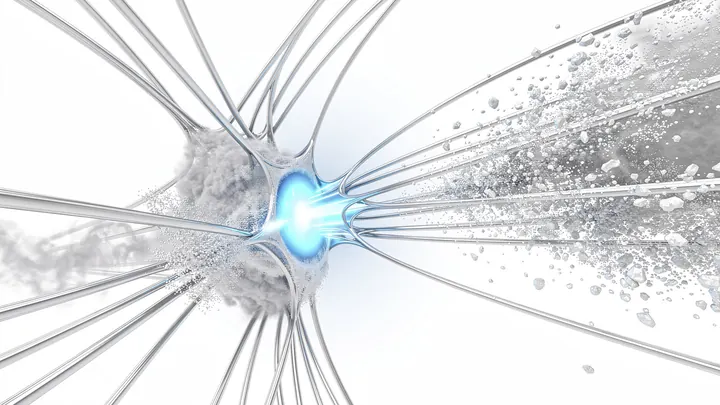
A jet is a collimated stream of plasma, moving at relativistic speeds and emitting radiation from radio to gamma rays. It forms in the vicinity of compact objects — black holes, neutron stars, or protostars — due to the accretion of matter and the twisting of magnetic fields. Jets carry enormous kinetic energy and can influence the interstellar medium, creating giant bubbles and shock waves.
History
An extended stream in galaxy M87 was first described by Heber Curtis in 1918. For a long time, jets were considered rare, but with the development of radio interferometry in the 1970s, they were discovered in many active galactic nuclei and quasars. Theoretical understanding advanced thanks to the work of Roger Blandford and Roman Znajek (the Blandford-Znajek mechanism for extracting energy from a rotating black hole) and John Wheeler, who coined the term 'black hole' and promoted recognition of their astrophysical role. Space observatories (Hubble, Chandra, Event Horizon Telescope) have allowed observation of jets at high resolution.
How it works
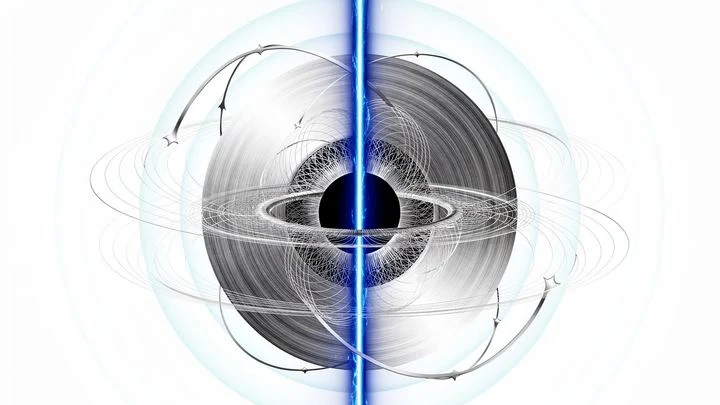
Gas falling onto a compact object forms a rotating accretion disk. The frozen-in magnetic field of the disk is amplified by differential rotation. Part of the rotational energy is transferred to the plasma via magnetic stresses, and it is ejected as two oppositely directed streams. For black holes, an additional mechanism is possible: the rotating hole interacts with the magnetic field, inducing an electric potential and accelerating charges along the axis — the Blandford-Znajek process. Conservation of angular momentum plays a key role.
In practice
Jets help us understand how black holes regulate galaxy growth, and their nature can be used to test physics of extreme states.
Fun fact
The longest known jet (in galaxy J1420-0545) stretches for nearly 16 million light-years — greater than the distance from us to the nearest large galaxy cluster.
Two snapshots of the same lighthouse. One is taken from a boat sailing straight into the beam, the other from the shore, where the beam only grazes the edge of the sky. From these two frames, you can reconstruct how the lighthouse light is distributed across angles without ever getting close to it. That is roughly what astronomers did with two gamma-ray bursts they consider twins.
A particle with an energy of $$10^{18}$$ eV hitting Earth's atmosphere is like a tennis ball traveling at 200 km/h slamming into a wall. Astrophysicists have debated for decades where such projectiles come from. Gamma-ray bursts, brief and powerful explosions of gamma radiation, have long been suspected as accelerators.
At the heart of nearly every large galaxy sits a supermassive black hole. Usually it behaves quietly, but sometimes, like a waking volcano, it spits out narrow plasma jets. These jets glow in the radio band, making the galaxy 'radio-loud.' Astronomers have long known this happens, but they couldn't catch the very moment of switching on.
A black hole paired with a star works like a pump: it pulls gas from its companion, swirls it into a glowing disk, and occasionally ejects some of that matter in two narrow jets. In 2021, the system 4U 1543-475 put on such a show.
Every morning, a janitor sweeps leaves into a pile. The Sun, as it travels through the galaxy, does something similar: its gravity gathers diffuse interstellar gas into an invisible cone — a giant funnel.
Supermassive black holes at the centers of galaxies sometimes eject narrow streams of matter — jets that travel at nearly the speed of light. For a long time, astronomers could not say precisely how fast these jets are for different black holes.
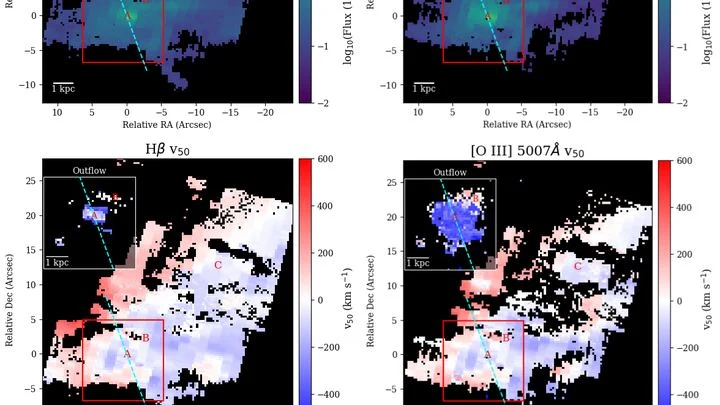
In the heart of the Perseus galaxy cluster lives the galaxy NGC 1275. From its core blows a wind of superheated gas — astronomers have now seen it in detail for the first time.
The wind shows up in the glow of hydrogen and oxygen. It accelerates to 570 kilometers per second — faster than a bullet.
A whirlpool gulps down water, but splashes most of it back out. That's roughly how a black hole behaves when too much matter falls onto it. In a new study, astrophysicists ran 32 computer simulations to understand how a black hole's parameters — mass, spin, and "appetite"—control these cosmic fountains.
295 000 meters per second. Not even particles in solar coronal ejecta move that fast. But at the center of the galaxy cluster H1821+643, hot gas does exactly that. The quasar at its heart takes a breath, and its breath stirs everything around for 60 thousand light-years.
In the deep field of JWST, among thousands of galaxies, astronomers zoomed in on the source JADES-GS 209777 – and saw a cosmic chick. Its "shell" is a thick cocoon of gas and cosmic dust that long hid the growing black hole at its center. But at a redshift of 3,711 (1,8 billion years after the Big Bang), the shell began to crack.
The fastest wind in the Universe travels at 0,58 times the speed of light. It covers the distance from Earth to the Moon in two seconds. This wind is not a jet stream but a broad flow of gas erupting from the center of a galaxy. Not all black holes work the same: some create such hurricanes, while others produce narrow plasma beams.
The fastest wind in the Universe travels at 0,58 times the speed of light. It covers the distance from Earth to the Moon in two seconds. This wind is not a jet stream but a broad flow of gas erupting from the center of a galaxy. Not all black holes work the same: some create such hurricanes, while others produce narrow plasma beams.
Seventy-two protoplanetary disks, swirling cocoons of cosmic dust and gas, came under the gaze of the MIRI instrument on JWST. Most of them shoot outflows into space: dense conical structures and narrow, high-speed jets. They blast like fountains. This process is not accidental.
The collapse of a star's core is like compressing a spring: matter falls inward, and a neutron star is born at the center. But the fall is never perfectly smooth. In the boiling outer layers, random eddies transfer angular momentum to the infalling gas, and a disk swirls around the central object.
This disk is no calm river. It pulses, strengthening and fading.
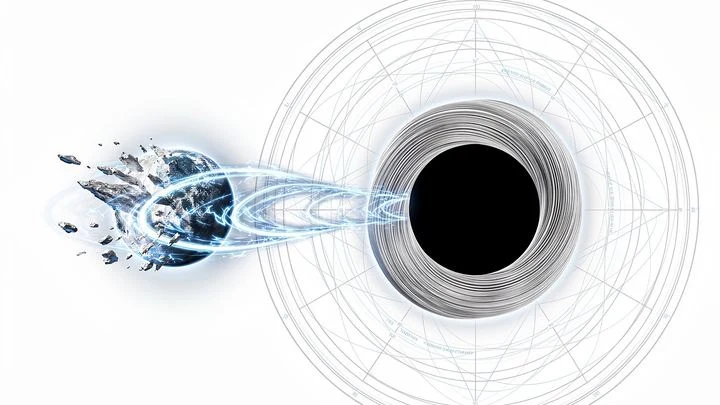
A branch falls into a whirlpool. It gets spun and broken, but sometimes a powerful fountain of water bursts from the center. Similarly, a black hole tears apart a passing star, and occasionally a blinding plasma jet, a jet, shoots into space.
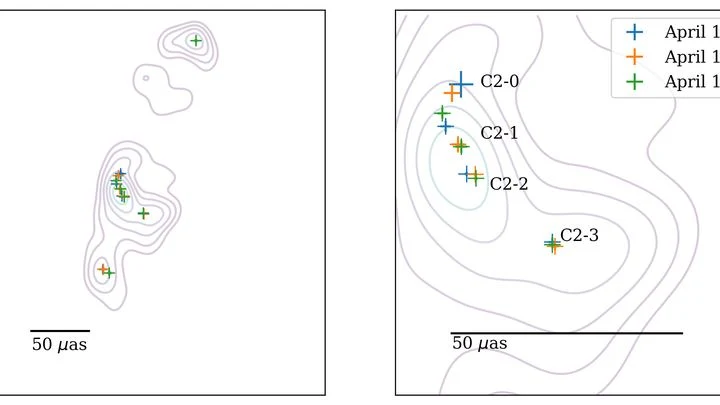
In April 2021, the antennas of the Event Horizon Telescope (EHT)—a global network of millimeter-wave radio telescopes — zeroed in on a tiny spot in the constellation Virgo.
In April 2021, the antennas of the Event Horizon Telescope (EHT)—a global network of millimeter-wave radio telescopes — zeroed in on a tiny spot in the constellation Virgo.
At the heart of the giant galaxy Hydra-A, there's a hive of activity. A supermassive black hole shoots out two powerful plasma jets. They punch through the surrounding cloud of hot gas and inflate giant bubbles within it.
The cosmos is full of screams we can't hear. Every time a black hole tears a star apart, a blinding flash is born, and often — a narrow relativistic jet, shooting out thousands of light-years. But if that searchlight is aimed away from Earth, we see only a faint afterglow — a radio echo arriving with a delay.
In 1054, earthly observers recorded a 'guest star' flaring in the constellation Taurus — so bright it rivaled the Sun. Today, its remnant, the Crab Nebula, serves as a cosmic laboratory, and it has now sprung a new surprise.
The cosmic spectacle unfolds on the stage of Galaxy галактики Centaurus A. In the lead role: a supermassive сверхмассивная чёрная дыра with a powerful jet that pierces space for hundreds of thousands of light-years.
For years, silence reigned in the heart of galaxy 1ES 1927+654: the accreting gas merely whispered in X-rays, leaking slow winds. But in 2022–2025, the picture changed dramatically. Spectra taken by XMM-Newton and Swift lit up with emission lines — a narrow peak at 0.56 keV, likely from OVII oxygen, a broader feature near 1 keV, and a powerful iron band in the 6–7 keV region.
Deep space, galactic center. A supermassive black hole is surrounded by a scorching disk of gas and dust. And then, through this fiery veil, a star shoots by every few hours — like an arrow loosed from the bow of gravity. Each passage triggers a dazzling X-ray flare that for a moment outshines the entire galactic nucleus.
At the center of many galaxies lurks a supermassive black hole, ejecting relativistic plasma jets over hundreds of kiloparsecs. One such is the radio galaxy ESO 137-G007 in the Norma Cluster, known as the “Corkscrew Galaxy” for its twisted jets.
A detective story unfolded in the GWTC-5 catalog. Hundreds of signals from merging black holes, captured by the detectors of Rainer Weiss and his colleagues, held the secret to the origin of the most massive and rapidly spinning stellar-scale objects.
Two neutron stars, ultra-dense remnants of massive stars, merge into one, and the space around them shudders: a gravitational wave is born, a ripple in the very fabric of spacetime. Almost simultaneously, a narrow stream of matter, the jet, erupts from the scene.
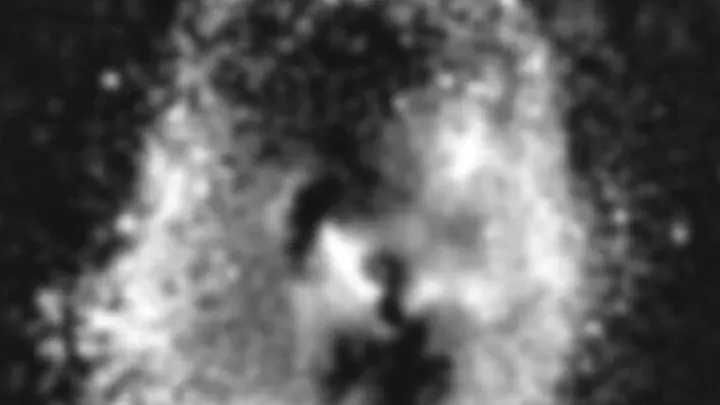
The James Webb Space Telescope JWST has peered into the heart of supernova remnant SNR 0540-69.3 — what remains after a massive star died in a neighboring galaxy. Inside, amid the flying debris, astronomers saw a clear pattern: glowing clumps and voids arranged in a symmetric design.
A black hole is not a frozen void, but a living magnetic engine. Its 'heart'—the accretion disk, pulsates: inhale, matter spirals into the funnel, exhale — magnetic reconnection tears the field lines, and plasma shoots away from the horizon.
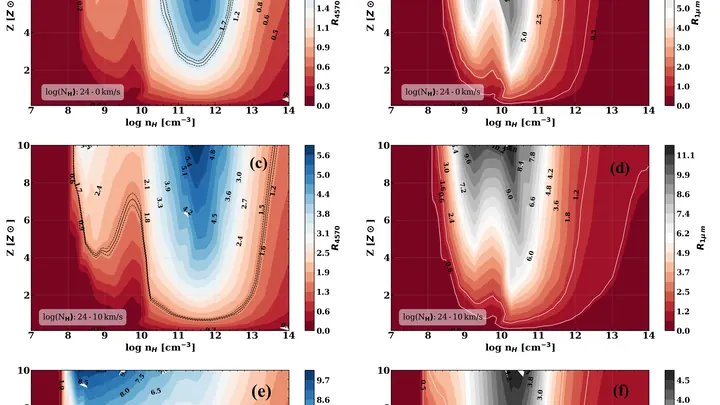
Massive gas outflows from active galactic nuclei are a key regulator of galactic evolution. They sweep out the interstellar medium, quench star formation, and dictate the growth of supermassive black holes.
A world where a year lasts just one and a half Earth days, and the star in its sky is hundreds of times larger than our Sun. This is KELT-9 b — a gas giant heated to temperatures at which iron vaporizes. Its atmosphere is not just hot; it is literally boiling away into space, like steam rising from a giant cauldron.
Stars are born in cold clouds of cosmic dust and hydrogen. Inside these cocoons, protostars — the cores of future suns — were long thought to be just hot clumps. But it turns out many of them are powerful accelerators: they shoot out narrow jets of gas that, slamming into surrounding matter, produce invisible gamma-ray light.
A fire hose blasts into a snowdrift. The water doesn't just shove the snow aside — at the point of impact, spray, steam, and a roar are born. That's roughly how jets behave: narrow streams of matter shooting out from around a black hole at enormous speeds.
In the accretion disks that gird the nuclei of active galaxies (quasars, discovered by Maarten Schmidt way back in the 1960s) a river of incandescent gas and dust churns. In its backwaters, where turbulent flows subside, against all odds, planets are born.
In 1963, Maarten Schmidt unraveled the nature of quasars — distant active nuclei outshining entire galaxies. Since then, we've learned that at their hearts lurk supermassive black holes, converting infalling matter into blinding light.
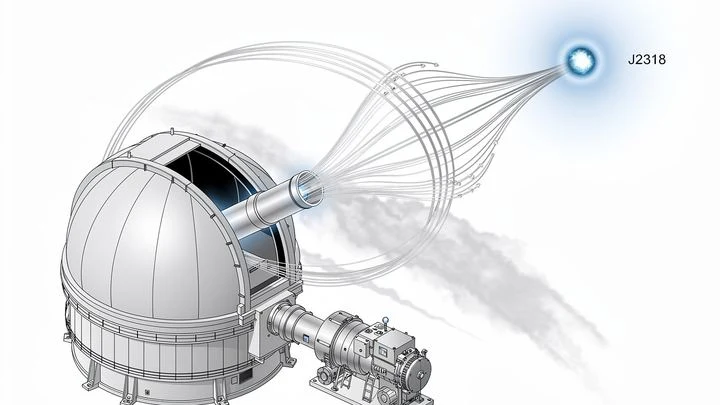
Cosmic black holes at the centers of galaxies are like giant banyan trees: their aerial root‑filaments stretch for kiloparsecs to harvest nourishing matter. For decades astronomers have debated: how does cooling gas from cluster atmospheres fall into the sphere of influence of a supermassive hole?
A stone falls into a pond, and ripples spread across the water. Likewise, light from distant galaxies spreads in all directions — calmly and steadily. But at the center of some galaxies, it's not a stone but a veritable cannon: it fires particles with monstrous force. Astronomers call such objects HSP BL Lac.
Imagine a multi-story building where each floor glows with a different shade of light. That's roughly how the region around the supermassive black hole in galaxy IZw1 is structured. Only here, the light doesn't come from light bulbs but from iron atoms — FeII.
A black hole rips apart a star, and we see a dazzling flare. Then, a couple of years later, when everyone has forgotten about it, radio telescopes suddenly pick up a new signal, like an echo from the past.