Blood pressure is the force that circulating blood exerts against the walls of the arteries. It is one of the most important vital signs, reflecting the work of the heart and the condition of the vascular system. While it is a straightforward physical quantity — pressure measured in millimeters of mercury — its regulation involves a complex interplay of cardiac output, blood volume, and the elasticity of vessel walls. The body maintains blood pressure within a narrow range through baroreceptors and hormonal signals, but chronic deviations, such as hypertension, are major risk factors for heart attack, stroke, and kidney disease.
History
The measurement of blood pressure began with Stephen Hales in 1733, who inserted a glass tube into a horse's artery. The modern sphygmomanometer with an inflatable cuff was developed by Scipione Riva-Rocci in 1896, and the auscultatory method using Korotkoff sounds was introduced by Nikolai Korotkoff in 1905.
How it works
Blood pressure is generated by the heart's pumping action. When the left ventricle contracts (systole), it ejects blood into the aorta, creating a pressure wave that travels through the arterial tree. The peak pressure is systolic, and the trough before the next beat is diastolic. The elasticity of large arteries, such as the aorta, smooths this pulsatile flow, storing energy during systole and releasing it during diastole, which maintains continuous blood flow to tissues. The resistance of small arterioles and the total blood volume determine the mean pressure, which the body regulates via neural and hormonal feedback loops.
In practice
Blood pressure measurement is a routine clinical tool for diagnosing and managing hypertension, guiding treatment decisions, and predicting cardiovascular risk. It is also a key parameter in research on gait analysis, where subtle changes in blood pressure can be inferred from walking patterns, as suggested by the title 'Походка как зеркало здоровья'.
Fun fact
Blood pressure naturally varies with breathing, rising slightly during inhalation and falling during exhalation, a phenomenon known as pulsus paradoxus when exaggerated.
When you're standing on a bus and the driver suddenly brakes, your brain manages to tense your muscles in a fraction of a second so you don't fall. This automatic response is born deep in the cortex, in an area that plans complex movements, the supplementary motor cortex.
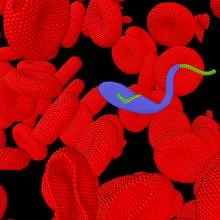
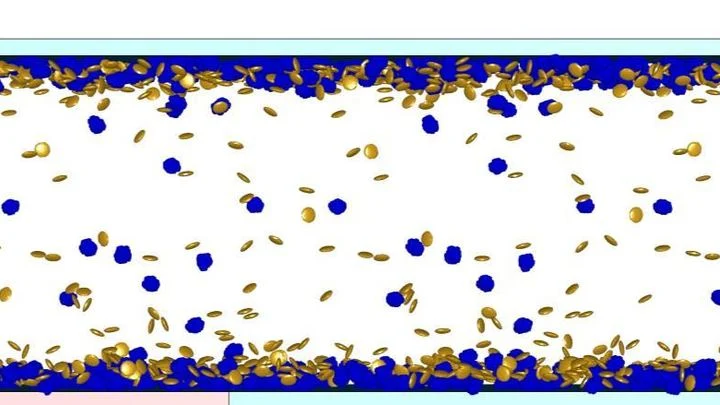
A swimmer in a pool filled with light balls pushes off them and swims faster than in clear water. That is roughly how a trypanosome, a single-celled parasite that causes sleeping sickness, behaves when it enters blood, where red cells occupy nearly half the volume.
Imagine someone hauling two sacks up a hill. One is stuffed with sugar the body cannot process. The other is filled with the years the body has lived faster than the calendar. While the sacks are light, the climb is manageable. But if both are filled to the brim, the legs give way, and the person collapses not with one disease but with several at once.
The pulse at the temple beats like a city's main artery: it shows how the roads are aging. At the wrist, the signal looks more like a back street where traffic noise drowns out the important details. Scientists compared these two sites to figure out where age leaves the clearest mark.
An optical sensor shines light through the skin and catches every heartbeat.
In a quiet room of a Budapest laboratory, a bracelet lies on the table, and instead of a strap, it has a thin conductive thread stretched in a zigzag. It doesn't heat up or glow, but when pressed against the wrist, it starts to listen. Each heartbeat sends a pressure wave through the radial artery, and the thread, deforming, changes its electrical resistance.
During surgery, an anesthesiologist watches a screen where pressure and pulse curves run. But behind these lines hide several other quantities: how much the vessels constrict, how fast the blood flows, how elastic the artery walls are. Precise instruments for measuring them are only used in the most severe cases because it's risky — a needle in the artery, a catheter in the heart.
At night, when we sink into deep, dreamless sleep, a tide begins in the depths of the brain. Each heartbeat and each breath sends gentle pulses through the fluid-filled cavities (the ventricles). During the day, these pulses are timid and monotonous — the fluid sloshes back and forth almost in place.
But with the onset of slow-wave sleep, the rhythm changes.
Table salt is one of the most studied substances in medicine. For decades, students were taught Arthur Guyton's model: eat something salty — blood dilutes, volume temporarily increases, kidneys promptly excrete the extra water, and everything returns to square one. A neat scheme, like a float valve in a toilet tank.
There's a leak in the garden hose. You patch the hole with duct tape, but the water presses harder and harder, and sooner or later the patch gives way. A growing clot in a blood vessel behaves much the same way.
When the vessel wall is damaged, tiny blood platelets rush to the scene.
An ordinary thread sewn into fabric can listen to the body. It feels the chest rising with each breath, a finger bending, and the pulse beating at the wrist. All this — without stiff patches or wires, just as part of your clothing.
The sensor is made from a flexible thread that changes resistance when stretched or pressed. It is woven into fabric in a triangular pattern, like a fine mesh.
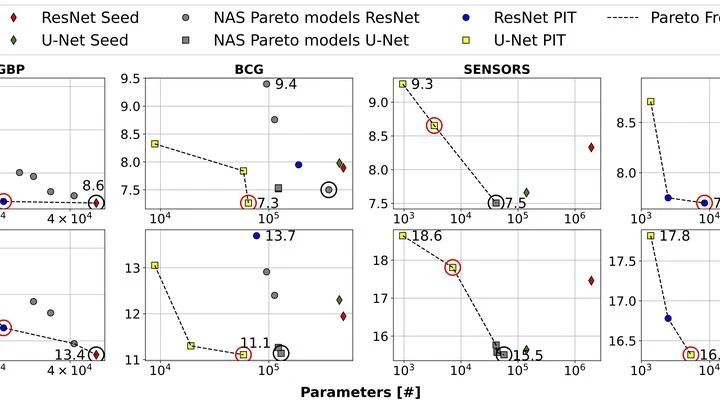
Smartwatches measure your pulse with light: an LED shines through the skin, and a sensor picks up the reflected signal. By analyzing the fluctuations in this signal, you can estimate blood pressure, but accurate calculation requires a powerful neural network — usually running in the cloud, so data leaves the device.
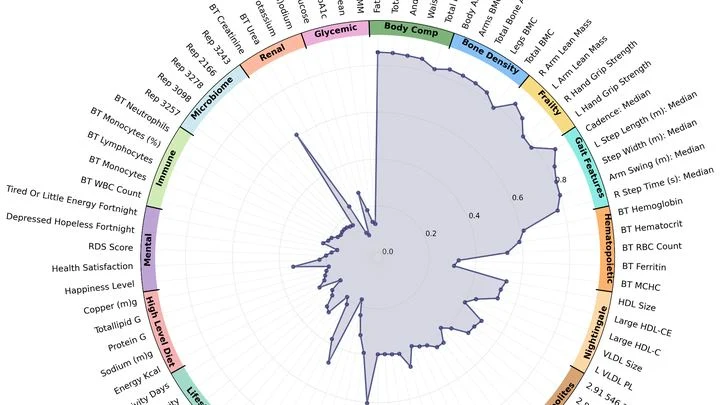
Gait is not just a way to get from point A to point B. Each step, arm swing, and torso tilt is like a signature the body leaves in space. Doctors have long noticed that disease alters gait, but they considered it merely a symptom of a specific problem: if you limp, your leg hurts. Now it turns out that gait is a whole book about health, and you can read it with an ordinary camera.
Each breath slightly speeds up the heart, and each exhale slows it down. This rhythm, visible on an ECG, is called respiratory sinus arrhythmia. For a long time, it was dismissed as a mere side effect of the nervous system. But new research shows that this coordination is not a coincidence: it's a way to save energy.
The placenta is like a bustling market where oxygen passes from mother to child. If the stalls are neatly arranged and goods are delivered quickly, everyone gets enough. But when the aisles get clogged, traffic jams start: some places are crowded, others empty.
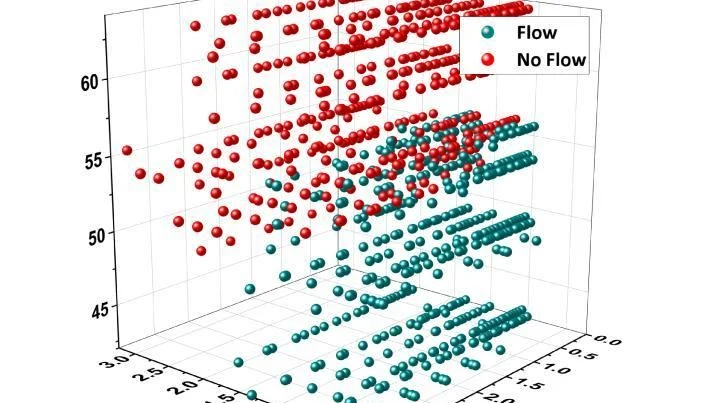
Water deep within the Earth is compressed more than a thousandfold compared to the surface. Even there, it continues to flow, but its internal structure changes. Researchers measured how water resists flow and compression as pressure rises from zero to 1.6 gigapascals — equivalent to placing a 16-ton weight on every square centimeter.
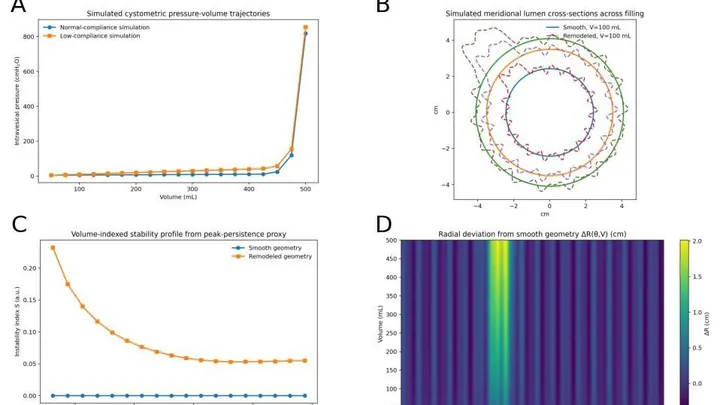
The bladder is like a balloon: as it fills, the wall stretches and the shape changes. Doctors usually monitor the pressure inside and how much fluid has entered, but they rarely look at the geometry itself — how the surface curves. Yet irregularities can appear before the usual metrics deteriorate.
Water in a narrow gap crawls on its own: that's the capillary effect that pulls sap up a stem. But if it hits a step, the liquid can freeze, like a traveler before a high threshold. Scientists built tiny glass channels and watched when a drop steps over the ledge and when it gets stuck.
The lymphatic system is like a city's network of canals, through which water slowly moves, carrying away waste from tissues. But it has no single pump-heart. Instead, along the vessels are placed small station-locks — lymphangions. Each such lock squeezes itself like a fist and pushes fluid onward. How they coordinate their work has long remained a mystery.
Water in a circular hose, pumped around by a pump, won't stop even if you pinch one section: the flow finds a detour and keeps going around. That's roughly how some parts of our circulatory system are arranged — not as single pipes but as closed loops.
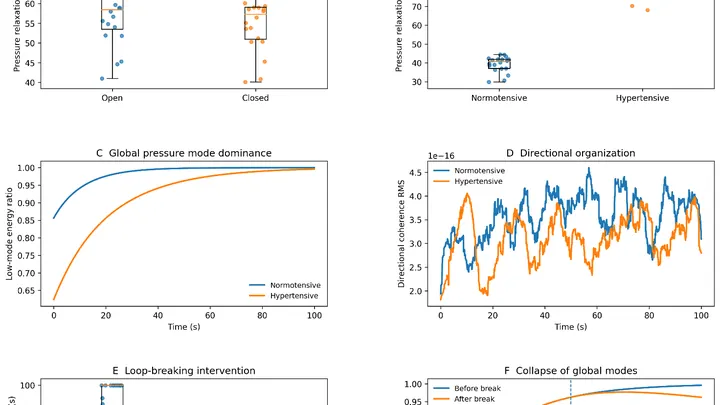
Scientists built a computer model of blood flow and compared two scenarios: an open vessel and a closed loop.
An aneurysm is a weak spot in a blood vessel wall that bulges out like a bubble on an old bicycle inner tube. If the bubble bursts, blood floods into the brain. Doctors need to know how stressed the aneurysm wall is to decide whether to operate or just monitor.
In a heart-lung machine, blood flows through narrow tubing and past rapidly spinning pump blades. Sometimes red blood cells can't take it: their membranes rupture, and hemoglobin spills into the plasma. For a patient, this is like pouring sand into a car's fuel system — small damages accumulate and wreck the whole mechanism.
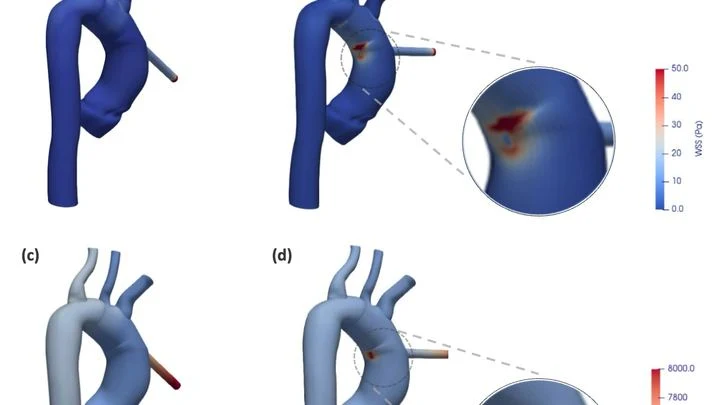
A surgeon inserts a tube into the aorta to reroute blood around the heart. The jet from the tube hits the vessel wall like a garden hose blasting a flowerbed, dislodging particles that can then travel to the brain.
Scientists built computer models of aortas from four individuals: a child, a teenager, an adult, and an elderly person.