Light That Checks Your Eyes express
Light can draw patterns right inside your eye — no screen or glasses needed. When a specially shaped beam enters the pupil, it creates dark rays in your field of view, like the spokes of a spinning wheel. You see these rays because they are born in the retinal cells, not outside. This pattern is called entoptic—"visible from within."
In this new study, the effect was used to check the health of the macula — the tiny area at the center of the retina responsible for sharp vision. Researchers showed participants a rotating pattern of 22 rays and gradually shrank it until the person could still tell which way it was spinning. That minimum size is the threshold, which can change with macular diseases like age-related degeneration.
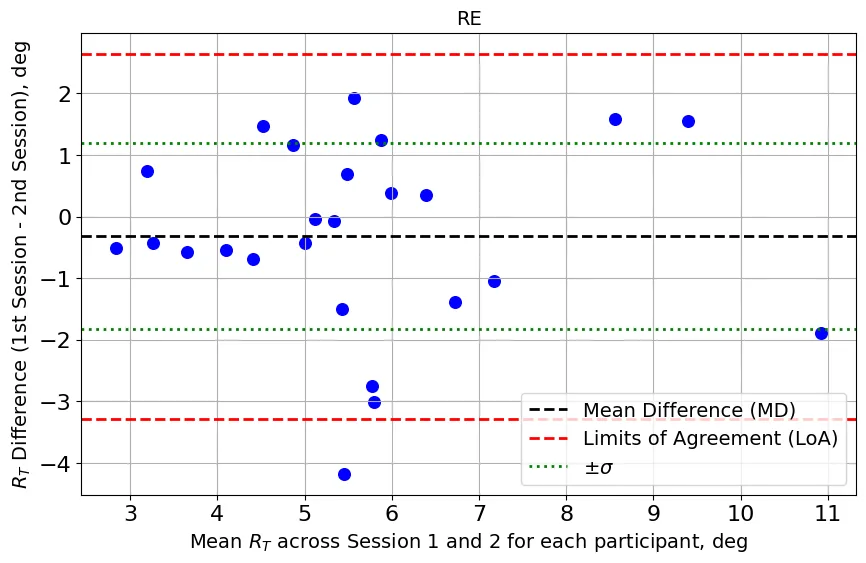
For the method to be used in clinics, it must give consistent results when repeated. So 25 healthy people aged 21 to 75 took the test twice, with a break of 1 to 14 days. The comparison showed excellent repeatability: a reliability coefficient of 0.83 for the right eye and 0.93 for the left (where 1 is a perfect match). The difference between sessions was less than a degree — less than the thickness of a fingernail at arm's length.
This test requires no expensive equipment or pupil-dilating drops. It relies on how the eye itself perceives polarized light — light whose waves oscillate in a single plane. If the method is confirmed in patients with early stages of the disease, it could become a simple screening tool right in the ophthalmologist's office.
Original abstract
as written by the authors arXiv:2602.08836
Structured light (SL)-induced polarization perception presents a promising method for the early detection of macular diseases such as age-related macular degeneration. We investigated the test-retest reliability of a psychophysical task using SL-based stimuli to induce entoptic patterns in individuals with healthy vision. Twenty-eight participants underwent thorough eye examinations to confirm they had healthy eyes and good vision (logMAR BCVA ~0.00). Of these, 25 participants (n=50 eyes) aged 21 to 75 completed two identical tasks separated by 1 to 14 days. Using SL-based stimuli that produced a rotating entoptic pattern containing 22 azimuthal brushes, we measured the retinal eccentricity threshold $$R_T$$ at which participants could reliably identify the direction of rotation by varying the size of a central obstruction. This threshold reflects the visual angle of the pattern for each participant. We calculated the reliability coefficient (intraclass correlation coefficient, ICC) using a two-way mixed-effects model and conducted a Bland-Altman analysis to assess test-retest reliability. The ICC was 0.83 [95% CI: 0.62 - 0.93] for right eyes (RE) and 0.93 [95% CI: 0.84 - 0.97] for left eyes (LE), indicating good reliability. The Bland-Altman analysis showed a mean difference of -0.32{\deg} (SD: 1.51) and -0.12{\deg} (SD: 1.03) for RE and LE respectively between the first and second sessions, with limits of agreement ranging from -3.28{\deg} to 2.64{\deg} and -2.14{\deg} to 1.89{\deg} for RE and LE respectively, confirming strong agreement and no significant bias. These results demonstrate that SL-based psychophysical tasks are a reliable method for assessing polarization perception, potentially improving screening for diseases affecting macular health.
Everyone has seen entoptic patterns: those floating "floaters" in your vision are also shadows cast by cells inside your eye, not something outside.