Screening is a test applied to asymptomatic individuals to identify those likely to have a disease, enabling early intervention. In medicine, screening programs for conditions like cancer, cardiovascular disease, and infectious diseases aim to detect pathology before symptoms appear, improving treatment outcomes and reducing mortality. The concept also extends to other fields, such as astrophysics, where screening methods help distinguish genuine biosignatures from false positives in the search for life on exoplanets.
History
The modern concept of screening emerged in the mid-20th century with the advent of mass screening for tuberculosis and later for cervical cancer via Pap smears. The principles were formalized by the World Health Organization in the 1960s.
How it works
Screening tests are designed to be sensitive (catch most cases) and specific (avoid false alarms), often using biomarkers, imaging, or physiological measurements. A positive screening result typically leads to confirmatory diagnostic tests. The effectiveness of a screening program depends on the disease prevalence, test accuracy, and the availability of effective interventions for detected cases.
In practice
Screening is widely used in public health for early detection of breast, colorectal, and lung cancers, as well as in newborn screening for metabolic disorders.
Fun fact
The Pap smear, introduced in the 1940s, reduced cervical cancer incidence and mortality by up to 70% in countries with widespread screening programs.
A watchdog that yawns and turns away instead of barking at an intruder is a bad guard. That is roughly how CD8+ T cells behave in people with type 2 diabetes. These cells are professional killers: they patrol the body, find infected or cancerous cells, and destroy them. But in diabetes, something breaks in the recognition system itself, and the watchdogs stop recognizing the enemy.
In the orchestra of aging, every instrument has its own part, and the conductor doesn't always wave the baton the same way. The protein SIRT6 was long considered the master regulator of longevity: with plenty of it, a cell lives longer; with too little, it wears out faster.
The power grid is a huge restaurant where thousands of 'dishes'—potential accidents — threaten to be served every minute. Checking every plate fully would take hours, and a quick glance sometimes misses danger, like invisible mold on cheese.
Studying distant exoplanets, scientists look for signs of life — for instance, water and carbon — and signs of technology: radio signals, megastructures. But between these clues there is a yawning gap. If intelligence hasn't created machines or they've vanished, we won't notice it.
Your arm lifts a cup from the shelf — a familiar motion you don't notice until muscles tire. Then the trajectory changes: the elbow shifts slightly, the hand trembles. A doctor usually catches these changes by hand, feeling the patient's muscles.
In a car, the steering, brakes, and accelerator gradually fail. At first, you can still swerve around a pothole, but each year the maneuver takes more effort. At some point, even a perfect road becomes impassable — the car no longer obeys the driver.
That's exactly how the authors describe aging: not as the accumulation of rust or wear and tear, but as the loss of "controllability" of the body.
The search for extraterrestrial life is like a detective investigation: from tiny clues, you must distinguish traces of life from random imprints of non-living nature. On Saturn's moon Enceladus, the investigators are lucky — geysers burst from cracks in the icy crust, ejecting water from the subsurface ocean straight into space.
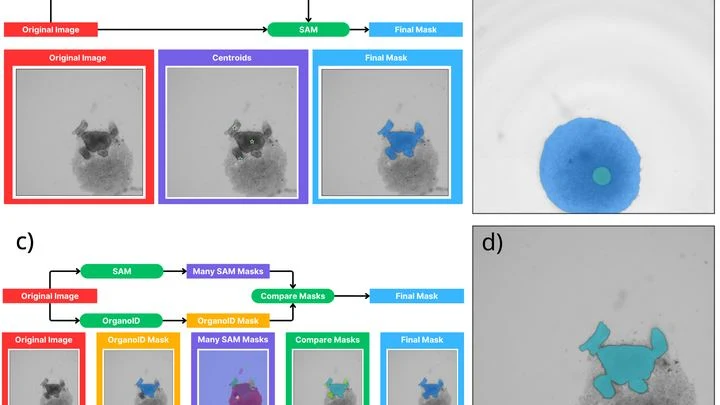
A biologist looks through a microscope at dozens of tiny cell spheres — spheroids. From these, miniature organ-like structures will later grow. The task is similar to a baker's job of checking whether the dough has risen evenly in each mold. Only here, instead of molds, there's a nutrient medium, and instead of dough, there are living cells.
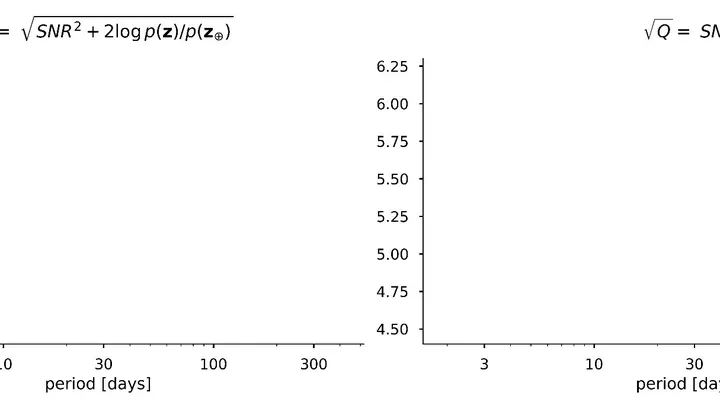
The hunt for life on distant planets is like diagnosing a rare disease with a test of unknown accuracy. A single positive result means nothing: maybe it's a glitch? We search the atmospheres of exoplanets (worlds around other stars) for traces of water and other compounds, but any signal could be a false alarm.
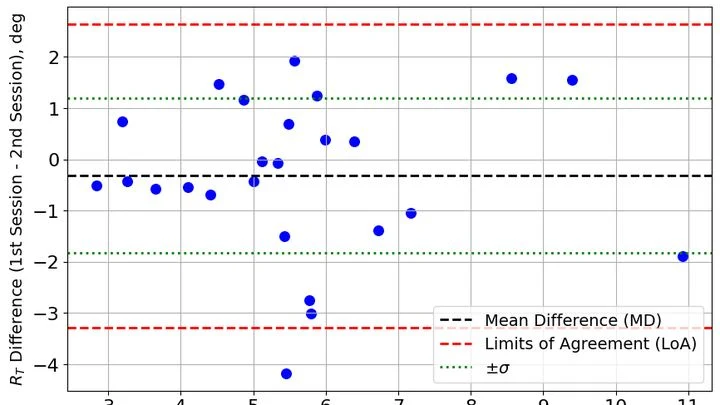
Two specialists look at the same breast image. One is an experienced doctor, the other is an artificial intelligence program. Sometimes their opinions match, sometimes they diverge. How often they agree determines how accurately they can together distinguish healthy tissue from a tumor.
Astronomers occasionally spot interstellar objects — rocky chunks or comets from other star systems. Most look ordinary, but some puzzle us with their shape, speed, or shine. To stop guessing, scientists applied the Loeb scale: from 0 (plain rock) to 5 (technosignature — an artificial signal from space).
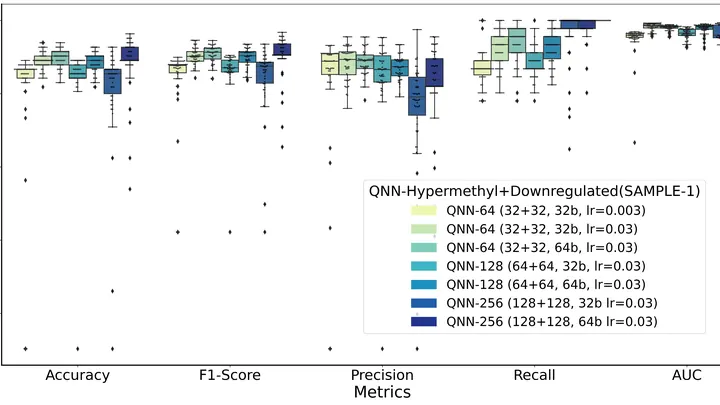
Two nearly identical locks are opened by the same pick. They look alike on the outside, but inside the mechanisms differ. Much the same can be said for the two main types of non-small cell lung cancer — adenocarcinoma and squamous cell carcinoma. Under a microscope, they can be confused, yet they require different treatments. That's where the quantum "magnifier" comes in.
PET/CT is like a map where cancer cells light up as bright spots. But what if the map is blank and the disease is still hiding somewhere? In 132 men with recurrent prostate cancer, doctors found no glowing lesions, but they decided to study the texture of the scan itself, like an experienced tracker noticing bent grass where an animal has passed.
A doctor stares at a gray-white smudge on the screen. It's the face of an unborn child. One shadow in the right place, and you can plan surgery in time. But not everyone sees that shadow: cleft lip or palate is rare, and a young specialist might go years without ever spotting one.
An electrocardiogram is like a recording of an engine's hum: an experienced mechanic can hear when something's off. A heart ultrasound shows the engine itself from the inside, but the machine is pricey and specialists are scarce.
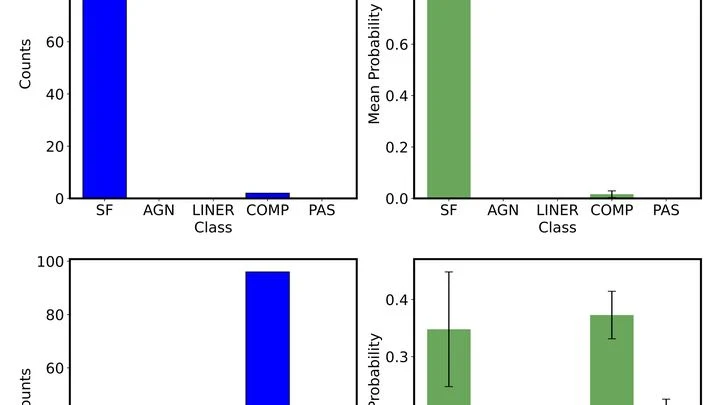
A galaxy is not just a sprinkle of stars. At the center of many, something shines brighter than billions of suns: hot gas falling into a black hole. The color of this glow reveals what kind of life the galaxy leads — quietly birthing stars or violently consuming matter.
Light can draw patterns right inside your eye — no screen or glasses needed. When a specially shaped beam enters the pupil, it creates dark rays in your field of view, like the spokes of a spinning wheel. You see these rays because they are born in the retinal cells, not outside.
The night sky is dotted with stars, and many of them have planets. But how do you spot a tiny dark disk against the glare of a distant sun? The Kepler telescope spent nine years watching hundreds of thousands of stars, waiting for a planet to pass in front of its star and briefly dim it. That 'wink' is the only way to find worlds like ours.
To spot life on other planets, you don't necessarily need to search for oxygen in the air. Living beings paint the surfaces of their worlds: Earth's plants in green, bacteria in purple. The future HWO space telescope will capture these "paints of life" on exoplanets.
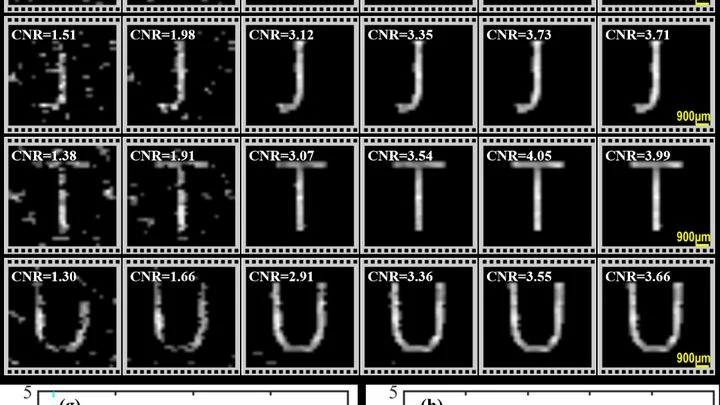
An X-ray image is like a photograph taken in the dark with a very short flash: anything that moves comes out blurred. Conventional X-ray detectors are large arrays of millions of pixels, and by the time they read out one frame, the next is already missed. For a spinning turbine or a beating heart, such sluggishness is a death sentence.
A team of researchers sidestepped this problem by ditching the array altogether.
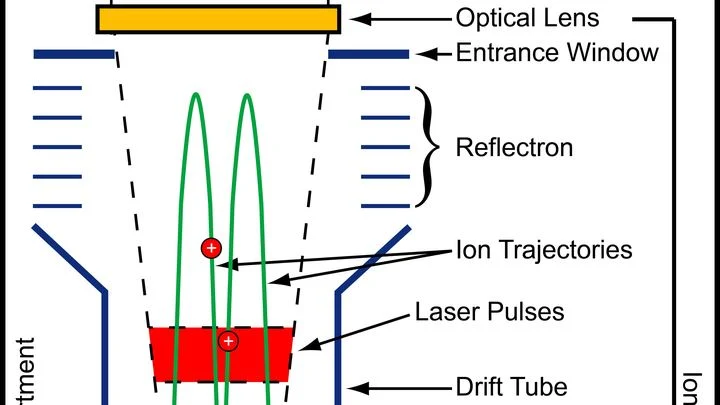
The chemical composition of a sample is like a soundscape. A living forest sounds polyphonic: chirping, rustles, the hum of insects. A barren desert is just the whistle of the wind.