Aluminum Thickness Holds the Key to Quantum Computer Noise express
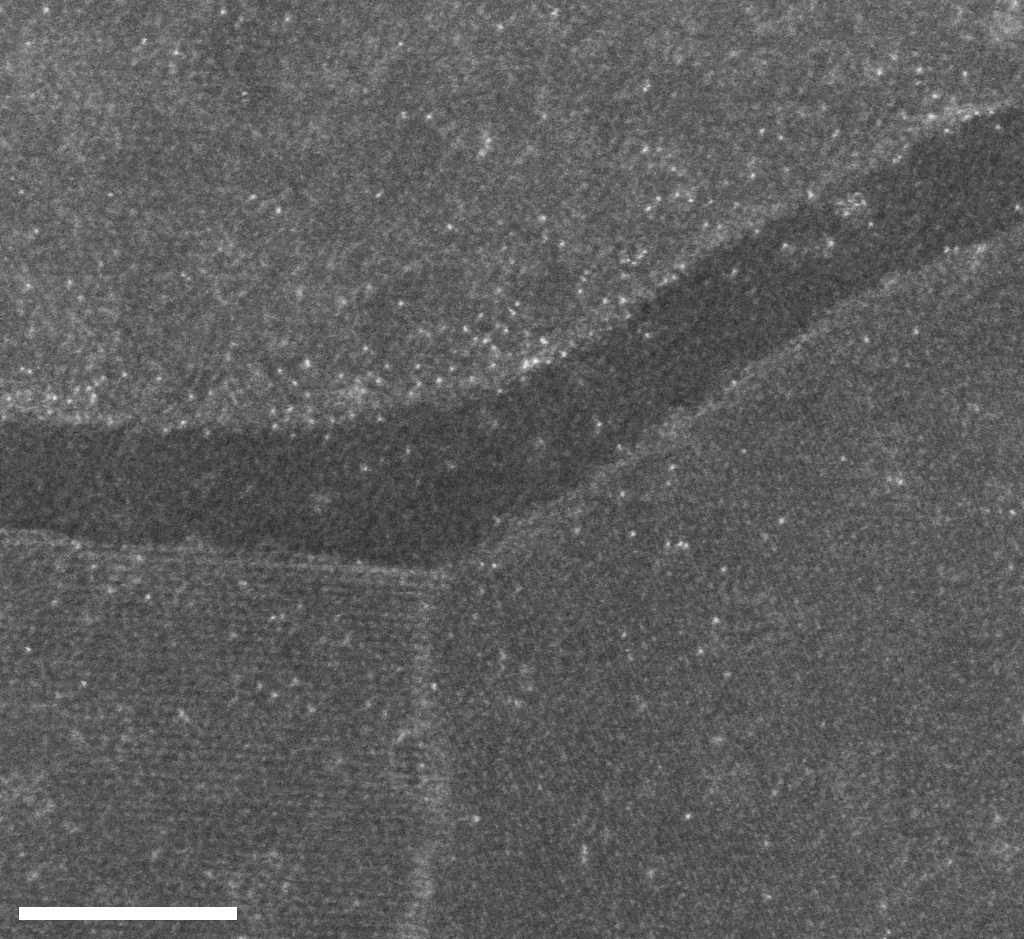
A quantum computer is like an orchestra where every musician must play their own note precisely. But the hall is filled with invisible noise — defects in superconducting contacts that throw qubits off rhythm. These defects are called two-level systems. They are like cracks in glass: tiny, yet capable of ruining the whole picture.
The authors of the study set out to find where such cracks come from. They amassed a huge dataset: 6000 contacts made of aluminum and aluminum oxide, plus over 600 images with atomic resolution. It turned out that the thicker the aluminum film and the larger the metal grains, the fewer the defects. It's as if a thick, uniform film were stronger than a thin, grainy one.
This approach, big data plus microscopy, opens the door to more reliable quantum circuits. Fewer defects mean less noise, so qubits can hold their quantum states longer. It's a step toward making the quantum orchestra play more cleanly.
Original abstract
as written by the authors arXiv:2602.11469
Materials defects in Josephson junctions (JJs), often referred to as two-level systems (TLS), couple to superconducting qubits and are a critical bottleneck for scalable quantum processors. Despite their importance, understanding the microscopic sources of TLS and how to mitigate them has remained a major challenge. Here, we demonstrate a high-throughput, correlated approach to trace the microstructural origins of strongly-coupled TLS in Josephson circuits. We assembled a massive dataset of TLS across 6,000 Al/AlOx/Al JJs and more than 600 atomic resolution transmission electron microscopy images. We statistically link fabrication, microstructure, and TLS occurrence, revealing a strong correlation between Al electrode thickness, Al grain size, and TLS density. Correspondingly, we find a two-thirds reduction in TLS prompted by a change in electrode fabrication parameters. These results demonstrate a robust, data-driven methodology to understand and control defects in quantum circuits and pave the way for significantly reducing TLS density.
Two-level systems behave like tiny magnets that randomly flip and disturb qubits.