Glass That Sees Thermal Neutrons express
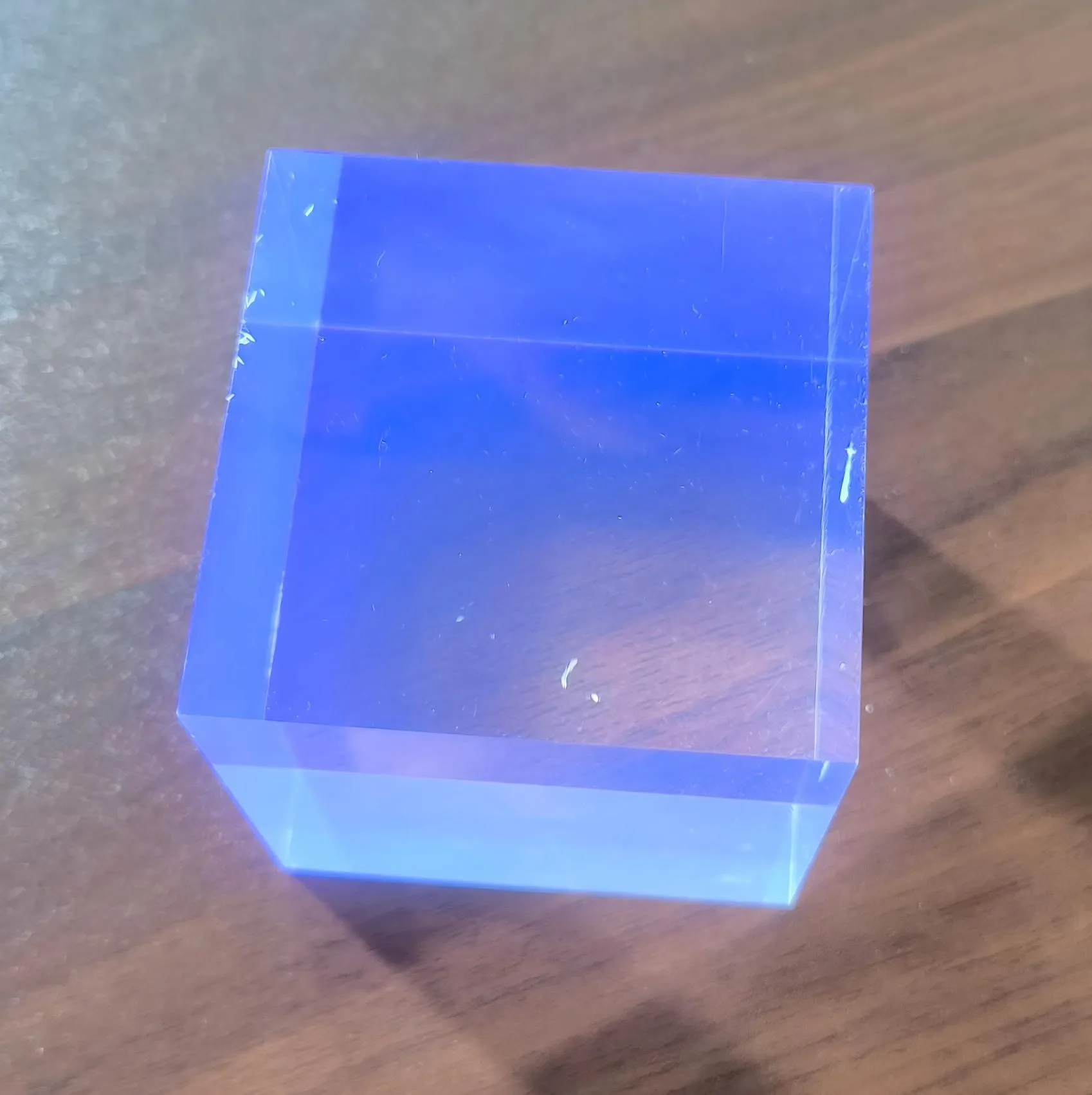
Neutrons leave no trace in ordinary glass: they pass right through, like light through a window pane. But some materials flash a faint burst of light when a particle hits them. That's how a scintillator works: a substance that turns invisible radiation into visible light.
The new transparent glass SG101 is one such material. It is especially sensitive to thermal neutrons — slow particles that have lost energy and move at the speed of air molecules in a room. In tests with an AmBe neutron source, the glass caught these particles and emitted flashes that electronics registered.
To tell useful signals from noise, SG101 was paired with organic scintillators EJ200 and EJ276. The result was a system that sorts radiation into categories: gamma rays, fast neutrons, and thermal neutrons. For the SG101+EJ200 pair, the quality of gamma/thermal neutron separation reached 3.81 on the FOM scale (higher means cleaner separation). With EJ276, it distinguished all three particle types with scores of 3.46 and 2.21.
Further analysis showed that events where a thermal neutron arrives together with a fast neutron or a gamma quantum occur much more often than random coincidences would predict. This confirms the detector truly sees correlated physical processes, not noise.
This material will be useful where you need to know exactly how many thermal neutrons arrived and when — for example, at research reactors or in nuclear material control systems.
Thermal neutrons travel at about 2.2 km/s — a hundred times slower than fast neutrons from nuclear reactions.